Quranic Answer
The Holy Quran, as the guiding scripture for Muslims, strongly and explicitly supports and encourages every good deed that benefits individuals and society. Although the specific phrase 'voluntary work' may not appear verbatim in the Quran, its spirit and essence are profoundly manifested in numerous teachings and verses. Voluntary work is, in fact, one of the clearest examples of 'Ihsan' (benevolence/excellence), 'Birr' (righteousness/piety), 'Ta'awun ala al-Birr wal-Taqwa' (cooperation in righteousness and piety), 'Infaq fi Sabilillah' (spending in the way of Allah), and 'Amal Saleh' (righteous deeds), all of which the Quran emphasizes strongly. It considers them signs of true faith and closeness to God. These teachings not only motivate individuals to help others but also establish a society based on solidarity and empathy, where every person understands their social responsibility and strives for the common good. One of the clearest verses in this regard is Surah Al-Ma'idah, verse 2, which states: “And cooperate in righteousness and piety, but do not cooperate in sin and aggression.” This verse explicitly calls believers to cooperate and assist each other in good deeds and piety, and forbids cooperation in sin and transgression. 'Al-Birr wal-Taqwa' are comprehensive terms that encompass every good, beneficial, and God-pleasing act. Voluntary work, which means dedicating time, ability, knowledge, and wealth without material expectation to help those in need, improve society, protect the environment, or promote justice, falls precisely under this 'cooperation in righteousness and piety.' With this verse, the Quran establishes a fundamental social principle that prevents any form of individual isolation and indifference, encouraging a collective spirit to build a better world. This cooperation is not limited to financial aid but includes all practical and intellectual participation to alleviate the problems and needs of fellow human beings. Furthermore, in Surah Al-Baqarah, verse 177, the concept of 'Birr' (righteousness and benevolence) is expounded upon in detail, encompassing a wide range of actions that can essentially be voluntary in nature: “Righteousness is not that you turn your faces toward the East or the West, but [true] righteousness is [in] one who believes in Allah, the Last Day, the angels, the Book, and the prophets and gives wealth, in spite of love for it, to relatives, orphans, the needy, the traveler, those who ask [for help], and for freeing slaves; [and who] establishes prayer and gives zakah; [and who] fulfill their promise when they promise; and [who] are patient in poverty and hardship and during battle. Those are the ones who have been true, and it is those who are the righteous.” This verse does not confine righteousness solely to religious rituals; rather, it ties it to faith in God and helping “relatives, orphans, the needy, the traveler, those who ask, and for freeing slaves.” The dedication of wealth, time, and effort for these groups are clear examples of voluntary work. Such assistance can take various forms, including educating orphaned children, caring for the sick, sheltering the homeless, or aiding needy travelers. The Quran's emphasis on spending wealth despite loving it signifies altruism and voluntary sacrifice, which are the essence of voluntary work. Spending in the way of Allah (Infaq fi Sabilillah) is another key concept that includes voluntary work. In numerous verses, the Quran encourages believers to spend and give, promising immense rewards. Surah Al-Baqarah, verse 261, states: “The example of those who spend their wealth in the way of Allah is like a seed [of grain] which grows seven spikes; in each spike is a hundred grains. And Allah multiplies [His reward] for whom He wills. And Allah is all-Encompassing and Knowing.” Although this verse directly refers to financial spending, the concept of 'fi Sabilillah' can also encompass any dedication of abilities and time, as all these efforts are made for divine purposes and service to creation. Voluntary work is also a form of spending; spending from the time, energy, and skills that Allah has bestowed upon humanity. This spending leads to the purification of the soul and the spiritual growth of the individual, benefiting society with its blessings. Moreover, Surah Al-Insan, verses 8 and 9, beautifully illustrate sincerity in voluntary work: “And they give food in spite of love for it to the needy, the orphan, and the captive, [saying], 'We feed you only for the countenance of Allah. We wish not from you reward or gratitude.'” These verses show that the righteous feed the needy, orphans, and captives despite their own need for the food, and their sole aim is Allah's pleasure, not reward or thanks from people. This serves as an unparalleled model for voluntary work, performed with utmost sincerity and without any expectation from creation. This approach not only doubles the spiritual value of the act but also transforms it into an activity that, more than anything else, leads to inner peace and divine satisfaction. Ultimately, the Holy Quran strongly emphasizes the importance of 'Amal Saleh' (righteous deeds) alongside faith and promises great rewards for it. Voluntary work is a clear manifestation of righteous deeds that improve individual and social life. The Quran considers humans social beings who have mutual responsibility towards each other. Helping others, fulfilling their needs, and participating in good deeds are among the acts that draw a person closer to God and promise paradise. These Quranic teachings provide a strong incentive for individuals to use their abilities and resources to serve humanity and ultimately achieve worldly and eternal success. Therefore, it can be stated with full confidence that the Quran not only supports voluntary work but considers it an integral part of faith and piety, holding it in high regard.
Related Verses
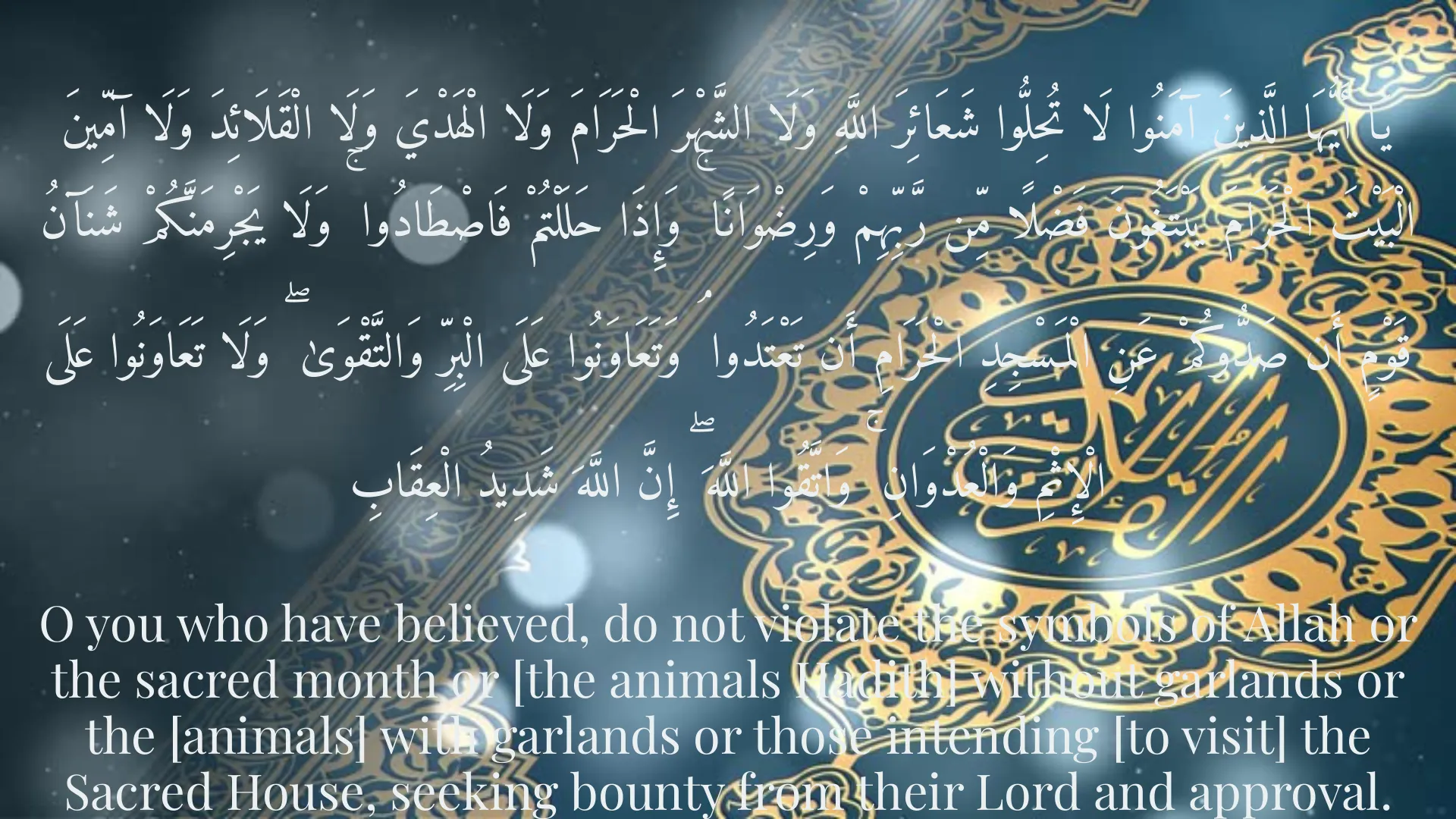
يَا أَيُّهَا الَّذِينَ آمَنُوا لَا تُحِلُّوا شَعَائِرَ اللَّهِ وَلَا الشَّهْرَ الْحَرَامَ وَلَا الْهَدْيَ وَلَا الْقَلَائِدَ وَلَا آمِّينَ الْبَيْتَ الْحَرَامَ يَبْتَغُونَ فَضْلًا مِّن رَّبِّهِمْ وَرِضْوَانًا ۚ وَإِذَا حَلَلْتُمْ فَاصْطَادُوا ۚ وَلَا يَجْرِمَنَّكُمْ شَنَآنُ قَوْمٍ أَن صَدُّوكُمْ عَنِ الْمَسْجِدِ الْحَرَامِ أَن تَعْتَدُوا ۘ وَتَعَاوَنُوا عَلَى الْبِرِّ وَالتَّقْوَىٰ ۖ وَلَا تَعَاوَنُوا عَلَى الْإِثْمِ وَالْعُدْوَانِ ۚ وَاتَّقُوا اللَّهَ ۖ إِنَّ اللَّهَ شَدِيدُ الْعِقَابِ
O you who have believed, do not violate the symbols of Allah or the sacred month or [the animals Hadith] without garlands or the [animals] with garlands or those intending [to visit] the Sacred House, seeking bounty from their Lord and approval. But when you come out of ihram, then [you may] hunt. And do not let the hatred of a people for having obstructed you from the Sacred Mosque lead you to transgress. And cooperate in righteousness and piety, but do not cooperate in sin and aggression. And fear Allah; indeed, Allah is severe in penalty.
Al-Ma'idah : 2
لَّيْسَ الْبِرَّ أَن تُوَلُّوا وُجُوهَكُمْ قِبَلَ الْمَشْرِقِ وَالْمَغْرِبِ وَلَٰكِنَّ الْبِرَّ مَنْ آمَنَ بِاللَّهِ وَالْيَوْمِ الْآخِرِ وَالْمَلَائِكَةِ وَالْكِتَابِ وَالنَّبِيِّينَ وَآتَى الْمَالَ عَلَىٰ حُبِّهِ ذَوِي الْقُرْبَىٰ وَالْيَتَامَىٰ وَالْمَسَاكِينَ وَابْنَ السَّبِيلِ وَالسَّائِلِينَ وَفِي الرِّقَابِ وَأَقَامَ الصَّلَاةَ وَآتَى الزَّكَاةَ ۚ وَالْمُوفُونَ بِعَهْدِهِمْ إِذَا عَاهَدُوا ۖ وَالصَّابِرِينَ فِي الْبَأْسَاءِ وَالضَّرَّاءِ وَحِينَ الْبَأْسِ ۗ أُولَٰئِكَ الَّذِينَ صَدَقُوا ۖ وَأُولَٰئِكَ هُمُ الْمُتَّقُونَ
Righteousness is not that you turn your faces toward the East or the West, but [true] righteousness is [in] one who believes in Allah, the Last Day, the angels, the Book, and the prophets and gives wealth, in spite of love for it, to relatives, orphans, the needy, the traveler, those who ask [for help], and for freeing slaves; [and who] establishes prayer and gives zakah; [and who] fulfill their promise when they promise; and [who] are patient in poverty and hardship and during battle. Those are the ones who have been true, and it is those who are the righteous.
Al-Baqarah : 177
وَيُطْعِمُونَ الطَّعَامَ عَلَىٰ حُبِّهِ مِسْكِينًا وَيَتِيمًا وَأَسِيرًا
And they give food in spite of love for it to the needy, the orphan, and the captive,
Al-Insan : 8
إِنَّمَا نُطْعِمُكُمْ لِوَجْهِ اللَّهِ لَا نُرِيدُ مِنكُمْ جَزَاءً وَلَا شُكُورًا
[Saying], 'We feed you only for the countenance of Allah. We wish not from you reward or gratitude.'
Al-Insan : 9
Short Story
It is narrated in Saadi's Gulistan that two dervishes set out on a journey; one was strong, and the other was weak and infirm. When they reached a desert where there was no water, the stronger dervish carried his weaker companion on his back, saying: "Carrying the burden of a brother is better than carrying the burden of regret." This beautiful anecdote illustrates that on the path of life, assisting fellow human beings, even if it entails hardship, holds a higher value than indifference and regret. Voluntarily helping others is the essence of humanity and the path to inner peace and contentment, for in every step of it, there is a good deed that returns to the individual.