Quranic Answer
Dear friend, the feeling of comparing oneself to others is a common challenge in modern human life, which can lead to envy, dissatisfaction, decreased self-confidence, and anxiety. In today's world, with the proliferation of social media and the constant display of seemingly perfect lives, this sense of comparison has intensified. However, the Holy Quran, as a book of guidance for all humanity, offers profound and fundamental solutions to escape this trap. These solutions not only contribute to psychological peace but also lead to spiritual growth and a deeper connection with the Creator of the universe. One of the most important concepts the Quran presents for combating comparison is the notion of gratitude and thankfulness (Shukr). Allah repeatedly advises His servants in the Quran to be grateful for His blessings. When a person focuses on what they possess (health, family, security, talents, and any other provision) and is grateful for it, instead of focusing on what others have and they do not, doors of tranquility and contentment open up for them. In Surah Ibrahim, verse 7, Allah states: "And [remember] when your Lord proclaimed, 'If you are grateful, I will surely increase you [in favor]; but if you deny, indeed, My punishment is severe.'" This verse promises that gratitude not only brings about a good state of being but also leads to an increase in blessings, which can extend beyond material possessions to encompass spiritual peace and countless intangible blessings. This belief dries up the roots of envy and dissatisfaction arising from comparison, as the individual focuses on the abundances present in their own life instead of longing for what others have. Another fundamental Quranic principle is understanding Divine wisdom in the distribution of provisions and talents (Rizq). Almighty Allah has distributed sustenance and abilities among His servants in a manner He knows to be wise. This distribution is based on His infinite knowledge and wisdom, not on apparent merit or worldly wealth. In Surah An-Nahl, verse 71, it states: "And Allah has favored some of you over others in provision..." This means that differences in wealth, beauty, talents, and social status are part of the divine plan. These differences exist to test humanity, to encourage interaction and mutual assistance, and to demonstrate the Creator's power and vastness. When one accepts this truth, there is no longer a reason to compare oneself with others, because everyone has received their share from Allah's bountiful table and should make the best life with it. This understanding invites cooperation and solidarity instead of unhealthy competition, reminding individuals that true worth lies not in material possessions but in how one utilizes what has been bestowed upon them. Furthermore, the Quran emphasizes that the true criterion for a person's worth in the sight of Allah is piety and righteousness (Taqwa), not wealth or social status. Surah Al-Hujurat, verse 13, explicitly states: "Indeed, the most noble of you in the sight of Allah is the most righteous of you." This verse brings about a fundamental transformation in a person's view of themselves and others. If my value lies in my faith, good deeds, and righteousness, what need is there to compare myself to another's wealth, beauty, or fame? This perspective shifts the focus from worldly appearances to the inner essence and depth of one's being. This verse reminds us that the primary competition is not over worldly matters and their manifestations, but rather a competition in performing good deeds and attaining closeness to Allah. This outlook eliminates destructive competition and instead encourages competing in goodness and virtues. Moreover, the Quran points to the transient and worthless nature of the world compared to the Hereafter. In Surah Al-Hadid, verse 20, we read: "Know that the life of this world is but amusement and diversion and adornment and boasting to one another and competition in increase of wealth and children..." This verse explicitly mentions "boasting to one another," which is the core root of comparison. When a person understands that this world is temporary and what endures are their good deeds, their inclination towards material competitions and futile comparisons decreases. Focusing on the Hereafter and aiming for Allah's pleasure helps a person break free from the shackles of material comparisons and find lasting peace. This perspective helps individuals set their goals based on enduring and divine values, not on fluctuating and superficial worldly patterns. Finally, focusing on one's individual path and personal accountability is also a Quranic concept. Each person is responsible for their own actions and choices, and no soul carries the burden of another (Surah Al-An'am, verse 164: "And no bearer of burdens will bear the burden of another"). This verse reminds us that each person's life journey is unique, and comparing oneself to another's path, which Allah has designed for them, is meaningless. We should focus on improving ourselves, spiritual growth, and fulfilling our duties, rather than constantly looking at what others are doing or possessing. This approach redirects energy from longing and envy towards self-improvement and individual elevation. By adhering to these Quranic principles – deep gratitude, understanding divine wisdom, focusing on piety as the measure of worth, attending to the Hereafter, and accepting one's unique path – we can gradually free ourselves from the captivity of comparison and attain true peace, contentment, and satisfaction.
Related Verses
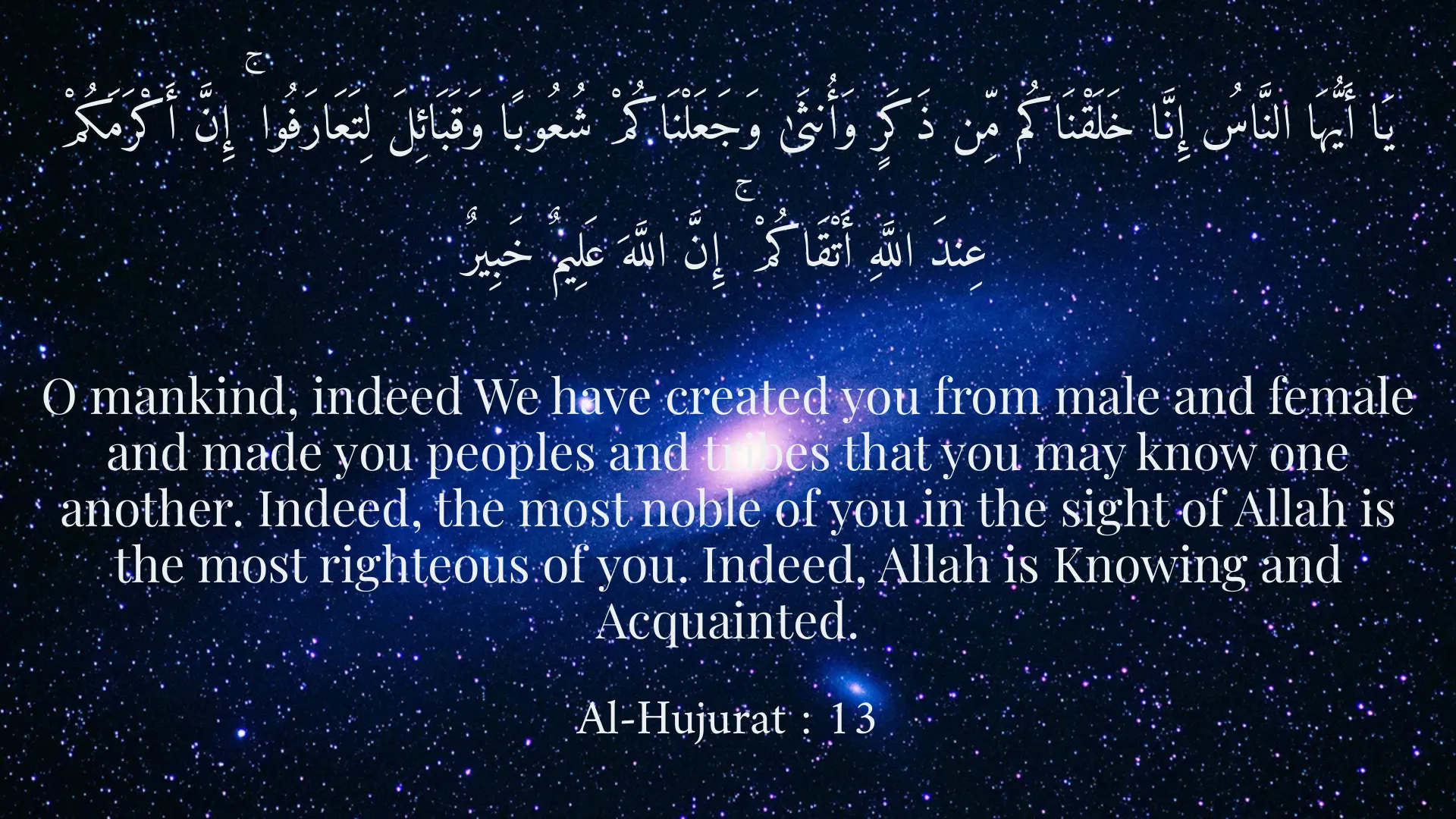
يَا أَيُّهَا النَّاسُ إِنَّا خَلَقْنَاكُم مِّن ذَكَرٍ وَأُنثَىٰ وَجَعَلْنَاكُمْ شُعُوبًا وَقَبَائِلَ لِتَعَارَفُوا ۚ إِنَّ أَكْرَمَكُمْ عِندَ اللَّهِ أَتْقَاكُمْ ۚ إِنَّ اللَّهَ عَلِيمٌ خَبِيرٌ
O mankind, indeed We have created you from male and female and made you peoples and tribes that you may know one another. Indeed, the most noble of you in the sight of Allah is the most righteous of you. Indeed, Allah is Knowing and Acquainted.
Al-Hujurat : 13
وَاللَّهُ فَضَّلَ بَعْضَكُمْ عَلَىٰ بَعْضٍ فِي الرِّزْقِ ۚ فَمَا الَّذِينَ فُضِّلُوا بِرَادِّي رِزْقِهِمْ عَلَىٰ مَا مَلَكَتْ أَيْمَانُهُمْ فَهُمْ فِيهِ سَوَاءٌ ۚ أَفَبِنِعْمَةِ اللَّهِ يَجْحَدُونَ
And Allah has favored some of you over others in provision. So those who have been favored are not to return their provision to those whom their right hands possess so they would be equal to them therein. Then is it the favor of Allah they reject?
An-Nahl : 71
اعْلَمُوا أَنَّمَا الْحَيَاةُ الدُّنْيَا لَعِبٌ وَلَهْوٌ وَزِينَةٌ وَتَفَاخُرٌ بَيْنَكُمْ وَتَكَاثُرٌ فِي الْأَمْوَالِ وَالْأَوْلَادِ ۖ كَمَثَلِ غَيْثٍ أَعْجَبَ الْكُفَّارَ نَبَاتُهُ ثُمَّ يَهِيجُ فَتَرَاهُ مُصْفَرًّا ثُمَّ يَكُونُ حُطَامًا ۗ وَفِي الْآخِرَةِ عَذَابٌ شَدِيدٌ وَمَغْفِرَةٌ مِّنَ اللَّهِ وَرِضْوَانٌ ۚ وَمَا الْحَيَاةُ الدُّنْيَا إِلَّا مَتَاعُ الْغُرُورِ
Know that the life of this world is but amusement and diversion and adornment and boasting to one another and competition in increase of wealth and children - like the example of a rain whose [resulting] plant growth pleases the disbelievers; then it dries and you see it turned yellow; then it becomes [scattered] debris. And in the Hereafter is severe punishment and forgiveness from Allah and approval. And what is the worldly life except the enjoyment of delusion.
Al-Hadid : 20
Short Story
It is narrated that one day, a poor man gazed with longing eyes at a caravan of wealthy individuals passing by, adorned in lavish clothes and splendor. He sighed to himself and complained about his fate, wondering why he was so deprived. At that very moment, he saw Saadi, the eloquent poet, passing by. The poor man, with a deep sigh, said, "O Master, what can I do when every time I look at this world, I find only a cruel comparison between my possessions and my lack, and this pains me?" Saadi smiled and replied, "One day, I was walking barefoot in the desert, feeling sad because I had no shoes. Suddenly, I saw a man who had no feet at all! After that, I was ashamed of my ingratitude and gave abundant thanks for the blessing of healthy feet." Upon hearing this story, the poor man lowered his head and understood that true peace lies in comparing oneself to those who have less and being grateful for what one possesses, rather than longing for what one lacks.