Quranic Answer
In the Holy Quran, and more broadly within the scope of Islamic teachings, the principle of respect for others forms a fundamental pillar of moral conduct. This respect is particularly emphasized towards those who dedicate their lives to serving the nation and society; among them, soldiers occupy a significant position. As defenders of the country, its values, and its institutions, they embody a commitment that is not only commendable but also deserving of appreciation and support from the wider community. Therefore, any form of harassment directed towards soldiers is not merely a social faux pas, but rather it constitutes a moral failing that contradicts the basic tenets of Islamic belief. One of the many notable verses in the Quran highlighting this notion is found in Surah Al-Hujurat, verse 11. In this verse, Allah explicitly instructs humanity to refrain from insulting one another or using derogatory terms. The verse serves as a clear reminder that respect and dignity must be afforded to every individual, regardless of their role in society. It underscores the idea that insults and slurs have no place in a society that aspires to uphold the values of kindness and respect toward all members, with soldiers as key contributors to the stability and safety of that society. Furthermore, Surah Al-Imran, verse 16, reiterates the importance of good conduct among those who profess faith in Allah and His Messenger. This verse reinforces that genuine belief in Allah necessitates harmonious interactions with others. In essence, adherence to faith ought to translate into positive behavior toward fellow humans, particularly those who put their lives at risk for the safety and well-being of others. The obligations of belief, therefore, extend beyond personal piety into the realms of social responsibility, community support, and mutual respect. The Islamic perspective encourages believers to engage with others grounded in principles of respect, love, and support. These values stand in stark contrast to attitudes that encourage harassment or degradation of any individual. For soldiers, whose roles are critical to maintaining peace and order, it is imperative that they receive recognition and appreciation for their sacrifices and services. Rather than facing scorn or disdain, soldiers deserve acknowledgment and encouragement from the very society they protect and serve. The teachings of Islam invite individuals to cultivate an environment where mutual respect can flourish. The path to such a society is paved with principles that advocate for treating individuals as valuable members of the community, irrespective of their occupation. For soldiers, this means fostering a culture of gratitude and support rather than one that indulges in harmful behaviors or antagonistic sentiments. Indeed, the act of harassment towards soldiers not only contradicts the prescribed norms of conduct outlined in the Quran but also represents a failure of the collective societal contract. As civilians, the responsibility lies with us to recognize the efforts and sacrifices made by military personnel who often face immense challenges and risks. Their commitment to serving and protecting the country warrants a response built on solidarity and respect. It should compel society to reflect on the necessary values we must instill in future generations regarding how we treat those in uniform. In Islamic tradition, the Prophet Muhammad (peace be upon him) is often seen as a role model for maintaining high standards of moral behavior. He emphasized the importance of kindness and compassion towards all human beings, regardless of their status. This example is particularly salient when considering members of the armed forces. Just as the Prophet advocated for respect and kindness towards others, so too should we adopt a similar demeanor towards those whose duty is to safeguard our national interests. It is essential to remember that soldiers are not only defending the borders of our country but also the values that underpin our society: justice, peace, and coexistence. Harassment or disrespect towards them is, therefore, an affront to those very principles. In a world where misconceptions and prejudices can lead to division, fostering an atmosphere of respect and uplifting those who serve is vital for national cohesion. The repercussions of ignoring these teachings extend beyond the immediate context of soldier treatment. A society that lacks respect for its defenders is one that risks fragmenting its own foundational values. Such behaviors promote a culture where disrespect becomes normalized, leading to further disconnection and conflict within communities. To remediate this, community programs aimed at educating the public about the sacrifices made by military personnel could serve as both an acknowledgment of their service and a deterrent against harassment. Additionally, initiatives that promote dialogue between service members and civilians can help bridge the gap of understanding, fostering a culture of respect and appreciation. In conclusion, the Quran provides guidance that implores individuals to practice respect and compassion toward each other, especially towards those who dedicate their lives to safeguarding the community. Soldiers, as defenders of our way of life, deserve our utmost respect and support. Harassing them is not just a personal failing; it is a societal one that undermines the core values of Islam and the fabric of a cohesive society. It is our collective duty to acknowledge their sacrifices, engage with them positively, and ensure that they receive the dignity they rightfully deserve in their roles as protectors of the peace and guardians of our nation.
Related Verses
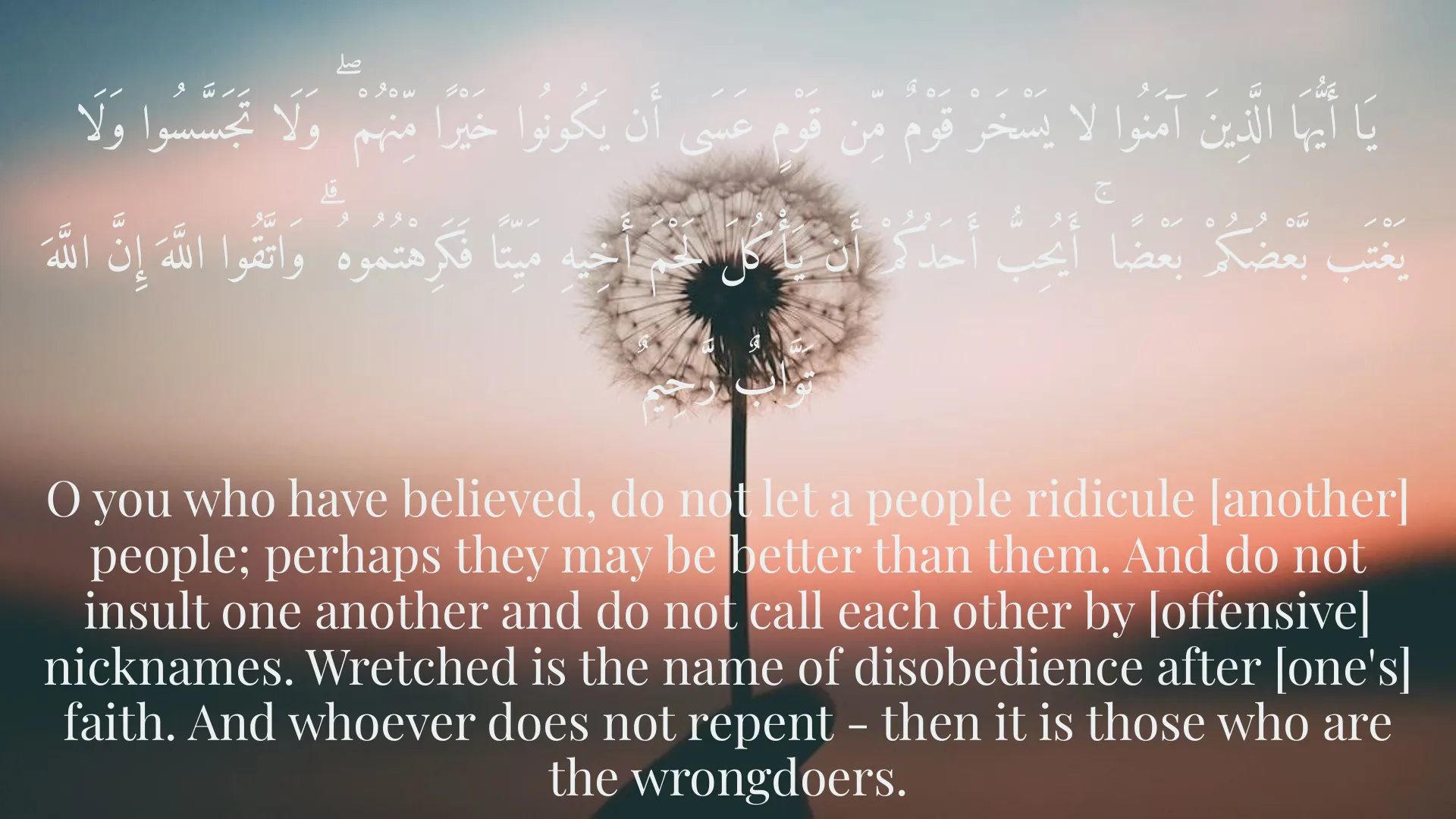
يَا أَيُّهَا الَّذِينَ آمَنُوا لا يَسْخَرْ قَوْمٌ مِّن قَوْمٍ عَسَى أَن يَكُونُوا خَيْرًا مِّنْهُمْ ۖ وَلَا تَجَسَّسُوا وَلَا يَغْتَب بَّعْضُكُمْ بَعْضًا ۚ أَيُحِبُّ أَحَدُكُمْ أَن يَأْكُلَ لَحْمَ أَخِيهِ مَيِّتًا فَكَرِهْتُمُوهُ ۗ وَاتَّقُوا اللَّهَ إِنَّ اللَّهَ تَوَّابٌ رَّحِيمٌ
O you who have believed, do not let a people ridicule [another] people; perhaps they may be better than them. And do not insult one another and do not call each other by [offensive] nicknames. Wretched is the name of disobedience after [one's] faith. And whoever does not repent - then it is those who are the wrongdoers.
Al-Hujurat : 11
إِنَّمَا أُوتِيَتْهُمْ كَرَّهٌ جَزَاءً وَلَكِن أَنْتَ أَتَى إِلَيْكَ الْفَاسِقُونَ
Only when you are called to do wrong, the label might be regretted, but must stay away from harassing others if someone truly believes in Allah and His Messenger.
Al-Imran : 16
Short Story
One day in a small town, a soldier was serving and always helped others with a smile. However, some people insulted him. One day an old man approached him and said, 'Excuse me, my son, have you been hurt?' The soldier replied, 'No, I'm doing my duty, and these people cannot diminish my motivation.' This old man's words made others think, and from that day on, they looked at the soldier with more respect.