Quranic Answer
The tongue, this small yet incredibly powerful organ in the human body, can be both a tool for good and construction, and a source of evil and destruction. The Holy Quran, which is the book of guidance and a manual for human life, meticulously and subtly addresses the importance of speech, accountability for what we utter, and the innumerable perils and dangers of the tongue. Quranic teachings in this regard are not limited to merely condemning obvious verbal sins, but also include encouraging good speech, avoiding vain talk, and reminding us of our responsibility for every word spoken. The Quran's emphasis on controlling the tongue indicates that the well-being of society and individuals largely depends on the purity of speech and avoiding verbal impurities. One of the most evident and repulsive perils of the tongue explicitly condemned by the Quran is backbiting (Gheebat). In Surah Al-Hujurat, verse 12, Almighty God uses a shocking analogy, likening backbiting to eating the flesh of one's dead brother: "...And do not backbite each other. Would one of you like to eat the flesh of his dead brother? You would despise it. And fear Allah. Indeed, Allah is Accepting of repentance and Merciful." This analogy profoundly illustrates the repugnance of this act; just as eating dead flesh is abhorrent, backbiting is detested and disliked by Allah. Backbiting not only violates individuals' dignity but also sows the seeds of malice, suspicion, and discord in society, weakening social cohesion. With this striking statement, the Quran strongly prohibits believers from this sin and reminds them that Allah is Forgiving and Merciful, but one must first desist from this vile act. Mockery and Ridicule (Sukhriya) are another verbal affliction addressed in the Quran. In the same Surah Al-Hujurat, verse 11, Allah says: "O you who have believed, let not a people ridicule [another] people; perhaps they may be better than them; nor let women ridicule [other] women; perhaps they may be better than them. And do not insult one another and do not call each other by [offensive] nicknames. Wretched is the name of disobedience after [one's] faith. And whoever does not repent — then it is those who are the wrongdoers." This verse explicitly forbids believing men and women from mocking and finding fault with one another, because the one being mocked might be superior in the sight of Allah. This act not only causes distress and humiliation but also leads to a false sense of superiority and destroys human relationships. By emphasizing non-humiliation of others, the Quran aims to preserve human dignity and promote mutual respect within the Islamic society. Lying (Kizb) is also a major verbal sin that the Holy Quran severely prohibits. Lying is the foundation of distrust, corruption, and decay in society. Allah states in Surah An-Nahl, verse 105: "Indeed, those who do not believe in the verses of Allah are those who invent falsehood, and it is they who are the liars." This verse explicitly attributes lying to those who do not believe in Allah's verses. Lying not only distances an individual from truth but also leads to the loss of credibility and trust from others. The Quran places great emphasis on honesty and truthfulness, considering them signs of faith and piety. Lying can destroy family, social, and even political relationships, and eliminate security and peace. False Accusation and Slander (Qazf), which means attributing something false to someone, are strictly prohibited in the Quran. This sin is specifically discussed in Surah An-Nur, verse 4, where a severe punishment is prescribed for those who slander chaste women: "And those who accuse chaste women and then do not produce four witnesses - lash them with eighty lashes and do not accept from them testimony ever after. And those are the defiantly disobedient." Slander not only ruins people's reputation but can also lead to irreparable consequences for the victim and their family. By enacting such rulings, the Quran defends the honor and reputation of believers and protects society from the rampant spread of false news and poisonous rumors. Furthermore, the Quran refers to the general responsibility of humans for their speech. In Surah Qaf, verse 18, it is stated: "He does not utter any word except that with him is an observer prepared [to record it]." This verse clearly indicates that no word leaves a person's mouth without a vigilant angel ready to record it. This verse serves as a serious warning that one must be conscious and responsible for every word they utter. This responsibility also includes abstaining from idle or meaningless talk (Lagw). In Surah Al-Mu'minun, verse 3, one of the characteristics of true believers is mentioned as turning away from idle talk: "And they who turn away from ill speech." Idle and useless talk not only wastes time and energy but also prevents the soul and heart from engaging in more important and constructive matters. In contrast to these perils, the Quran also highlights the beauties of speech and verbal virtues; such as "Qawlan Sadeed" (straight and firm speech) in Surah Al-Ahzab, verse 70, "Qawlan Kareem" (noble and respectful speech) in Surah Al-Isra, verse 23 (regarding parents), and "Qawlan Layyin" (gentle and mild speech) in Surah Taha, verse 44 (regarding Pharaoh). These recommendations show that the tongue should be a tool for expressing truth, guidance, comfort, and promoting goodness. In conclusion, the Holy Quran introduces the tongue as a highly sensitive and crucial instrument in human life. Verbal perils such as backbiting, mockery, lying, slander, and idle talk not only harm the individual but also weaken the moral and social foundations of society. Quranic teachings, by encouraging good speech and prohibiting bad speech, pave the way for building a healthy, safe society full of mercy and friendship. Controlling the tongue and safeguarding it is, in fact, a sign of true faith and divine piety, which brings about prosperity in this world and the hereafter.
Related Verses
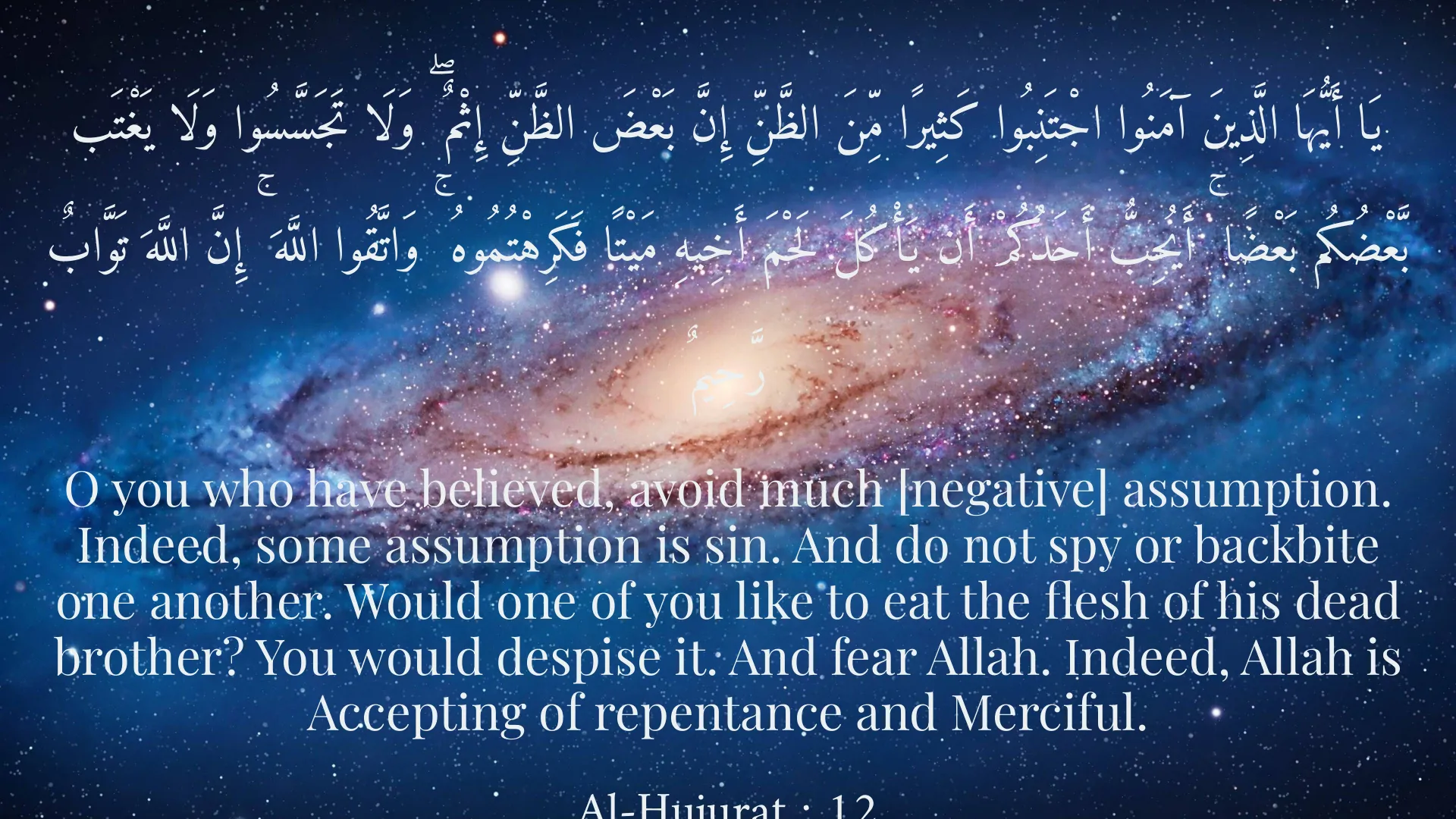
يَا أَيُّهَا الَّذِينَ آمَنُوا اجْتَنِبُوا كَثِيرًا مِّنَ الظَّنِّ إِنَّ بَعْضَ الظَّنِّ إِثْمٌ ۖ وَلَا تَجَسَّسُوا وَلَا يَغْتَب بَّعْضُكُم بَعْضًا ۚ أَيُحِبُّ أَحَدُكُمْ أَن يَأْكُلَ لَحْمَ أَخِيهِ مَيْتًا فَكَرِهْتُمُوهُ ۚ وَاتَّقُوا اللَّهَ ۚ إِنَّ اللَّهَ تَوَّابٌ رَّحِيمٌ
O you who have believed, avoid much [negative] assumption. Indeed, some assumption is sin. And do not spy or backbite one another. Would one of you like to eat the flesh of his dead brother? You would despise it. And fear Allah. Indeed, Allah is Accepting of repentance and Merciful.
Al-Hujurat : 12
يَا أَيُّهَا الَّذِينَ آمَنُوا لَا يَسْخَرْ قَوْمٌ مِّن قَوْمٍ عَسَىٰ أَن يَكُونُوا خَيْرًا مِّنْهُمْ وَلَا نِسَاءٌ مِّن نِّسَاءٍ عَسَىٰ أَن يَكُنَّ خَيْرًا مِّنْهُنَّ ۖ وَلَا تَلْمِزُوا أَنفُسَكُمْ وَلَا تَنَابَزُوا بِالْأَلْقَابِ ۖ بِئْسَ الِاسْمُ الْفُسُوقُ بَعْدَ الْإِيمَانِ ۚ وَمَن لَّمْ يَتُبْ فَأُولَٰئِكَ هُمُ الظَّالِمُونَ
O you who have believed, let not a people ridicule [another] people; perhaps they may be better than them; nor let women ridicule [other] women; perhaps they may be better than them. And do not insult one another and do not call each other by [offensive] nicknames. Wretched is the name of disobedience after [one's] faith. And whoever does not repent — then it is those who are the wrongdoers.
Al-Hujurat : 11
مَا يَلْفِظُ مِن قَوْلٍ إِلَّا لَدَيْهِ رَقِيبٌ عَتِيدٌ
He does not utter any word except that with him is an observer prepared [to record it].
Qaf : 18
إِنَّمَا يَفْتَرِي الْكَذِبَ الَّذِينَ لَا يُؤْمِنُونَ بِآيَاتِ اللَّهِ ۖ وَأُولَٰئِكَ هُمُ الْكَاذِبُونَ
Indeed, those who do not believe in the verses of Allah are those who invent falsehood, and it is they who are the liars.
An-Nahl : 105
Short Story
It is narrated that in ancient times, there was a man who was accustomed to backbiting and tale-telling. Wherever he sat, he spoke of people's flaws and sowed seeds of malice. One day, he approached a sage and asked, "O sage, why do people avoid me?" The sage smiled and said, "My friend, your tongue is a sword that wounds at every turn, and pains hearts. If you wish people to love you, guard your tongue. For God, in His words, has taught us to refrain from backbiting and mockery, and every word that leaves your mouth is recorded by Him. So know that one inappropriate word can sometimes bring about the ruin of a hundred homes, and one righteous word can build a world. The tongue, though a small organ, can either forge paradise for you or hell." The man heeded the sage's advice and thereafter, refrained his tongue from all ugly and vain speech, and saw how hearts were drawn to him and he gained people's respect. Indeed, whoever guards their tongue lives in peace, and whoever lets it loose suffers hardship and regret.