Quranic Answer
Human beings are wonderfully complex creatures, endowed with remarkable capabilities and subjected to a range of experiences as they navigate through life. Among these experiences are the numerous blessings and bounties that individuals encounter along their journey. While these blessings, such as health, wealth, relationships, and knowledge, can enhance the quality of life, they can also become a source of arrogance and pride if not properly managed. This duality of blessings is a profound theme addressed in many religious texts, most notably in the Holy Quran, which serves as a crucial reminder of the fragility of human arrogance amid divine generosity. In the Holy Quran, Allah underscores the importance of humility and gratitude through various verses that remind us of the source of all blessings. One pivotal verse found in Surah An-Nahl, verse 18 states, "And if you should count the favors of Allah, you could not enumerate them." This poignant reminder emphasizes the immeasurable nature of divine blessings; despite our human inclination to take credit for what we have, the reality is that these gifts are not ours by right but rather are bestowed upon us by a higher power. The Quran indicates that recognizing the continuous flow of favors from Allah can keep human beings grounded, preventing the dangerous lures of arrogance from creeping in. Furthermore, Surah Al-Imran, verse 14 serves to illustrate how worldly attachments can lead to prideful behavior. The verse mentions, "Beautified for people is the love of that which they desire – of women and sons, heaped-up sums of gold and silver..." Here, Allah draws attention to the beauty of worldly desires, a sentiment that resonates with many. These enhancements can often lead to a false sense of superiority or entitlement, suggesting that one’s worth is intertwined with their possessions or lineage. In a society that often equates success with material wealth, it becomes crucial to critically analyze our attachment to such pursuits. Such reflections prompt believers to recognize that true success is not measured by worldly standards but instead by one’s relationship with Allah and how one chooses to use their blessings. In this vein, one of the most effective antidotes to arrogance highlighted in Islamic teachings is the practice of charity and helping those in need. As elucidated in Surah Al-Baqarah, verse 261, Allah speaks about the immense reward associated with spending in His cause: "The example of those who spend their wealth in the way of Allah is like a seed of grain that sprouts into seven ears; in every ear there are a hundred grains..." This analogy stresses not only the importance of generosity but also the multiplicative effect of goodness. When we choose to share our blessings with those who are less fortunate, we cultivate a sense of humility and gratitude that can counteract feelings of pride. By recognizing that our wealth is a trust from Allah, we internalize the notion that it is not solely for our enjoyment but meant to be shared with others. Engaging genuinely in acts of charity thus becomes a transformative practice. Alongside charity, fostering conversations with fellow believers also acts as a buffer against arrogance. Surrounding oneself with individuals who are keen to remember Allah fosters a supportive environment ripe for spiritual growth. Regular discussions that reflect on the teachings of the Quran and share personal experiences relating to divine favors keep the heart humble and constant in the recognition of one's dependency on Allah. In conclusion, human beings often find themselves surrounded by numerous blessings, yet it is essential to recognize how these gifts can both uplift and distort one's character. The Holy Quran profoundly invites believers to maintain humility through gratitude, reminding them that the source of their blessings lies beyond human effort. By practicing gratitude, engaging with fellow believers, and partaking in charity, one can nurture a spirit of humility and avoid the snares of pride. Life is a continuous journey of balancing acknowledgment of divine grace with responsible stewardship of life’s gifts. Ultimately, it is through these mindful practices that we can truly manifest a faith that cherishes humility and fosters a deeper connection with our Creator.
Related Verses
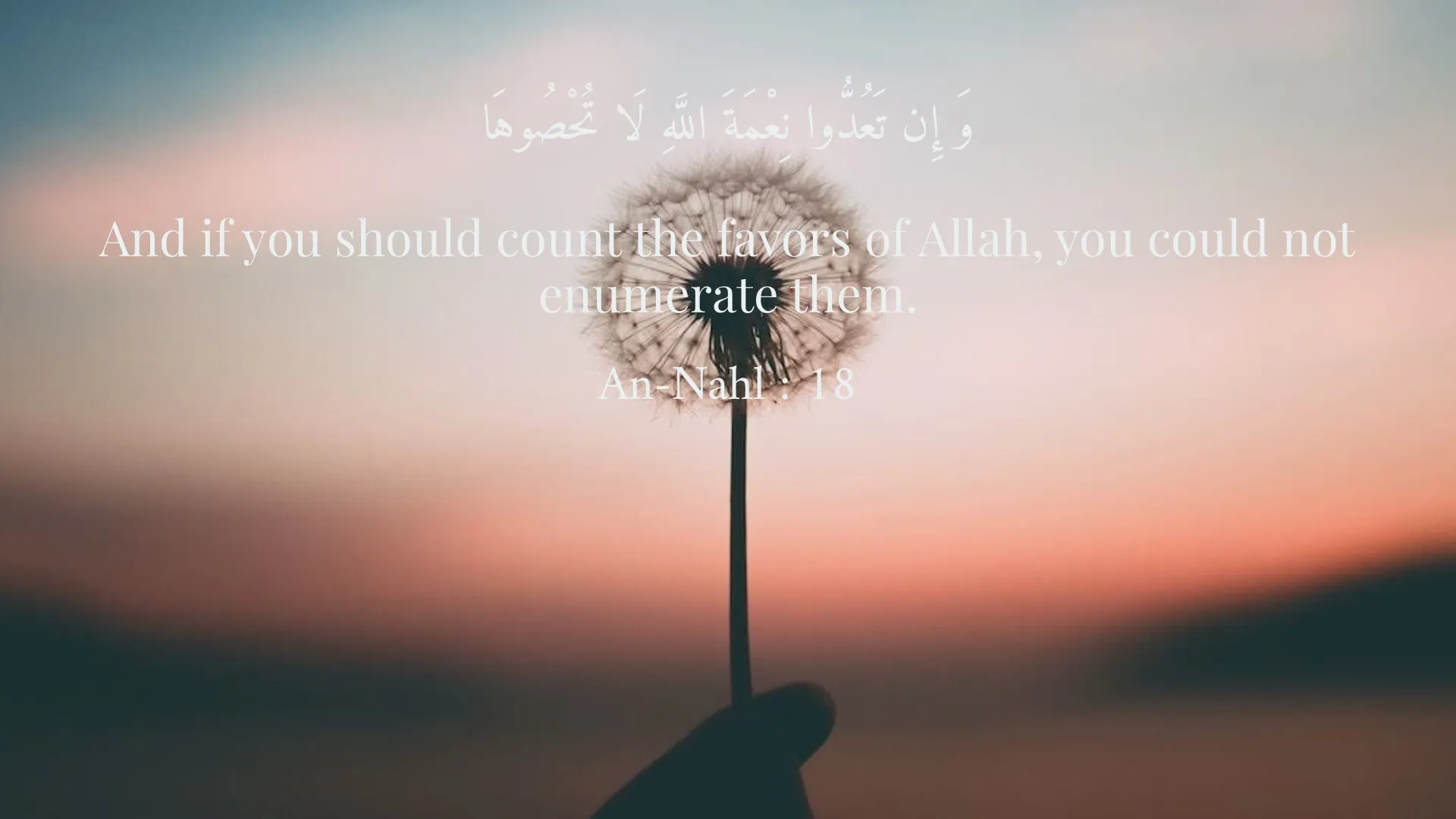
وَ إِن تَعُدُّوا نِعْمَةَ اللَّهِ لَا تُحْصُوهَا
And if you should count the favors of Allah, you could not enumerate them.
An-Nahl : 18
زُيِّنَ لِلنَّاسِ حُبُّ الشَّهَوَاتِ مِنَ النِّسَاءِ وَ الْبَنِينَ وَ الْقَنَاطِيرِ الْمُقَنطَرَةِ مِنَ الذَّهَبِ وَ الْفِضَّةِ
Beautified for people is the love of that which they desire - of women and sons, heaped-up sums of gold and silver.
Al-Imran : 14
مَثَلُ الَّذِينَ يُنفِقُونَ أَمْوَالَهُمْ فِي سَبِيلِ اللَّهِ كَمَثَلِ حَبَّةٍ أَنفَتْهَا سَبْعَ سُنبُلَاتٍ
The example of those who spend their wealth in the cause of Allah is like a seed of grain that sprouts into seven ears.
Al-Baqarah : 261
Short Story
Once upon a time, there was a young man named Hassan who became prideful in his life. He often boasted about the blessings he had, forgetting that everything was from God. One day, he went to a sage and sought help. The sage said to him, 'Why don’t you do good and share your blessings with others?' Hassan reflected on this and decided to help the needy. He realized that through helping others, he not only calmed himself but also distanced himself from arrogance.