Quranic Answer
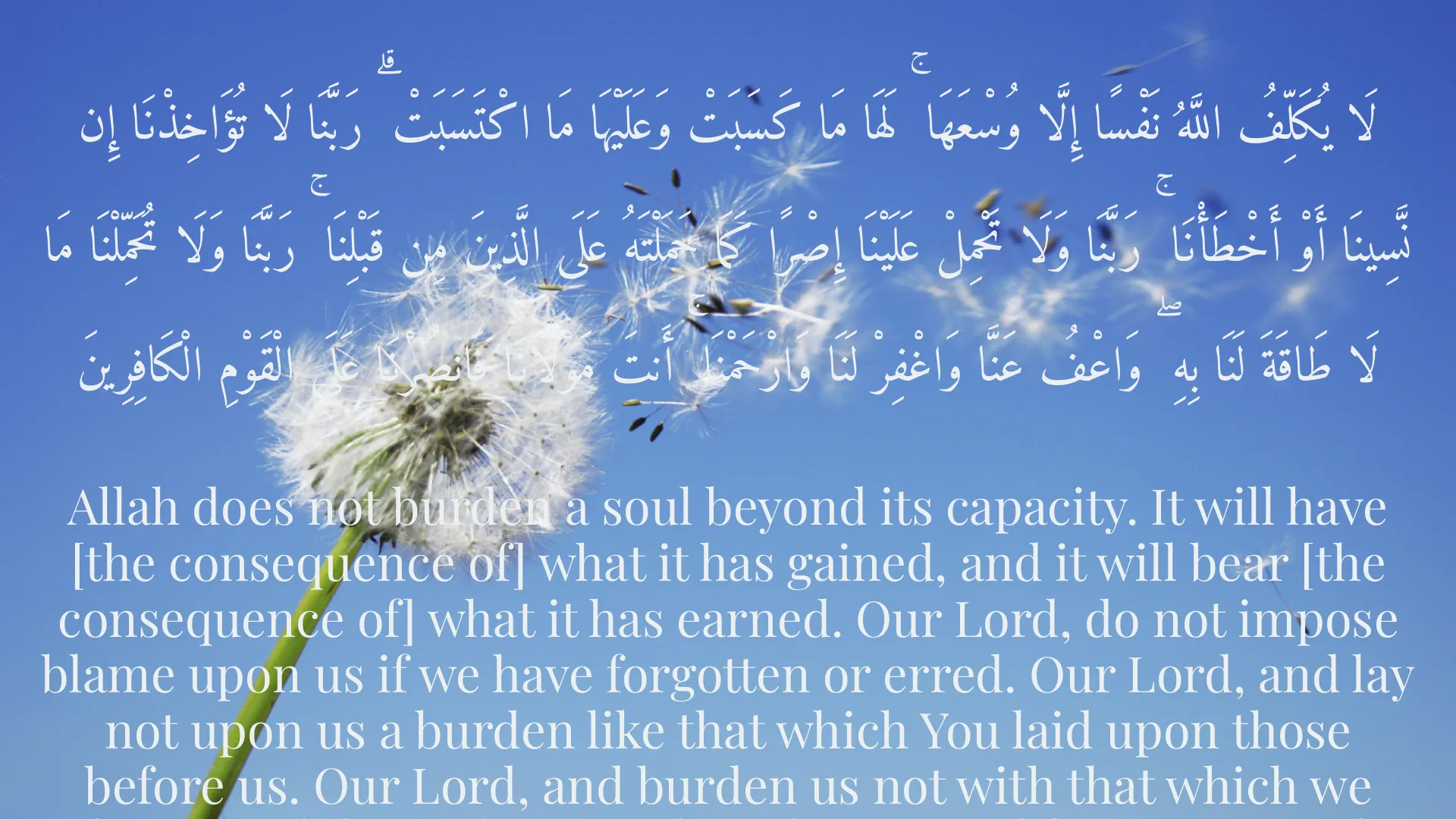
In the rich teachings of the Holy Quran, while the exact phrase "kindness to oneself" in its modern psychological sense is not directly mentioned, the spirit and essence of this concept are deeply embedded and pervasive throughout its various verses. The Quran offers us pathways that, by adopting them, we can achieve inner peace, psychological balance, and spiritual well-being, all of which are manifestations of being kind to oneself. This kindness is not a blameworthy selfishness, but rather the nurturing and development of the "nafs" (soul and self) that Allah has entrusted to us. The Quran teaches us how to treat ourselves so that we may attain success in this world and be prepared for the Hereafter. One of the most important principles emphasized by the Quran is not to burden the soul with heavy loads. In Surah Al-Baqarah, verse 286, we read: "Allah does not burden a soul beyond its capacity." This verse is a fundamental principle in Islam that directly points to the concept of kindness to oneself. It means that Allah does not expect more from us than what we are capable of. This verse reminds us to recognize our limits and capabilities and to refrain from imposing unrealistic pressures and expectations upon ourselves. Sometimes, we become our own biggest critics and harshest judges, placing burdens on ourselves that are beyond our capacity. This verse gives us solace that even Allah does not expect such from us; therefore, we should not put excessive pressure on ourselves beyond our strength. This includes psychological, physical, intellectual, and emotional pressures. Accepting our weaknesses and limitations, and striving within our means, is a form of compassion and kindness to oneself that prevents anxiety and despair. It helps us avoid burnout and maintain a healthy, sustainable pace in life, acknowledging that we are human and fallible, and that growth is a gradual process rather than an immediate perfection. Another principle is hope in Divine mercy and forgiveness, even after sin and error. In Surah Az-Zumar, verse 53, Allah says: "Say, 'O My servants who have transgressed against themselves [by sinning], do not despair of the mercy of Allah. Indeed, Allah forgives all sins. Indeed, it is He who is the Forgiving, the Merciful.'" This verse demonstrates the pinnacle of Allah's kindness towards His servants, and consequently, the kindness that a human being should have towards themselves. Excessive self-blame, drowning in guilt, and despair are detrimental to the soul. The Quran teaches us that even after missteps, the door to repentance is open, and we can start anew. This self-forgiveness is essential for being kind to oneself. Accepting that humans are fallible and that there is an opportunity for rectification and return releases one from the heavy burden of internal accusations, allowing us to continue life with hope and peace. This perspective fosters resilience and encourages individuals to learn from mistakes without being crippled by them, promoting a healthy self-image rooted in divine mercy. Furthermore, the Quran emphasizes the importance of "Dhikr Allah" (remembrance of Allah) and the tranquility of the heart through it. In Surah Ar-Ra'd, verse 28, it states: "Unquestionably, by the remembrance of Allah hearts are assured." Heartfelt tranquility is the foundation of kindness to oneself. When one's mind and heart are entangled in anxiety, worry, or negative thoughts, it becomes difficult to be kind and compassionate towards oneself. The remembrance of Allah, whether through prayer, recitation of the Quran, supplication (du'a), or contemplation of creation, is a safe haven for the soul that frees it from internal turmoil. This inner peace helps an individual to view themselves with a kinder perspective and to be released from obsessions and mental pressures. When the heart is at peace, one can better cope with oneself and life's challenges. This spiritual connection provides a steady anchor in a fluctuating world, offering solace and strength that contribute to overall well-being. Moreover, the Quran stresses "moderation" and "balance" (mizan) in all aspects of life. This includes balancing worldly and hereafter concerns, work and rest, and one's own rights and the rights of others. Extremism in any field harms the individual. For example, if a person works excessively and neglects their physical and spiritual needs, or if they are so extreme in worship that they neglect normal life, this is a form of injustice to the self. The Prophet Muhammad (peace be upon him) also emphasized the rights of the self in his hadiths: "Indeed, your Lord has a right over you, and your soul has a right over you, and your family has a right over you, so give each one its right." This hadith clearly shows that taking care of oneself and one's needs is a right that must be fulfilled, not a selfish act. This holistic approach ensures that no aspect of one's being is neglected, promoting a harmonious existence. Ultimately, kindness to oneself from a Quranic perspective means avoiding despair, being grateful for blessings, seeking refuge in patience and prayer during hardships, and striving for self-purification (tazkiyah) and spiritual growth. Caring for the body as a divine trust, consuming healthy food, getting adequate rest, and avoiding self-harm are all part of this broader kindness. A believing individual, knowing that every soul is accountable for its deeds and will one day be questioned, strives to treat themselves in the best possible way and prepare their soul for perfection and Allah's pleasure. This self-care and self-nurturing is the most fundamental form of kindness to oneself, leading to comprehensive physical, mental, and spiritual health, making the individual more steadfast and vibrant on the path of servitude to Allah.
Related Verses
لَا يُكَلِّفُ اللَّهُ نَفْسًا إِلَّا وُسْعَهَا ۚ لَهَا مَا كَسَبَتْ وَعَلَيْهَا مَا اكْتَسَبَتْ ۗ رَبَّنَا لَا تُؤَاخِذْنَا إِن نَّسِينَا أَوْ أَخْطَأْنَا ۚ رَبَّنَا وَلَا تَحْمِلْ عَلَيْنَا إِصْرًا كَمَا حَمَلْتَهُ عَلَى الَّذِينَ مِن قَبْلِنَا ۚ رَبَّنَا وَلَا تُحَمِّلْنَا مَا لَا طَاقَةَ لَنَا بِهِ ۖ وَاعْفُ عَنَّا وَاغْفِرْ لَنَا وَارْحَمْنَا ۚ أَنتَ مَوْلَانَا فَانصُرْنَا عَلَى الْقَوْمِ الْكَافِرِينَ
Allah does not burden a soul beyond its capacity. It will have [the consequence of] what it has gained, and it will bear [the consequence of] what it has earned. Our Lord, do not impose blame upon us if we have forgotten or erred. Our Lord, and lay not upon us a burden like that which You laid upon those before us. Our Lord, and burden us not with that which we have no ability to bear. And pardon us; and forgive us; and have mercy upon us. You are our protector, so give us victory over the disbelieving people.
Al-Baqarah : 286
قُلْ يَا عِبَادِيَ الَّذِينَ أَسْرَفُوا عَلَىٰ أَنفُسِهِمْ لَا تَقْنَطُوا مِن رَّحْمَةِ اللَّهِ ۚ إِنَّ اللَّهَ يَغْفِرُ الذُّنُوبَ جَمِيعًا ۚ إِنَّهُ هُوَ الْغَفُورُ الرَّحِيمُ
Say, 'O My servants who have transgressed against themselves [by sinning], do not despair of the mercy of Allah. Indeed, Allah forgives all sins. Indeed, it is He who is the Forgiving, the Merciful.'
Az-Zumar : 53
الَّذِينَ آمَنُوا وَتَطْمَئِنُّ قُلُوبُهُم بِذِكْرِ اللَّهِ ۗ أَلَا بِذِكْرِ اللَّهِ تَطْمَئِنُّ الْقُلُوبُ
Those who have believed and whose hearts are assured by the remembrance of Allah. Unquestionably, by the remembrance of Allah hearts are assured.
Ar-Ra'd : 28
Short Story
I heard that in ancient times, there was an ascetic worshipper who stood in prayer all night and fasted all day. His body had become very weak, though his spirit soared. A wise and elderly Sheikh, upon hearing of his condition, visited him and said, 'O young man, your devotion is good, but have you not heard that 'your soul has a right over you'? Your body is a trust, and your soul needs peace and balance. God does not burden a servant beyond their capacity and expects the servant not to harm themselves.' The worshipper took heed of the Sheikh's words, established balance in his life, and understood that kindness to oneself is not laziness, but a pillar for better and deeper servitude. From then on, he engaged in worship and life with greater vitality.