Quranic Answer
Cultivating devotion to God and freeing oneself from the shackles of worldly attachments is one of the deepest and most vital goals in a person's spiritual journey, a theme repeatedly addressed in various ways throughout the Holy Quran. This process is not merely about withdrawing from the world and its pleasures, but rather about shifting one's focus and re-evaluating values. It means perceiving the world as a tool to achieve the Hereafter and a means to attain divine proximity, not as an ultimate end. With a compassionate and guiding tone, the Quran teaches us how to liberate our hearts from the allure of fleeting worldly splendor and connect them to the source of existence, the Almighty God. The first step on this path is a correct understanding of the nature of this world (Dunya) and the Hereafter (Akhira). The Quran clearly states that worldly life is a fleeting and deceptive enjoyment, while the Hereafter is the eternal and enduring abode. Surah Al-Hadid, verse 20, likens worldly life to a game, diversion, adornment, boasting, and rivalry in accumulation of wealth and children, much like rain that causes vegetation to grow, only to wither and turn yellow. This verse provides a vivid image of the world's impermanence. A deep understanding that all we possess in this world is transient and that only good deeds and connection with God endure frees the heart from false attachments. When a person realizes that wealth and children are merely adornments of worldly life, and that 'Al-Baqiyat As-Salihat' (enduring good deeds and the remembrance of God) are better with their Lord in terms of reward and hope (Surah Al-Kahf, verse 46), their perspective on the world changes. They no longer view the world as their ultimate goal but rather as a bridge to eternity and divine proximity. The second fundamental pillar is the constant remembrance of God (Dhikr). The Holy Quran emphasizes that true tranquility of hearts is achieved only through the remembrance of God. In Surah Ar-Ra'd, verse 28, Allah says: "الَّذِينَ آمَنُوا وَتَطْمَئِنُّ قُلُوبُهُم بِذِكْرِ اللَّهِ ۗ أَلَا بِذِكْرِ اللَّهِ تَطْمَئِنُّ الْقُلُوبُ" (Those who have believed and whose hearts are assured by the remembrance of Allah. Unquestionably, by the remembrance of Allah hearts are assured). Dhikr is not merely the repetition of words but a state of presence of heart and continuous attention to God in all aspects of life. The more a person remembers God and perceives Him as present and observing their actions, the less they are drawn to sin and worldly attachments. The five daily prayers, recitation of the Quran, glorification (Tasbih), and any act that keeps the remembrance of God alive in the heart are examples of Dhikr. This continuous connection gradually plants the roots of divine love in the heart and purifies it from worldly impurities. The third strategy is avoiding excess in worldly pleasures and prioritizing the Hereafter over this world. The Quran warns people against excessive attachment to the world and highlights the superiority of the Hereafter. Surah Al-A'la, verses 16 and 17, explicitly state: "بَلْ تُؤْثِرُونَ الْحَيَاةَ الدُّنْيَا وَالْآخِرَةُ خَيْرٌ وَأَبْقَىٰ" (But you prefer the worldly life, while the Hereafter is better and more enduring). This preference does not mean abandoning the world, but rather having a correct perspective on it. Instead of limitless accumulation of wealth and immersion in fleeting pleasures, one should use the world only as needed and dedicate the major portion of their energy and effort to the Hereafter. Giving charity in the way of God, helping the needy, and performing good deeds not only frees the heart from attachment to wealth but also brings it closer to eternal rewards and divine proximity. The Quran condemns those who prefer the world over the Hereafter and considers the outcome of such an act to be loss and failure. The fourth aspect is contemplation of divine signs and God's power in creation. Whenever a person observes the sky, the earth, mountains, seas, and living creatures and reflects on their grandeur and order, they perceive the Creator's power and wisdom. This contemplation leads a person to a deeper knowledge of God and increases His love in their heart. When a person sees that all existence moves in precise order and that God guarantees the sustenance of all beings, their reliance on God increases, and they are freed from attachment to the superficial means of the world. This perspective opens the eye of the heart and removes the veils of heedlessness. Finally, the fifth point is associating with good people and avoiding materialistic environments. Humans are unconsciously influenced by those they associate with. Being in the company of individuals who remember God, value the Hereafter, and have spiritual concerns helps one on the path of devotion to God. The Quran encourages believers to associate with the truthful and the righteous. Conversely, associating with those who only think of the world and its pleasures can draw one's heart towards the world and make them oblivious to the remembrance of God. Ultimately, devotion to God is a gradual process that requires effort and persistence. With every prayer, every recitation of the Quran, every remembrance, every good deed, and every act of helping the needy, a person's heart comes one step closer to God and becomes purer from the impurities of the world. This path is an inner journey that begins with love and awareness and reaches its destination with reliance and certainty. The deeper this devotion becomes, the greater the individual's inner peace and contentment, and they will experience a more fulfilling life, for all their actions will take on a divine color, performed for the pleasure of the Beloved, not for the acquisition of fleeting worldly goods. This is the true meaning of liberation.
Related Verses
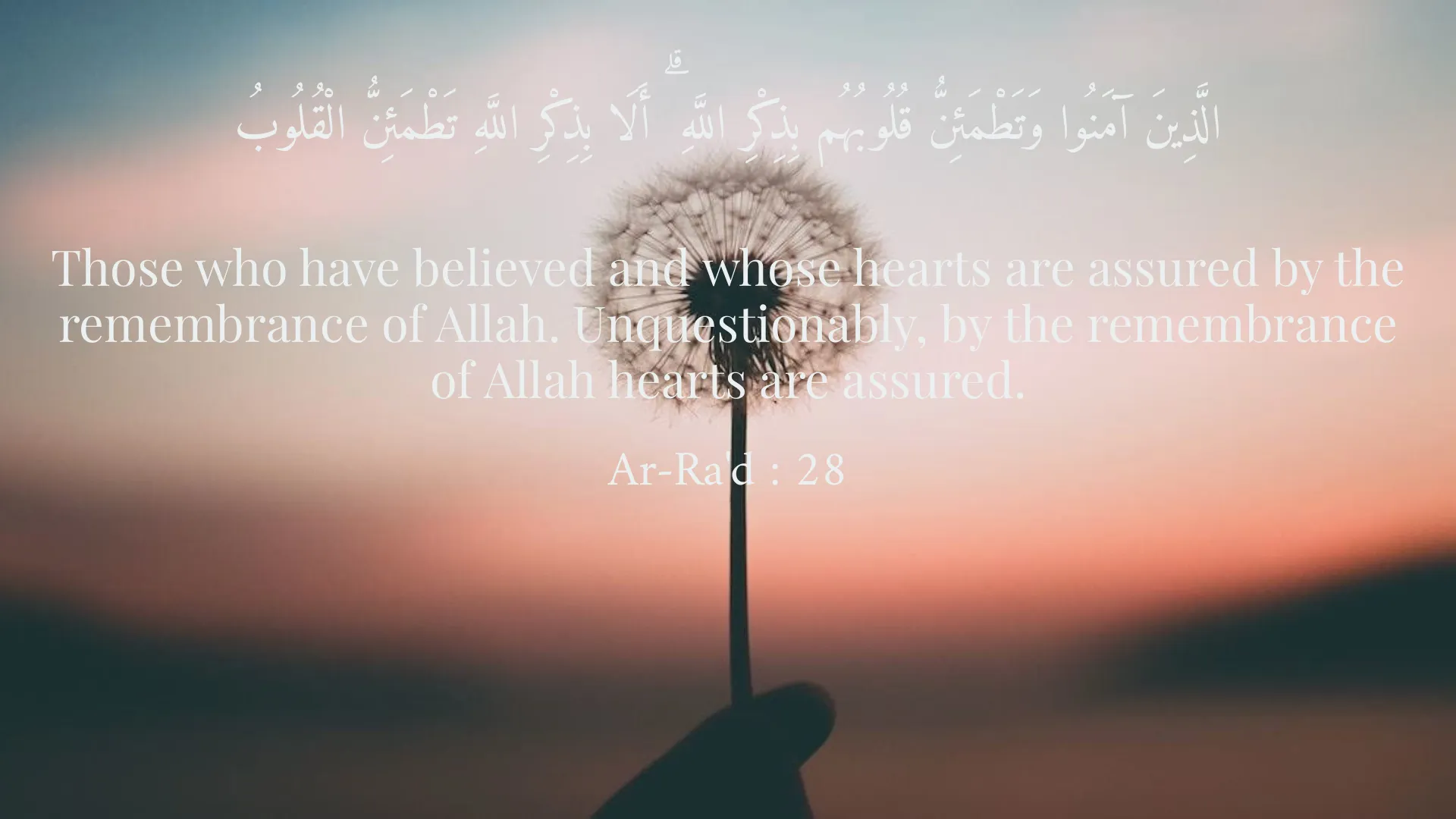
الَّذِينَ آمَنُوا وَتَطْمَئِنُّ قُلُوبُهُم بِذِكْرِ اللَّهِ ۗ أَلَا بِذِكْرِ اللَّهِ تَطْمَئِنُّ الْقُلُوبُ
Those who have believed and whose hearts are assured by the remembrance of Allah. Unquestionably, by the remembrance of Allah hearts are assured.
Ar-Ra'd : 28
الْمَالُ وَالْبَنُونَ زِينَةُ الْحَيَاةِ الدُّنْيَا ۖ وَالْبَاقِيَاتُ الصَّالِحَاتُ خَيْرٌ عِندَ رَبِّكَ ثَوَابًا وَخَيْرٌ أَمَلًا
Wealth and children are [but] adornment of the worldly life. But the enduring good deeds are better to your Lord for reward and better for [one's] hope.
Al-Kahf : 46
بَلْ تُؤْثِرُونَ الْحَيَاةَ الدُّنْيَا
But you prefer the worldly life,
Al-A'la : 16
وَالْآخِرَةُ خَيْرٌ وَأَبْقَىٰ
while the Hereafter is better and more enduring.
Al-A'la : 17
Short Story
It is narrated that a wealthy merchant named Bahram, whose vast caravans and countless treasures were famed throughout the lands, constantly lived in anxiety and distress over the fear of losing his wealth. One day, on a journey, he encountered a humble dervish named Sheikh Khosrow, who lived in a small hut, possessing nothing but a prayer mat and a few tattered books. Yet, a profound tranquility emanated from the Sheikh, and his eyes shone with an inner light. Bahram, amazed by this contrast, approached the dervish and said: 'O wise Sheikh, I possess what most men only dream of—boundless wealth. Nevertheless, my heart knows no peace, and my days are filled with worry. You, who own nothing, seem to dwell in perpetual serenity. What is the secret of your tranquility?' Sheikh Khosrow smiled gently and replied: 'My dear Bahram, you have tethered your heart to ships that sail treacherous seas and to the fleeting treasures they carry. Should a storm sink your ships, or bandits plunder your caravan, your heart will be shattered. But I, Bahram, have tethered my heart to the Compassionate Lord who commands the winds and protects all. My wealth lies in His remembrance, and my joy in His nearness. What reaches me is from Him, and what departs, departs by His will. Therefore, my heart remains ever steadfast, for its anchor is in eternity, not in transient things.' Bahram pondered the dervish's words deeply, realizing that true richness lay not in what one possessed, but in where one's heart was truly anchored.