Quranic Answer
Cleansing the Heart from Resentment and Malice: A Pillar of Islamic Ethics The concept of cleansing the heart from resentment and malice embodies a foundational principle of Islamic ethics. It is not merely a personal endeavor but an essential component of a harmonious society. At the core of this principle is the teaching of the Holy Quran, where Allah emphasizes the importance of nurturing love and friendship among individuals while discouraging grudge-holding. This ethical outlook facilitates not just personal tranquility but also fosters community cohesion, promoting a collective sense of peace and empathy. The Quran serves as a guiding light, illustrating the significance of mastering our emotions, particularly anger and bitterness. One profound affirmation of this principle is found in Surah Al-Imran, verse 134, where Allah describes the qualities of those whom He loves: "And those who spend [in charity] during ease and hardship and who restrain anger and who pardon the people - and Allah loves the doers of good." This verse highlights a triad of behaviors crucial for spiritual elevation: spending in charity, controlling one’s anger, and extending forgiveness. Firstly, the act of giving in charity is heralded as a noble attribute that reflects compassion and generosity, qualities that flourish in a heart free from negativity. It acts as a means of purifying one’s wealth and heart, redirecting focus from self-centeredness to collective well-being. It fosters a spirit of communal support and ensures that those in need are cared for, reinforcing the bonds of friendship among community members. Secondly, restraining anger emerges as a critical skill that calls for emotional discipline. Anger, when unchecked, can lead to destructive actions and sentiments that disrupt personal peace and societal harmony. Thus, the Quran advocates for the importance of controlling anger. This control is not merely about suppressing emotions but involves a conscious effort to respond to anger with calmness and perspective. By doing so, one creates an environment where conflict can be resolved peacefully, allowing for dialogue rather than division. The third principle articulated in this verse—pardon and forgiveness—is perhaps the most vital, as it directly reflects the broader message of mercy inherent in Islamic teachings. Forgiveness does not denote weakness; rather, it is a profound strength that signifies the ability to rise above petty grievances and misunderstandings. This ability to pardon another is deeply rooted in understanding human fallibility. As flawed beings, we all err at some point in our lives, and recognizing this shared humanity fosters a sense of empathy that can dissolve resentments and build lasting relationships. Moreover, the essence of forgiving others is emphasized further in Surah An-Nur, verse 22, where Allah advises believers to refrain from harboring resentment in their hearts towards others. This serves as a reminder that holding onto grudges not only harms our spiritual state but also impacts our mental well-being. Carrying resentment is akin to nurturing a toxic burden that weighs down the heart and clouds judgment, hindering personal and relational growth. The call to actively let go of such sentiments is an invitation to engage in a more purposeful existence rooted in love and understanding. In everyday life, the application of these principles requires conscious effort and reflection. When faced with harm or betrayal, it is imperative to strive for understanding. Rather than immediately reacting with anger or hostility, we should take a moment to consider the other person’s circumstances. This perspective-taking can lead to compassion rather than contempt, inviting healing rather than harm into our lives. The wisdom of the Quran encourages this proactive approach, supporting a shift from reaction to reflection, from defensiveness to openness. Additionally, engaging in prayer and remembrance of Allah’s name can serve as therapeutic practices that promote the cleansing of the heart. Prayer acts as a mechanism for individuals to seek solace and guidance, fostering a deep connection with the divine. It allows people to articulate their grievances, seek forgiveness for their shortcomings, and request purity of heart. The act of remembering Allah reinforces the awareness of His presence, which can bring profound peace and clarity to tumultuous situations. The transformative power of replacing bitterness with love and forgiveness cannot be overstated. This endeavor not only elevates one’s own soul but significantly contributes to the fostering of a society characterized by empathy and reciprocal respect. When individuals commit to cleansing their hearts, they set in motion a ripple effect of kindness that can permeate communities. In conclusion, the path towards cleansing the heart from resentment and malice is essential not only for spiritual growth but for the cultivation of a healthy and harmonious society. Through the teachings of the Quran, Allah guides believers towards internal peace via the practice of charity, emotional restraint, and the power of forgiveness. By adopting these principles, one can significantly improve not only their spiritual health but also contribute positively to the well-being of those around them. As we navigate the complexities of human relationships, let us remember that nurturing our hearts to be free from negativity and filled with love represents a vital principle in living a fulfilling Islamic life.
Related Verses
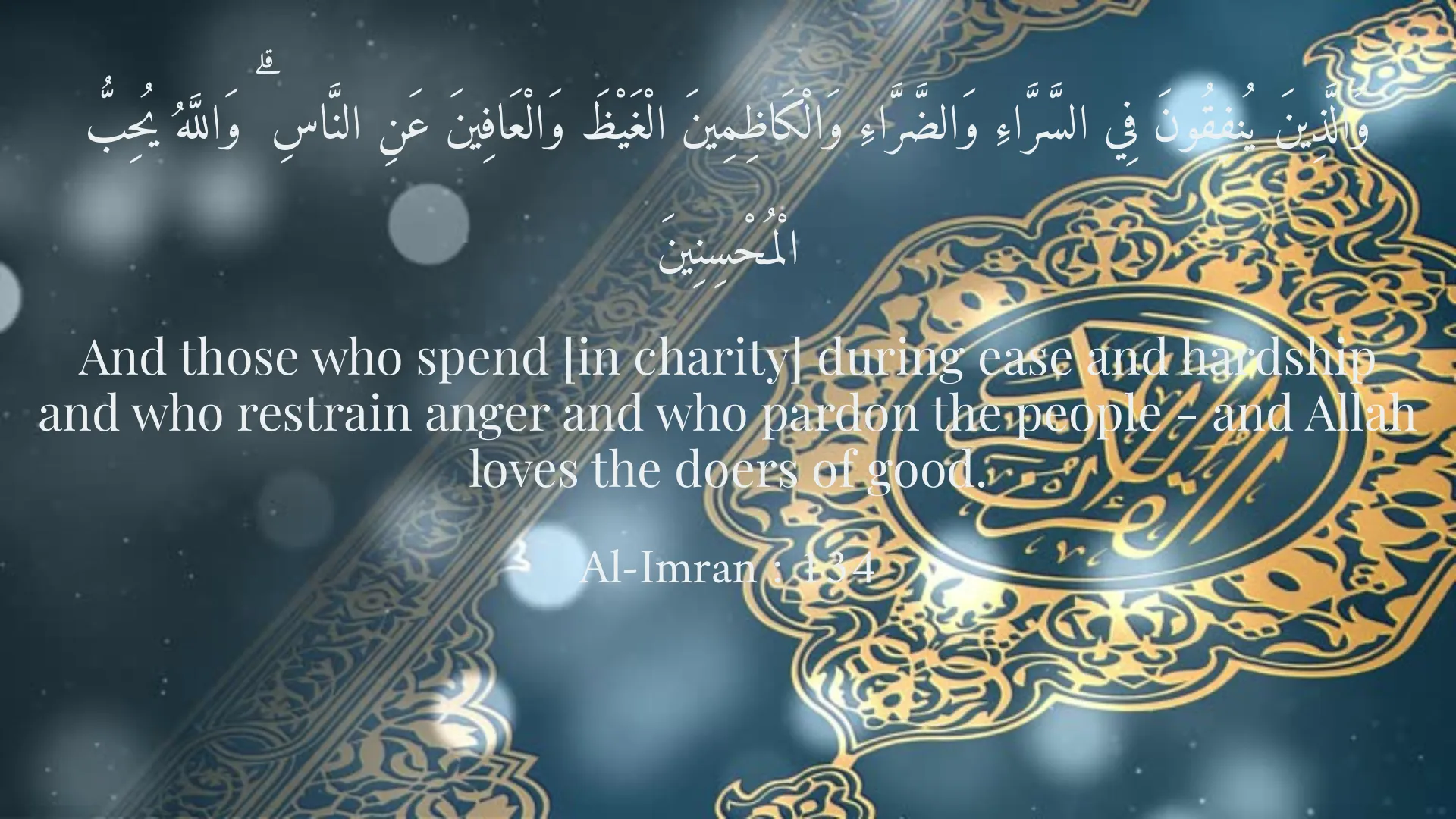
وَالَّذِينَ يُنفِقُونَ فِي السَّرَّاءِ وَالضَّرَّاءِ وَالْكَاظِمِينَ الْغَيْظَ وَالْعَافِينَ عَنِ النَّاسِ ۗ وَاللَّهُ يُحِبُّ الْمُحْسِنِينَ
And those who spend [in charity] during ease and hardship and who restrain anger and who pardon the people - and Allah loves the doers of good.
Al-Imran : 134
لَوْلَا أَنْ فَضْلُ اللَّهِ عَلَيْكُمْ وَرَحْمَتُهُ وَأَنَّ اللَّهَ تَوَّابٌ حَكِيمٌ
If it had not been for the favor of Allah upon you and His mercy, and that Allah is Forgiving and Wise.
An-Nur : 22
Short Story
Once, a candle in the alley of love shed light. Anyone who approached it with a resentful heart found its light dimmed. One day, the poorest man in the city visited the candle. The candle kindly said to him, "Empty your heart from grudges, and let my light shine in your heart!" The man cleared his heart from bitterness and embraced the candle. Thus, he set forth again towards love and kindness.