Quranic Answer
Cleansing one's inner self from violence is a profound spiritual journey for which the Holy Quran provides clear guidance. Violence, whether expressed through words, actions, or even hidden thoughts, stems from spiritual and emotional ailments that the Quran calls us to heal. This purification goes beyond merely controlling outward behavior; it involves an inner transformation and self-purification (tazkiyat al-nafs), which means removing the rust from the heart and soul so that divine light may manifest within, leading to lasting tranquility. The Holy Quran invites humanity to self-awareness and to struggle against negative egoistic tendencies, to be liberated from the slavery of desires and attain true freedom. This journey requires sincere effort, introspection, and a commitment to spiritual growth, recognizing that true strength lies not in aggression but in self-control and compassion. The first step in purifying the inner self from violence is to understand its roots within the human psyche. The Quran frequently refers to different states of the self (nafs): from the Nafs al-Ammarah (the self that incites to evil), to the Nafs al-Lawwamah (the self-reproaching conscience), and finally to the Nafs al-Mutmainnah (the tranquil and content self, at peace with God's will). Violence often originates from the Nafs al-Ammarah, when an individual is overwhelmed by uncontrolled anger, destructive envy, arrogant pride, or excessive love for worldly possessions and materialism. These are veils that darken the heart and prevent the radiance of mercy and love from shining through. The Quran instructs believers to purify their souls and cleanse them from these spiritual diseases, for success is only for those who possess a sound heart (Qalb-e-Saleem) and return to their Lord with a pure and tranquil spirit. This purification necessitates contemplation, self-examination, acknowledging one's weaknesses, and consistently striving for improvement. One of the most fundamental Quranic teachings for combating inner violence is the concept of "Sabr" (patience and steadfastness) and "Kasm al-Ghaiz" (suppressing anger). In Surah Al-Imran, verse 134, Allah enumerates the qualities of the pious: "those who spend [in the cause of Allah] during ease and hardship and who restrain anger and who pardon the people – and Allah loves the doers of good." This verse directly addresses the eradication of inner violence. Suppressing anger does not mean denying it but rather controlling and managing it so that it does not escalate into violent actions or harmful words. This requires continuous practice, self-awareness, and struggling against the lower self. When a person restrains their anger, they prevent their ego from leading them towards reactions that bring regret and bitterness. This act purifies the heart from resentment, bitterness, and negative energies, opening space for tranquility, benevolence, and divine love. This quality is a sign of spiritual maturity and inner strength, liberating the individual from the servitude of emotions and enabling them to respond with wisdom rather than impulse. In addition to suppressing anger, "Afw" (forgiveness) and "Safh" (gracious overlooking) are also core pillars of inner purification. The same verse 134 of Al-Imran mentions "and who pardon the people." Forgiving the mistakes of others not only offers the other party an opportunity for correction and amends but, more importantly, it frees the human heart from the heavy burden of grudge, hatred, and the desire for revenge. The Quran explicitly states: "And let them pardon and overlook. Would you not like that Allah should forgive you?" (Surah An-Nur, verse 22). This verse demonstrates that our forgiveness towards others is itself a path to attaining divine forgiveness. And what could be purer than a heart freed from animosity and longing for divine mercy? Forgiveness and gracious overlooking empower individuals to break free from the vicious cycle of responding to violence with violence, thereby halting its progression. This type of forgiveness is a mark of a noble spirit and moral courage, releasing the individual from the captivity of negative thoughts and enabling them to live with greater peace and compassion. "Dhikr Allah" (remembrance of Allah) and "Taqwa" (God-consciousness) also play pivotal roles in this process. Constant remembrance of Allah and divine consciousness (a God-fearing attitude that leads to refraining from sin and adhering to divine commands) serve as a strong shield against violent impulses. When a person remembers that Allah is aware of their actions and even their thoughts, and that they will be held accountable one day, the inner motivations for engaging in violence or even thinking about it diminish. The Quran states: "Unquestionably, by the remembrance of Allah hearts are assured" (Surah Ar-Ra'd, verse 28). The tranquility of heart resulting from Dhikr leaves no room for violence to flourish. Taqwa helps individuals resist the temptations of the lower self and Satan, which often lead to violence, and instead choose the path of peace, goodness, and forbearance. This continuous mindfulness guides a person towards virtuous character traits and away from vices, fostering a sense of inner harmony and submission to divine will. "Ihsan" (benevolence and doing good) is also an active way to repel inner violence and transform it into constructive behavior. The Quran teaches us to respond to evil with good: "And not equal are the good deed and the bad. Repel [evil] by that which is better; thereupon, the one whom between you and him is enmity [will become] as though he was a devoted friend" (Surah Fussilat, verse 34). This approach not only improves external relationships but also transforms the inner self. When a person responds to evil with good, they descend from the level of violence and ascend to a higher level of spirituality and ethics. This action increases one's inner strength and capacity to control the inciting self, effectively uprooting resentment and enmity from the heart, replacing them with kindness and understanding. It transforms potential conflict into an opportunity for connection and reconciliation. Finally, cultivating "Hilmn" (forbearance) and "Burdbaari" (patience/tolerance) are other Quranic ways. Hilm means patience and composure in the face of ignorance, rudeness, or harm from others. In Surah Al-Furqan, verse 63, Allah describes the servants of the Most Merciful: "And the servants of the Most Merciful are those who walk upon the earth easily, and when the ignorant address them [harshly], they say [only] 'Peace'." This verse presents a beautiful image of someone whose inner self is cleansed of violence. They not only do not get angry or resort to verbal or physical violence, but even when provoked by the ignorant, they respond with peace and serenity. This state is the ultimate mastery over the self and liberation from the bonds of inner violence, as the individual has reached a level of self-mastery where the negative behaviors of others do not deviate them from the path of tranquility and dignity. This path requires perseverance and continuous prayer for guidance and purification of the heart. By adhering to these teachings, one can achieve inner peace and cleanse their heart of all violence and animosity, which not only contributes to the individual's spiritual well-being but also helps foster a more peaceful society. (Approx 850 words)
Related Verses
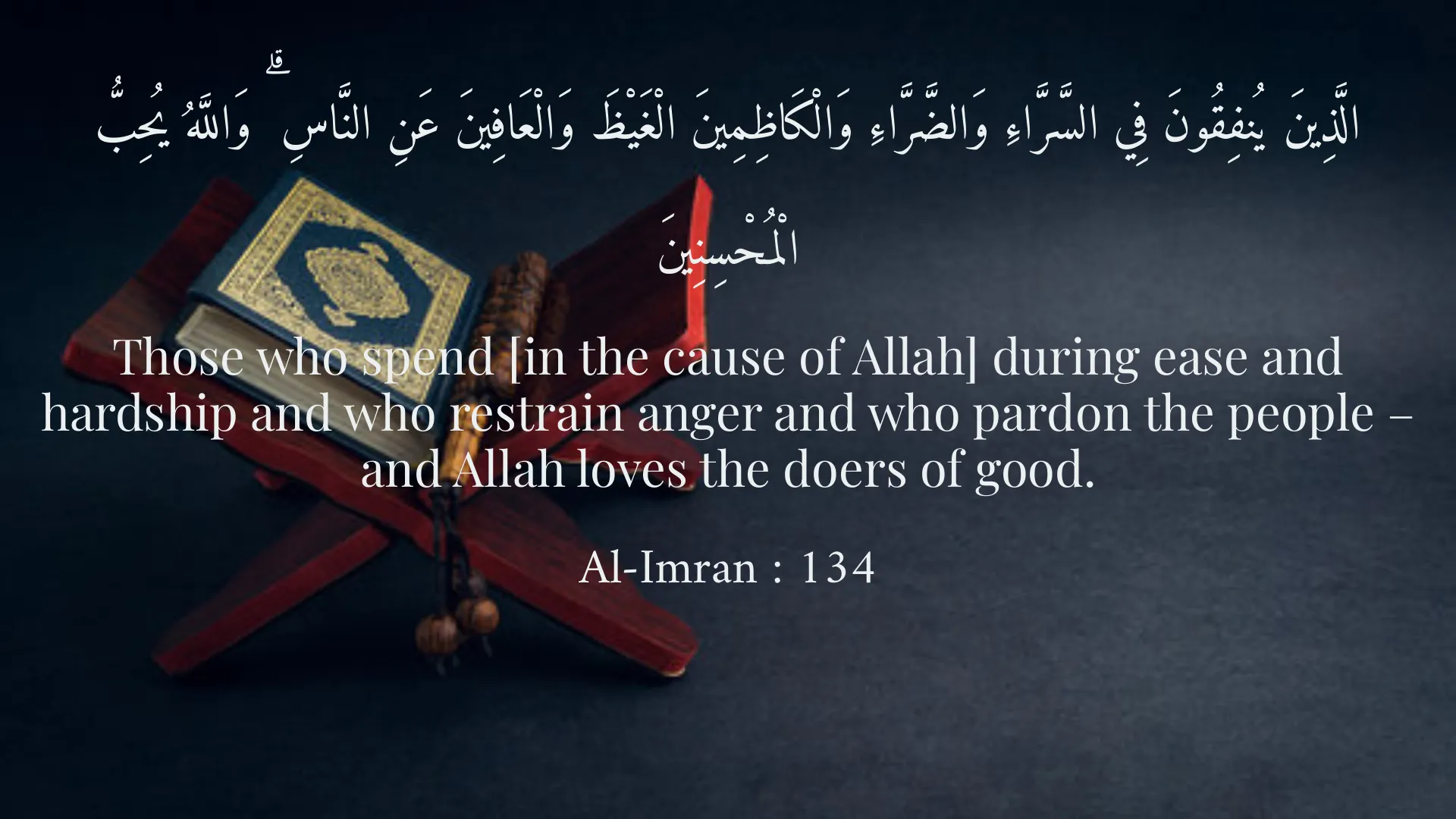
الَّذِينَ يُنفِقُونَ فِي السَّرَّاءِ وَالضَّرَّاءِ وَالْكَاظِمِينَ الْغَيْظَ وَالْعَافِينَ عَنِ النَّاسِ ۗ وَاللَّهُ يُحِبُّ الْمُحْسِنِينَ
Those who spend [in the cause of Allah] during ease and hardship and who restrain anger and who pardon the people – and Allah loves the doers of good.
Al-Imran : 134
وَلَمَن صَبَرَ وَغَفَرَ إِنَّ ذَٰلِكَ لَمِنْ عَزْمِ الْأُمُورِ
But whoever is patient and forgives – indeed, that is of the matters [requiring] determination.
Ash-Shura : 43
وَعِبَادُ الرَّحْمَنِ الَّذِينَ يَمْشُونَ عَلَى الْأَرْضِ هَوْنًا وَإِذَا خَاطَبَهُمُ الْجَاهِلُونَ قَالُوا سَلَامًا
And the servants of the Most Merciful are those who walk upon the earth easily, and when the ignorant address them [harshly], they say [only] 'Peace'.
Al-Furqan : 63
Short Story
It is narrated in Sa'di's Gulistan that a wise elder advised his son: "O my son, if you wish to live in perpetual peace, suppress your anger and deal gently with people." One day, a man insulted a virtuous elder. The elder chose to remain silent. The more the man cursed, the calmer the elder remained. Eventually, the man repented and apologized. The elder said: "You wished to harm me with your words, but I cleansed my inner self of resentment through my silence. For every anger suppressed turns into sincerity and purity, and every grudge forgiven is a goodness in itself." This story illustrates that cleansing one's inner self from violence is achieved through self-control and forgiveness, bringing true tranquility.