Quranic Answer
### The Spiritual Perspective on Wealth in Islam In the Holy Quran, wealth and riches are considered blessings from Allah, granted to humanity as a test of character and piety. Wealth can be a means to achieve comfort and security in life, but it also possesses the potential to mislead individuals if they become overly attached to it. This duality in the nature of wealth presents an intricate challenge that Muslims must navigate throughout their lives. The Quran frequently emphasizes the transient nature of worldly possessions and encourages believers to seek a balanced approach to wealth, where gratitude, responsibility, and detachment coalesce. #### Wealth as a Blessing and a Test One of the profound statements regarding wealth is found in Surah Aal-E-Imran, verse 14, where Allah states, "Beautified for people is the love of that which they desire - of women and children, heaped-up sums of gold and silver..." This verse serves as an important reminder about the allure of materialism that is hardwired into human nature. The Quran acknowledges the innate desire for wealth, as well as the focus on worldly pleasures, yet it compels individuals to understand that these desires are tests of their faith. As believers, it is essential to recognize that wealth is not inherently good or bad; rather, it is one's attitude and actions regarding wealth that determine its impact. In Islam, the accumulation of wealth is only virtuous when it is achieved through lawful means, utilized for the benefit of oneself and society, and approached with the understanding that it is a temporary blessing in this life. #### The Transient Nature of Life In Surah Al-Hashr, verse 18, Allah warns believers by stating: "O you who have believed, fear Allah. And let every soul look to what it has put forth for tomorrow." This verse compels individuals to reflect seriously on their actions and the legacy they leave behind. The concept of looking forward to what one has prepared for the afterlife juxtaposes the ephemeral nature of earthly wealth against the eternal nature of spiritual fulfillment. This remembrance of the impermanence of life emphasizes the need for Muslims to prioritize spiritual growth over material gain. When individuals acknowledge that their time in this world is limited, they begin to perceive wealth in a different light. It is not a means to excess but rather a tool to create a better life for themselves and others, enhancing their community and spirituality. #### The Role of Prayer and Worship To detach oneself from worldly wealth, the Quran stresses the importance of prayer and worship. In Surah Al-Anfal, verse 28, it mentions that "your wealth and children are indeed tests for you." This realization urges the faithful to remember that their true provider is Allah and that everything they possess is ultimately a trust from Him. By consistently engaging in prayer, believers establish a direct connection with Allah, which helps to reorient their priorities towards the spiritual instead of the material. Engaging in regular worship provides solace and a sense of community among believers, thus enabling them to support one another in their endeavors to rise above worldly attachments. Regular acts of worship also serve as a reminder to be thankful for all the blessings one has received, establishing an attitude of gratitude rather than greed. #### Reducing Attachment to Material Possessions Moreover, it is essential for individuals to actively work on reducing their attachment to material possessions. This can be achieved through simple practices such as decluttering one’s surroundings. When one consciously decides to let go of unnecessary possessions, they free themselves from the burden of materialism and create space for spiritual growth. Focusing on spiritual development should be prioritized above the accumulation of wealth. This perspective can encourage individuals to seek knowledge, engage in self-reflection, and volunteer their time and resources towards charitable causes, which serve to uplift those in need and further enrich one’s spiritual journey. #### Acts of Charity and Service Acts of charity and service to others play a pivotal role in diminishing attachment to worldly wealth. In Islam, charity (or Zakat) is not merely a recommended act but an obligatory one for those who are financially capable. Surah Al-Baqarah, verse 177, discusses the importance of giving to those in need, emphasizing that true righteousness comes not merely from outward practices like prayer and fasting, but also from caring for others and helping them in times of need. Through charitable acts, believers can break the chains of greed and excessive attachment to their wealth. As they offer their time, resources, and kindness to others, they cultivate a sense of empathy, compassion, and gratitude for the bounty they possess. This shift in mindset allows them to realize that true contentment lies not in the accumulation of wealth but in the richness of human relationships and acts of kindness. #### Conclusion: Striking a Balance In conclusion, the Holy Quran presents a nuanced understanding of wealth, framing it as both a blessing and a test. The believer's relationship with wealth must be approached with a spirit of responsibility, gratitude, and awareness of its transient nature. By prioritizing prayer and worship, reflecting on one's actions, reducing attachment to material possessions, and engaging in acts of charity, Muslims can cultivate a deeper connection to spiritual truths. Ultimately, understanding wealth in the context of one's faith is imperative. It empowers individuals to rise above the temptations of materialism and focus on their spiritual journeys, ensuring that they remain steadfast and grateful for the blessings they receive, while continuously striving to contribute positively towards the community and the world at large. In this way, wealth transforms from a source of potential distraction into a powerful instrument for good.
Related Verses
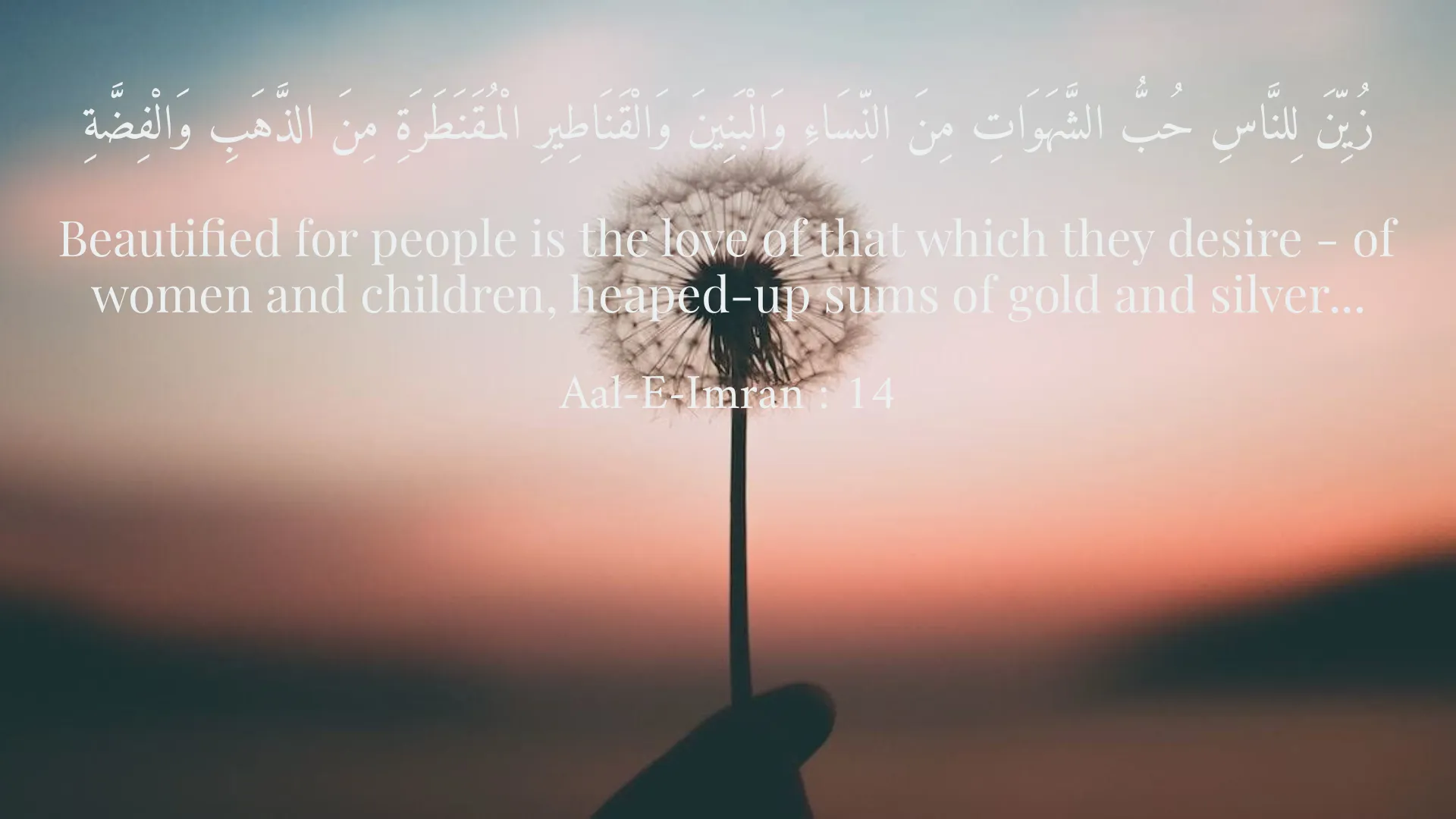
زُيِّنَ لِلنَّاسِ حُبُّ الشَّهَوَاتِ مِنَ النِّسَاءِ وَالْبَنِينَ وَالْقَنَاطِيرِ الْمُقَنَطَرَةِ مِنَ الذَّهَبِ وَالْفِضَّةِ
Beautified for people is the love of that which they desire - of women and children, heaped-up sums of gold and silver...
Aal-E-Imran : 14
يَا أَيُّهَا الَّذِينَ آمَنُوا اتَّقُوا اللَّهَ وَلْتَنظُرْ نَفْسٌ مَّا قَدَّمَتْ لِغَدٍ
O you who have believed, fear Allah. And let every soul look to what it has put forth for tomorrow.
Al-Hashr : 18
وَاعْلَمُوا أَنَّمَا أَمْوَالُكُمْ وَأَوْلَادُكُمْ فِتْنَةٌ
And know that your properties and your children are but a trial.
Al-Anfal : 28
Short Story
One day, a man named Ahmad saw the goods and gold he had purchased in the market and realized that these items were merely worldly adornments and that he sought greater peace. He decided to donate a portion of his wealth for the sake of Allah. After a while, Ahmad felt no longer attached to worldly possessions and noticed a deeper sense of peace within his soul.