Quranic Answer
To cultivate a simpler outlook on life, the Holy Quran offers profound and practical guidance that can bring peace to the heart and mind, freeing individuals from unnecessary complexities and anxieties. This Quranic approach is built upon the strong foundations of faith, reliance on God, contentment, gratitude, and a focus on eternity. In essence, simplicity from an Islamic perspective does not mean renouncing the world, but rather understanding its true nature and placing it in its proper context as a temporary passage towards the Hereafter. True simplicity is internal; it is the tranquility and lightness that arise from deep-seated beliefs and adherence to divine teachings, not merely from reducing material possessions or isolation. The Quran invites us to balance and shows us how to live in the world while being free from its attachments and finding peace. One of the fundamental principles for achieving a simpler outlook is complete reliance on Allah (Tawakkul). When a person truly believes in their heart that Allah Almighty alone is the Provider, the Protector, and the Orchestrator of all affairs, heavy burdens are lifted from their shoulders. Worries about the future, fear of not achieving aspirations, and anxiety stemming from perceived shortcomings all originate from a lack of sufficient reliance. The Quran repeatedly addresses this concept. For instance, in Surah At-Talaq, verse 3, it states: "And whoever relies upon Allah - then He is sufficient for him." This verse clearly indicates that if a person entrusts their affairs to God, Allah will be enough for them. This reliance does not imply inaction or abandoning effort; rather, it means striving and planning with a confident heart in divine decree. When we know that everything is in His hands and that He knows what is best for us, there is no need to overcomplicate life or drown in regrets and greed. Life, with reliance on Allah, becomes simpler and more pleasant, as anxiety about outcomes gives way to peace and satisfaction. This perspective empowers individuals to cope with challenges, knowing that a superior and merciful force supports them, and whatever happens is ultimately for their good. Another crucial principle is understanding the transient nature of this world and focusing on the Hereafter (Akhirah). Many of our mental distresses and pressures arise because we perceive this world as the ultimate goal, relentlessly chasing its pleasures and successes. However, the Quran repeatedly reminds us that the life of this world is nothing but a fleeting enjoyment and a mere plaything. In Surah Al-Ankabut, verse 64, we read: "And this worldly life is not but amusement and diversion; and indeed, the home of the Hereafter - that is the [true] life, if only they knew." This verse shifts one's perspective from the materialistic and transient concerns of this world towards the eternal life of the Hereafter. When a person becomes certain that a real and lasting life awaits them in the Hereafter, worldly matters appear smaller in their eyes, and they no longer feel the need for pointless competitions or excessive accumulation of wealth and status. This outlook brings an extraordinary sense of tranquility, freeing individuals from covetousness and greed. The simplicity of life begins here, when one's goal is not this world, but the pleasure of God and the Hereafter. This insight helps us redefine our priorities and dedicate our time and energy to matters of eternal value, rather than things that cease with the end of this world. Consequently, focusing on the Hereafter automatically leads to a reduction in mental and material complexities in this world. Contentment (Qana'ah) and Gratitude (Shukr) are two essential wings for soaring towards a simpler and more satisfying life. Contentment means being satisfied with what one possesses and refraining from excessive desires and greed. This concept is not in contradiction with laziness or a lack of effort for progress, but rather with avarice and perpetual dissatisfaction. When a person is content, they do not constantly compare themselves to others and genuinely enjoy what they have. This inner satisfaction is the most important factor for liberation from social pressures and the urge for endless competitions. Gratitude, on the other hand, means recognizing and appreciating Allah's blessings, even if they seem small. In Surah Ibrahim, verse 7, Allah says: "If you are grateful, I will surely increase you [in favor]; but if you deny, indeed, My punishment is severe." This verse indicates that gratitude not only leads to an increase in blessings but also transforms one's outlook on life. When a person is grateful, their heart is filled with satisfaction, and they no longer feel the need for luxuries or excessive adornments. Simplicity in life finds its meaning through being grateful for what we have and content with what Allah has destined for us. These two qualities help us accept life with all its ups and downs and enjoy every moment of it. Finally, moderation and avoidance of extravagance (Israf) are vital. The Quran consistently calls humanity to moderation in all affairs, warning against excess and negligence. In Surah Al-A'raf, verse 31, it states: "And eat and drink and do not be extravagant; indeed, He does not like those who commit extravagance." This verse applies not only to eating and drinking but to all aspects of life. Extravagance is not just in spending money and material resources; it can also be in wasting time, energy, and even thoughts, which can complicate life. Over-planning, excessive perfectionism, and accumulating unnecessary information can all detract from the simplicity of life. When a person refrains from excess in everything, their life becomes more organized, calmer, and significantly simpler. Avoiding materialism, consumerism, and unhealthy material competitions helps individuals focus on what truly matters: their relationship with God, family, health, and helping others, thereby enjoying a quality and simple life. This moderation in all dimensions of life, from social interactions to financial management and even thinking, can help us experience today's complex life in a simpler and more peaceful manner. In summary, simplicity from the Quranic perspective is an internal state that originates from deep faith and adherence to divine teachings, leading to lasting peace and satisfaction in this world and the Hereafter.
Related Verses
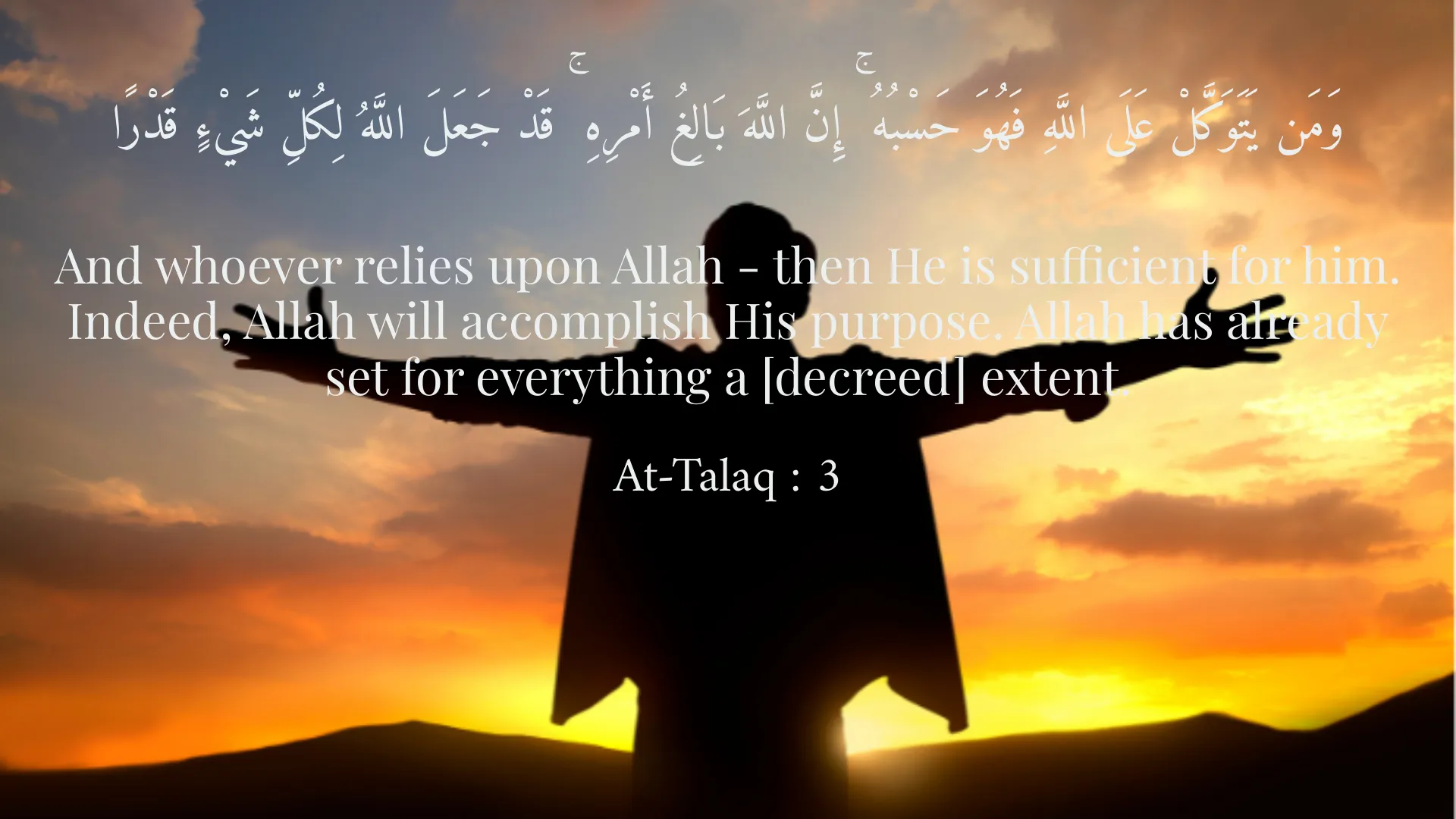
وَمَن يَتَوَكَّلْ عَلَى اللَّهِ فَهُوَ حَسْبُهُ ۚ إِنَّ اللَّهَ بَالِغُ أَمْرِهِ ۚ قَدْ جَعَلَ اللَّهُ لِكُلِّ شَيْءٍ قَدْرًا
And whoever relies upon Allah - then He is sufficient for him. Indeed, Allah will accomplish His purpose. Allah has already set for everything a [decreed] extent.
At-Talaq : 3
وَمَا هَٰذِهِ الْحَيَاةُ الدُّنْيَا إِلَّا لَهْوٌ وَلَعِبٌ ۚ وَإِنَّ الدَّارَ الْآخِرَةَ لَهِيَ الْحَيَوَانُ ۚ لَوْ كَانُوا يَعْلَمُونَ
And this worldly life is not but amusement and diversion; and indeed, the home of the Hereafter - that is the [true] life, if only they knew.
Al-Ankabut : 64
يَا بَنِي آدَمَ خُذُوا زِينَتَكُمْ عِندَ كُلِّ مَسْجِدٍ وَكُلُوا وَاشْرَبُوا وَلَا تُسْرِفُوا ۚ إِنَّهُ لَا يُحِبُّ الْمُسْرِفِينَ
O children of Adam, take your adornment at every masjid, and eat and drink and do not be extravagant; indeed, He does not like those who commit extravagance.
Al-A'raf : 31
وَإِذْ تَأَذَّنَ رَبُّكُمْ لَئِن شَكَرْتُمْ لَأَزِيدَنَّكُمْ ۖ وَلَئِن كَفَرْتُمْ إِنَّ عَذَابِي لَشَدِيدٌ
And [remember] when your Lord proclaimed, "If you are grateful, I will surely increase you [in favor]; but if you deny, indeed, My punishment is severe."
Ibrahim : 7
Short Story
It is narrated that in ancient times, two neighbors lived side by side: one was a wealthy merchant, and the other a contented dervish. The merchant constantly thought about increasing his wealth and possessions, which made him sleepless at night and tirelessly busy during the day. Despite his vast riches, he was always anxious about losing his assets and envious of what he didn't possess. The dervish, however, owned nothing but the clothes on his back and a bowl for water, yet he was always grateful and joyful. One night, the merchant dreamt that the dervish, with a serene smile, walked in a garden full of blessings, while he himself wandered with a grim face and empty hands in a dry, barren desert. He awoke bewildered and looked at the dervish. The next day, he approached the dervish and asked, "O man of God, what is your secret that despite all these deficiencies, you are so tranquil and happy?" The dervish replied, "Because my heart is not attached to anything that I fear losing, nor do my eyes covet what others have. I am content and grateful for what God has provided me. I have freed myself from the servitude of the world and consider myself a true servant of God. My life's provisions are simple, and the burdens of the world do not weigh heavily on my shoulders. This simplicity and freedom have granted me true peace and joy." The merchant took heed of the dervish's words and strived to change his outlook on life, to shun greed and avarice, so that he might taste the sweet flavor of peace and simplicity. This beautiful tale from Saadi's Bustan reminds us that simplicity lies not in having little, but in desiring little and possessing heartfelt contentment.