Quranic Answer
Finding God's satisfaction in all our actions and moments of life is a noble and attainable goal for every believer who steps onto the path of servitude with a pure heart and sincere intention. The Holy Quran illuminates the path to achieving this divine pleasure. This satisfaction is not merely attained by performing outward religious duties; rather, it requires a comprehensive approach that includes sincere intention, righteous deeds, piety (taqwa), patience (sabr), gratitude (shukr), and steadfastness in the path of truth. The foundation of any action that brings divine satisfaction is sincere intention. Almighty Allah states in the Quran that the purpose of creating jinn and humans is solely for their pure worship of Him. In Surah Al-Bayyinah, verse 5, He says: “And they were not commanded except to worship Allah, [being] sincere to Him in religion, inclining to truth, and to establish prayer and to give zakat. And that is the correct religion.” This verse explicitly shows that the main criterion for the acceptance of deeds is sincerity (ikhlas); meaning, every action must be performed solely to gain divine pleasure, not to seek people's attention or worldly gains. Sincerity breathes life into an action, transforming it from a mere physical movement into a profound act of worship. Without sincerity, even the greatest deeds lose their spiritual value, because Allah does not need our actions; rather, He looks at our hearts and intentions. If a person performs every task with the aim that 'Allah sees me and will be pleased with me,' then their entire life transforms into a grand act of worship. This sincere intention must flow through all aspects of life, from personal worship to social interactions, economic activities, and even professional endeavors. Following sincere intention, the element of righteous deeds (amal saleh) comes into play. Righteous deeds are a broad concept that does not only include prayer, fasting, and Hajj, but encompasses every good act performed according to divine teachings and with the aim of reforming the individual and society. In Surah Al-Kahf, verse 110, it is stated: “Say, 'I am only a man like you, to whom has been revealed that your god is one God. So whoever would hope for the meeting with his Lord - let him do righteous work and not associate anyone with the worship of his Lord.'” This verse clearly articulates the connection between hoping for the meeting with one's Lord (which implies His satisfaction) and performing righteous deeds. Righteous deeds include observing the rights of parents and relatives, helping the needy, truthfulness, trustworthiness, justice, avoiding oppression and corruption, and every type of service to God's creation. Allah emphasizes kindness to parents in several verses, such as Surah Al-Isra, verse 23: “And your Lord has decreed that you not worship except Him, and to parents, good treatment.” This demonstrates that even our family and social interactions, if conducted with the right intention and according to divine teachings, can lead to God's satisfaction. Therefore, every step taken to establish peace, justice, kindness, and alleviate human suffering, if done with sincere intention, is on the path to gaining divine pleasure. The important point is that righteous deeds must always be accompanied by monotheism and avoidance of polytheism; meaning, one should not associate any partners with God in worship or perform deeds with intentions other than for God. Divine piety (taqwa) is another essential pillar for achieving God's satisfaction. Taqwa means self-restraint and abstaining from sins and divine prohibitions, and fulfilling obligations. One who practices taqwa is always careful not to overstep divine boundaries in their words and actions. In Surah Al-Imran, verses 133 and 134, we read: “And hasten to forgiveness from your Lord and a Garden whose width is the heavens and the earth, prepared for the righteous * who spend [in the cause of Allah] during ease and hardship and who restrain anger and who pardon the people - and Allah loves the doers of good.” These verses enumerate the qualities of the righteous, which include spending in ease and hardship, suppressing anger, and forgiving people. These qualities demonstrate the practical dimensions of taqwa that lead to divine love and satisfaction. A pious person is one who not only avoids major sins but also abstains from doubts and actions that might lead to sin, because they always sense God's presence and supervision and wish to gain His satisfaction. This sense of divine presence causes a person to act in private and in public the same way they would act in the presence of others, and this itself is a sign of true sincerity and taqwa. Patience (sabr) and gratitude (shukr) are also important characteristics that keep a person steadfast on the path to earning divine satisfaction. Patience in the face of difficulties and calamities, and gratitude for blessings, are both signs of submission and reliance on Allah. In Surah Al-Baqarah, verse 153, it is stated: “O you who have believed, seek help through patience and prayer. Indeed, Allah is with the patient.” This verse emphasizes that patience and prayer are tools for seeking help from Allah, and Allah is with those who are patient. One who exercises patience in the face of hardships and does not despair of divine favors has, in fact, surrendered their own will to God's satisfaction. Similarly, gratitude for divine blessings leads to their increase and greater satisfaction from Allah. In Surah Ibrahim, verse 7, we read: “If you are grateful, I will surely increase you [in favor]; but if you deny, indeed, My punishment is severe.” Gratitude is not merely verbal; it also includes the proper use of blessings in a way that pleases Allah. For example, using wealth to help the needy or using knowledge to guide people are examples of practical gratitude that leads to divine satisfaction. Finally, steadfastness in the path of truth and repentance and returning to Allah after every mistake are other ways to achieve His satisfaction. Human life is not free from errors and mistakes, but what is important is that after every slip, a person quickly returns to Allah and seeks forgiveness. Allah loves those who repent, and His embrace of mercy is always open to His servants. Steadfastness also means perseverance and constancy in performing righteous deeds and avoiding sins, even if the path is full of difficulties and temptations. Those who persevere in the way of Allah receive glad tidings from divine angels and enter the promised Paradise. Surah Al-Fajr, verses 27 to 30, beautifully illustrates the good end of those who sought divine satisfaction in their lives with the soothing call: “O contented soul, Return to your Lord, pleased and pleasing [to Him], And enter among My [righteous] servants, And enter My Paradise.” These verses indicate that a tranquil and assured soul is one that has gained God's satisfaction through its deeds in this world, and in the Hereafter, returns to its Lord with complete satisfaction, entering Paradise among His righteous servants. Therefore, finding God's satisfaction in one's actions is a continuous and lifelong journey that requires attention to intention, the quality of action, adherence to taqwa, patience, gratitude, and steadfastness in the divine path. This satisfaction not only brings eternal bliss but also bestows peace and blessings upon one's life in this world.
Related Verses
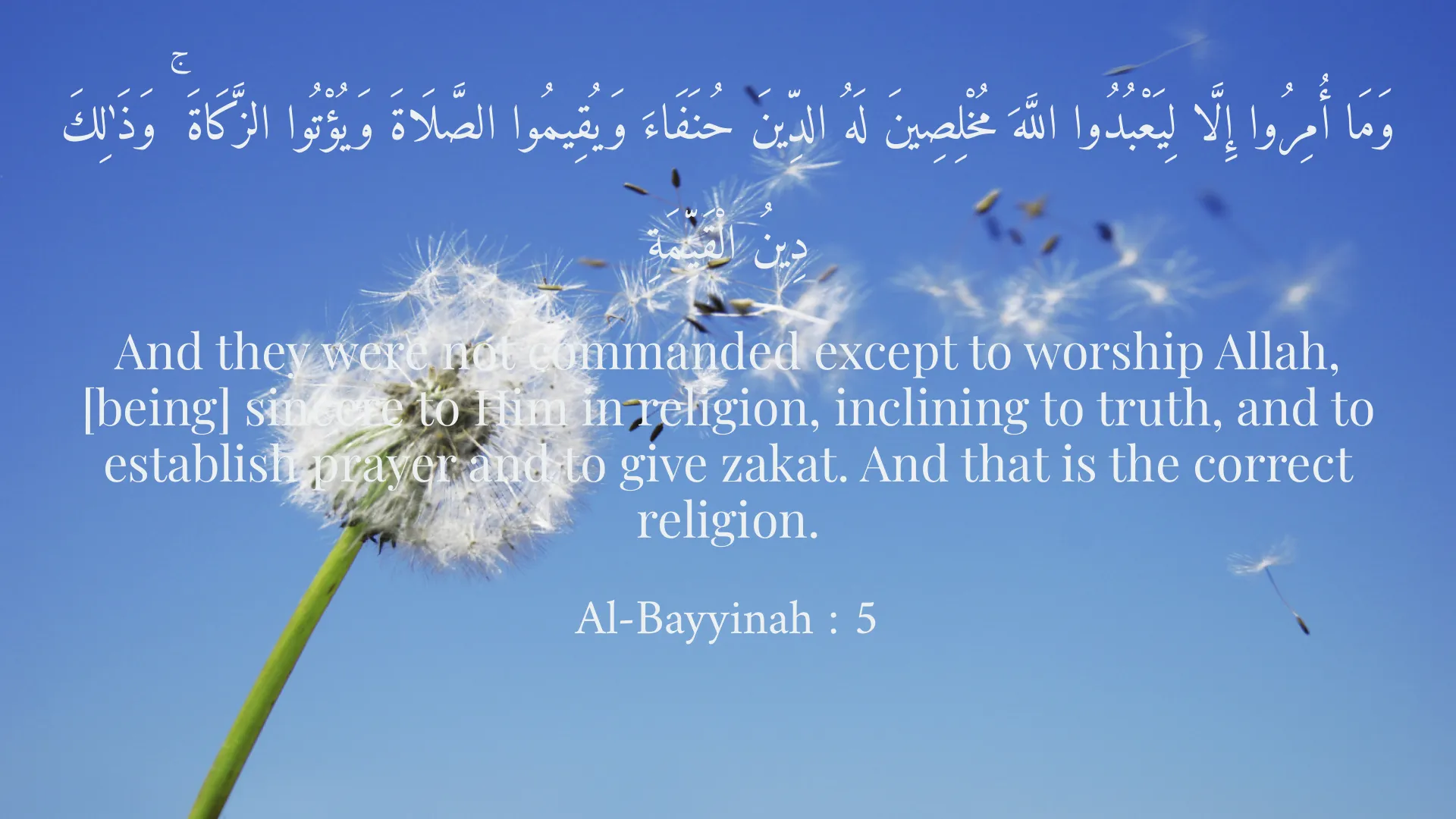
وَمَا أُمِرُوا إِلَّا لِيَعْبُدُوا اللَّهَ مُخْلِصِينَ لَهُ الدِّينَ حُنَفَاءَ وَيُقِيمُوا الصَّلَاةَ وَيُؤْتُوا الزَّكَاةَ ۚ وَذَٰلِكَ دِينُ الْقَيِّمَةِ
And they were not commanded except to worship Allah, [being] sincere to Him in religion, inclining to truth, and to establish prayer and to give zakat. And that is the correct religion.
Al-Bayyinah : 5
قُلْ إِنَّمَا أَنَا بَشَرٌ مِّثْلُكُمْ يُوحَىٰ إِلَيَّ أَنَّمَا إِلَٰهُكُمْ إِلَٰهٌ وَاحِدٌ ۖ فَمَن كَانَ يَرْجُو لِقَاءَ رَبِّهِ فَلْيَعْمَلْ عَمَلًا صَالِحًا وَلَا يُشْرِكْ بِعِبَادَةِ رَبِّهِ أَحَدًا
Say, "I am only a man like you, to whom has been revealed that your god is one God. So whoever would hope for the meeting with his Lord - let him do righteous work and not associate anyone with the worship of his Lord."
Al-Kahf : 110
يَا أَيَّتُهَا النَّفْسُ الْمُطْمَئِنَّةُ
O contented soul,
Al-Fajr : 27
ارْجِعِي إِلَىٰ رَبِّكِ رَاضِيَةً مَّرْضِيَّةً
Return to your Lord, pleased and pleasing [to Him],
Al-Fajr : 28
فَادْخُلِي فِي عِبَادِي
And enter among My [righteous] servants,
Al-Fajr : 29
وَادْخُلِي جَنَّتِي
And enter My Paradise.
Al-Fajr : 30
Short Story
Once upon a time, in the city of Shiraz, lived a pious and ascetic man. He appeared very simple and unpretentious, never revealing his good deeds to anyone. People considered him an ordinary man, yet with every breath and every action, he sought God's satisfaction. One night, he saw that his poor neighbor was sick in bed and had no food to eat. Without anyone noticing, he secretly prepared some food and medicine and took it to the poor man's house. He did not even wait for the poor man to recognize him and thank him, quickly returning. When one of his friends asked him, “Why didn’t you stay so he would know who helped? Perhaps he would have prayed for you!” The ascetic smiled and said, “Brother, I prefer the Creator’s satisfaction to the creature's gratitude. One who works for God needs no reward from His servants.” Thus, with every small and great act performed out of sincerity, the ascetic found a peace within his heart that surpassed any worldly pleasure, for he knew that God was pleased with him.