Quranic Answer
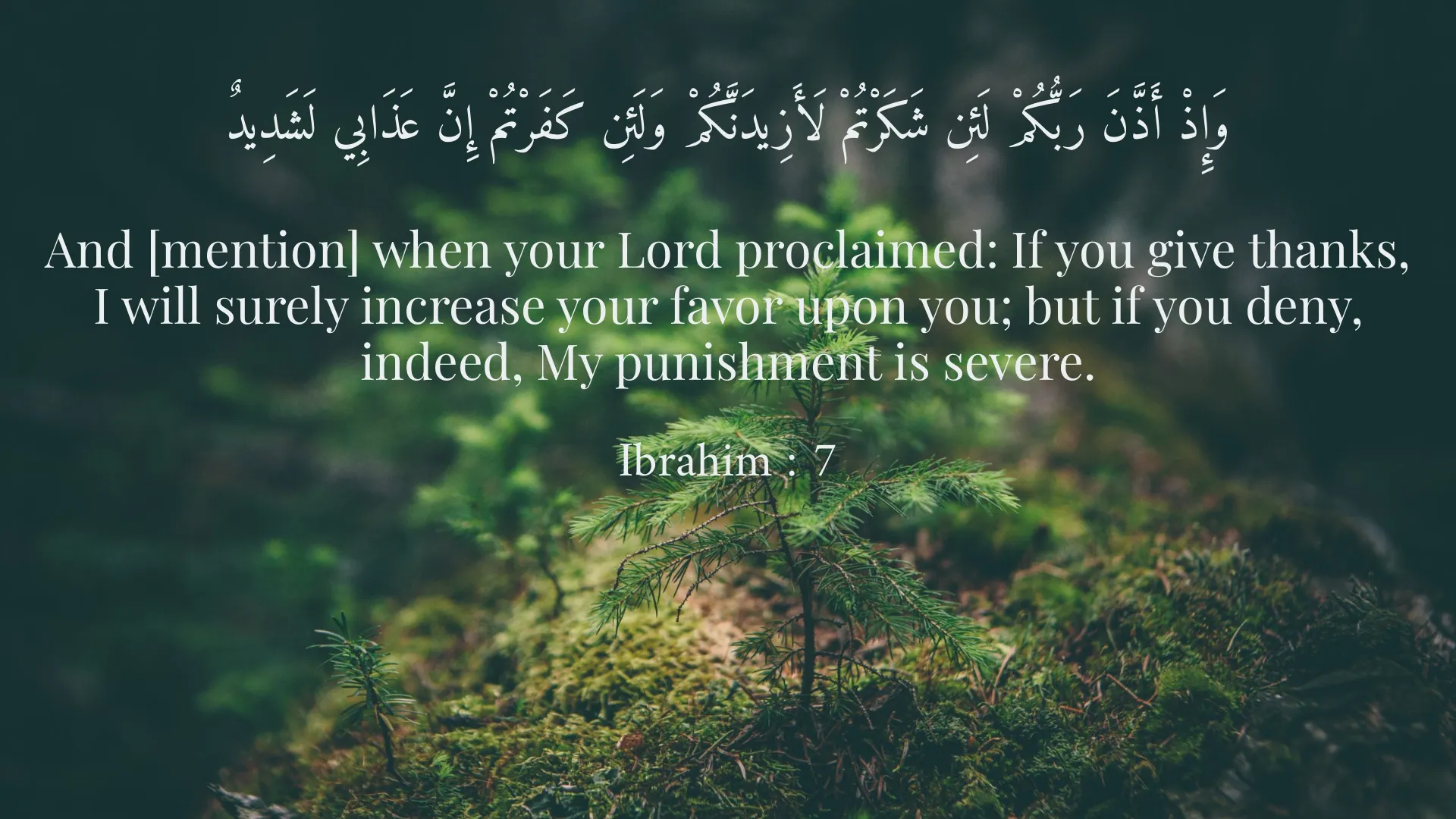
Jealousy is a complex and often negative emotion that can have a profound impact on a person's life. It can arise in various situations, whether in personal relationships, work environments, or even in social contexts. This feeling can be detrimental not only to the individual experiencing it but also to their relationships with others. In exploring the nature of jealousy, we can turn to the teachings of the Holy Quran, which offers valuable guidance on how to navigate this emotion effectively. In the Holy Quran, one of the key ways to free oneself from the grip of jealousy is to concentrate on the blessings of Allah and to express gratitude for them. This principle is beautifully encapsulated in Surah Ibrahim, verse 7, where Allah declares: 'And [mention] when your Lord proclaimed: If you give thanks, I will surely increase your favor upon you; but if you deny, indeed, My punishment is severe.' This verse emphasizes the importance of gratitude as a powerful antidote to negative emotions, including jealousy. By acknowledging and appreciating the blessings we receive, we shift our focus from what others have to the abundance present in our own lives, reducing feelings of jealousy. Gratitude is not merely a passive feeling; it is an active practice that can transform one's mindset. The more we cultivate an attitude of thankfulness, the more we become aware of the positive aspects of our lives. This awareness can help drown out feelings of envy, making space for contentment and joy. Studies have shown that individuals who practice gratitude often experience increased happiness and reduced levels of depression and anxiety. Thus, turning to gratitude is not only a spiritual practice encouraged in the Quran but also one supported by psychological research. Moreover, the Quran reminds us that everyone progresses in life in their own unique way, and it warns against envying the fate of others. In Surah Al-Imran, verse 169, it is asserted: 'And do not think of those who have been killed in the cause of Allah as dead; rather, they are alive with their Lord and receiving provision.' This verse serves as a poignant reminder that we should not measure our success against that of others. Instead, it encourages us to view our paths as individual and distinct, allowing us to appreciate our journeys without comparison. It's essential to recognize that jealousy often stems from a place of insecurity and comparison. When we perceive others as having achieved what we desire, we feel inadequate in our pursuits. However, by internalizing the understanding that everyone achieves success in their own way, we can cultivate a healthier perspective. This perspective fosters a sense of solidarity rather than competition, reminding us that our worth is not based on our possessions or accolades. In addition to the spiritual teachings of the Quran, there are practical steps individuals can take to overcome jealousy. Engaging in positive activities, such as giving charity, performing good deeds, and helping others, can significantly alleviate feelings of envy. When we direct our energy towards uplifting others, we not only foster a sense of community but also enhance our own well-being. Acts of kindness can lead to increased feelings of happiness and fulfillment, serving as a counterbalance to negative emotions such as jealousy. Furthermore, volunteering for charitable organizations or supporting those in need can provide a profound sense of purpose. By contributing to the well-being of others, we gain perspective on our own lives and find appreciation for what we have. This shift in focus from self to others can serve as a powerful mechanism for mitigating jealousy. Additionally, practicing self-reflection can also help in recognizing the roots of jealousy. By taking the time to understand what triggers these feelings, individuals can develop strategies to address them effectively. Journaling about one's emotions, contemplating their underlying causes, and seeking out personal growth opportunities can lead to greater emotional intelligence and resilience against jealousy. In conclusion, jealousy is a potent emotion that can overshadow our lives, but it is not insurmountable. The teachings of the Holy Quran provide profound insights into how we can combat this feeling through gratitude, acceptance of individual paths to success, and positive engagement with our communities. By focusing on our blessings, refraining from comparing ourselves to others, and channeling our energies towards constructive actions, we can liberate ourselves from the chains of jealousy. Ultimately, it is through introspection, gratitude, and service to others that we can cultivate a life filled with positivity and fulfillment, free from the negative clutches of jealousy.
Related Verses
وَإِذْ أَذَّنَ رَبُّكُمْ لَئِن شَكَرْتُمْ لَأَزِيدَنَّكُمْ وَلَئِن كَفَرْتُمْ إِنَّ عَذَابِي لَشَدِيدٌ
And [mention] when your Lord proclaimed: If you give thanks, I will surely increase your favor upon you; but if you deny, indeed, My punishment is severe.
Ibrahim : 7
وَلَا تَحْسَبَنَّ الَّذِينَ قُتِلُوا فِي سَبِيلِ اللَّهِ أَمْوَاتًا بَلْ أَحْيَاءٌ عِندَ رَبِّهِمْ يُرْزَقُونَ
And do not think of those who have been killed in the cause of Allah as dead; rather, they are alive with their Lord and receiving provision.
Al-Imran : 169
Short Story
Once, a woman lived in a city who always envied the lives of others. She looked at a lush and beautiful garden and thought to herself, 'Why don't I have such a garden?' One night, an angel appeared to her and said, 'Why don't you appreciate your own blessings?!' She looked back at her home and realized she had valuable things. From that moment, she promised to always be grateful for Allah's blessings.