Quranic Answer
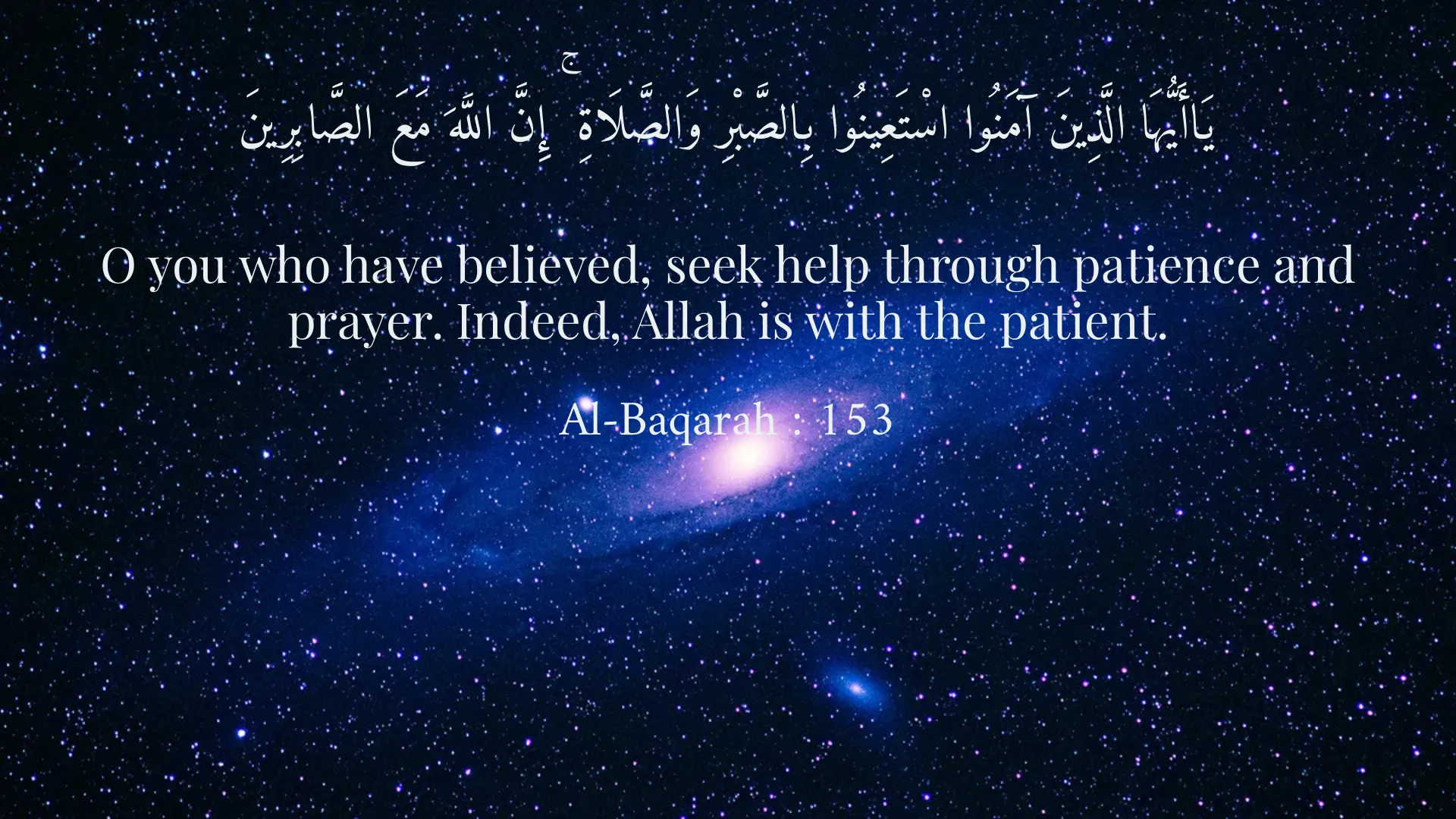
Sorrow and grief are intrinsic elements of the human experience, representing emotions that we all encounter at various points in our lives. These feelings can emerge from numerous sources including the loss of loved ones, personal failures, or even witnessing the suffering of others. The complexity of sorrow often leads individuals to seek comfort and solace in different ways, and for many, this comfort can be found in spirituality and faith. In the Holy Quran, these themes of sorrow, grief, and the divine path to healing are addressed with profound wisdom. One of the significant verses in the Quran that deal directly with sorrow and the human condition is found in Surah Al-Baqarah, verse 153. Allah, in His infinite wisdom, instructs us with a simple yet powerful response to our hardships: "O you who have believed, seek help through patience and prayer. Indeed, Allah is with the patient." This verse serves as both a reminder and a call to action; it emphasizes that patience and prayer are not merely suggestions but essential practices that can aid in transcending sorrow. Patience, or Sabr, is a recurring theme in the Quran. It signifies resilience in the face of adversity and a steadfast spirit amidst challenges. The instruction to seek help through prayer further highlights the relational aspect of faith. When individuals engage in prayer, they establish a connection with the Divine, which can be profoundly comforting. In times of sorrow, prayer can serve as a sanctuary where one can express their innermost fears, hopes, and desires. The act of supplication offers a moment of pause, allowing individuals to confront their grief with a sense of purpose and reliance on a higher power. Moreover, the tranquility that comes from engaging in prayer can act as a balm for a troubled heart. For instance, during Salah, the prescribed Islamic prayers, individuals physically and spiritually detach from earthly worries, providing a momentary refuge from sorrow. Through consistent prayer, a person may experience a sense of inner peace, becoming more equipped to face life's tribulations. In addition to prayer, another critical component highlighted in the Quran is the concept of guidance in Surah Al-Ankabut, verse 69: "And those who strive for Us, We will surely guide them to Our ways." This verse speaks to the idea of active engagement in one’s faith journey. It indicates that striving towards righteousness, while remaining patient during life’s challenges, will ultimately lead individuals to divine guidance and a deeper understanding of their purpose. Faith is often not a passive state; it requires effort, determination, and a willingness to seek God through acts of goodness and perseverance. By doing so, believers can find solace knowing that their struggles are acknowledged and that they are supported by divine mercy. Spiritual practices and connections are vital, yet they can be supplemented by the love and support of family and friends. Human beings are inherently social creatures, and the impact of social support on mental well-being cannot be overstated. Engaging with loved ones can help alleviate feelings of sorrow. When faced with grief, sharing one’s innermost thoughts and emotions can create a network of support that aids in healing. Whether it be through conversations, shared activities, or simply being present with one another, the love and empathy of others can significantly mitigate feelings of loneliness and despair. Furthermore, research in psychology supports the notion that social connections boost resilience in difficult times. Talking to friends or family about one's sorrow allows for an exchange of empathy, advice, and comfort. It can also facilitate a sense of belonging and reassurance, making it easier for individuals to navigate their challenges. Therefore, fostering relationships with those who provide emotional support is not only encouraged spiritually but also scientifically backed as a means to cope with grief. Alongside prayer and social support, cultivating a mindset focused on gratitude and positivity can lead to enhanced tranquility in life. In moments of sorrow, it is easy to become enveloped in negativity; however, making a conscious effort to remember one’s blessings can shift the perspective from despair to appreciation. Gratitude can transform one’s outlook by highlighting the positive aspects of life, no matter how small they may seem. The Quran encourages believers to express gratitude, and doing so can create a profound change in how one processes grief. By taking stock of what is good and enriching in our lives, we center our thoughts on the potential for healing rather than the pain of loss. Activities such as journaling, meditation, and simply reflecting on the goodness in one’s life can all serve to promote a sense of gratitude. These practices not only help to alleviate grief but also build resilience against future sorrow. Engaging in acts of service, kindness, and compassion for others can also pull individuals out of their internal struggles. By giving back to the community, one can create a sense of purpose that helps to distract from personal challenges and enhances overall well-being. In conclusion, sorrow and grief are integral to the human experience, yet the tools provided through the divine teachings in the Quran are invaluable in dealing with such emotions. The combination of patience, prayer, social support, and a focus on gratitude offers a comprehensive approach to overcoming sorrow. In addition, engaging actively in one’s faith and striving to do good can lead to divine guidance. By embracing these methods, individuals can navigate through their grief with the knowledge that they are not alone, that their feelings are valid, and that there exists a pathway to peace and healing. Life’s trials may be numerous, but with a supportive community, a steadfast faith, and a grateful heart, one can emerge from sorrow into the light of tranquility.
Related Verses
يَاأَيُّهَا الَّذِينَ آمَنُوا اسْتَعِينُوا بِالصَّبْرِ وَالصَّلَاةِ ۚ إِنَّ اللَّهَ مَعَ الصَّابِرِينَ
O you who have believed, seek help through patience and prayer. Indeed, Allah is with the patient.
Al-Baqarah : 153
وَالَّذِينَ جَاهَدُوا فِينَا لَنَهْدِيَنَّهُمْ سُبُلَنَا ۗ وَإِنَّ اللَّهَ لَمَعَ الْمُحْسِنِينَ
And those who strive for Us, We will surely guide them to Our ways. And indeed, Allah is with the doers of good.
Al-Ankabut : 69
Short Story
One day, a friend of mine was complaining about his sorrow and sadness. He said nothing makes him happy. I reminded him that the Quran says: 'O you who have believed, seek help through patience and prayer.' He decided to pray for 10 minutes every day and ask God for help. After a few weeks, he felt that his sorrows had diminished, and happiness had returned to his life.