Quranic Answer
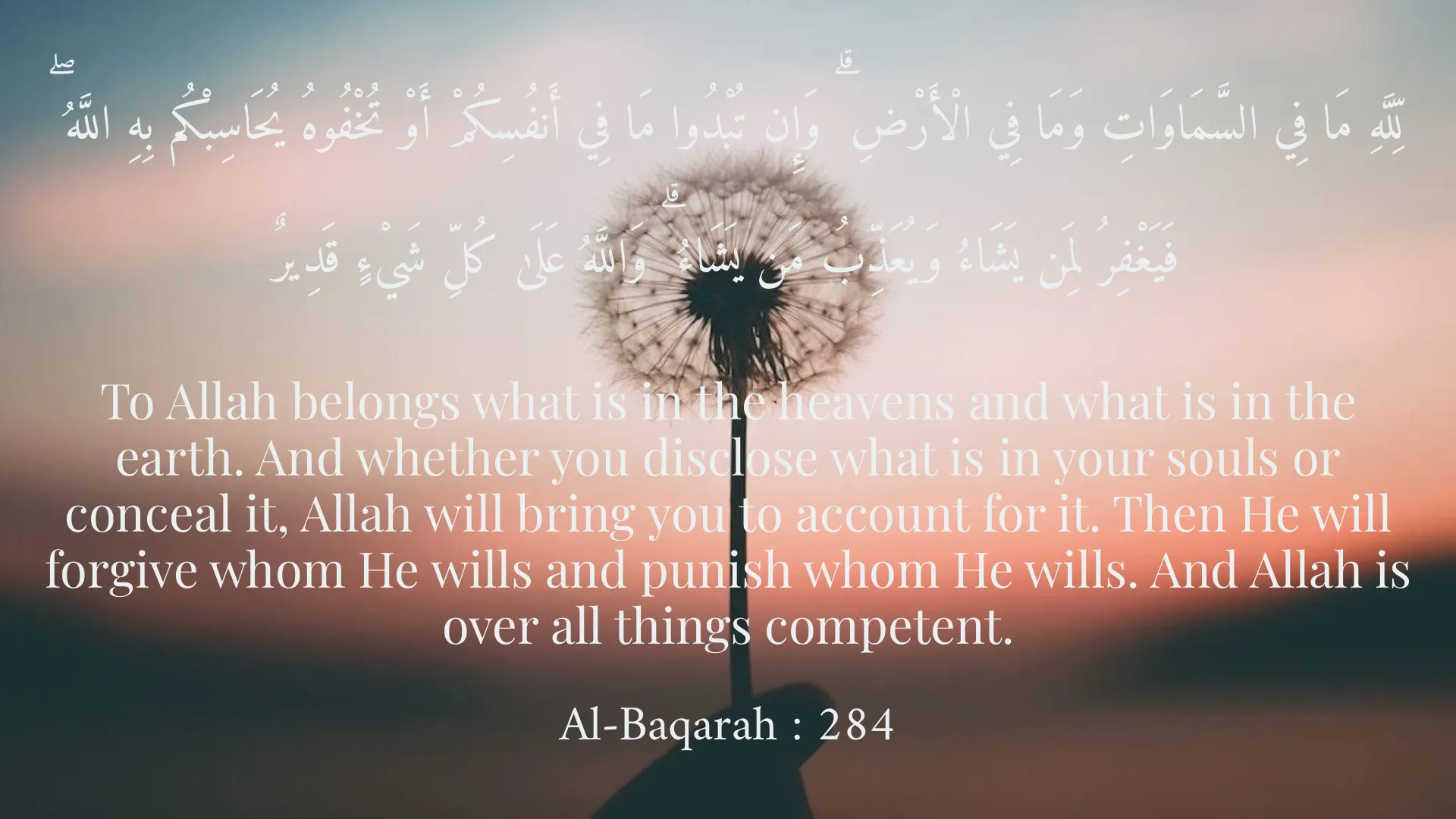
Looking at one's intentions honestly is the backbone of spiritual life in Islam, and the Holy Quran provides clear guidance in this regard. Intention (niyyah), before any action, is considered its foundation, and in Islamic teachings, the value and acceptance of any deed depend on the intention behind it. Allah Almighty and His Noble Messenger (peace be upon him) have consistently emphasized the importance of pure intention, known as 'Ikhlas.' Ikhlas means performing deeds solely for the pleasure and satisfaction of Allah, without associating anyone else in this intention, whether for ostentation (riya), seeking material gain, or fame. The Holy Quran invites us to deep reflection and self-awareness, urging us to pay attention to what is hidden in our hearts. In Surah Al-Baqarah, verse 284, Allah says: “To Allah belongs what is in the heavens and what is in the earth. And whether you disclose what is in your souls or conceal it, Allah will bring you to account for it. Then He will forgive whom He wills and punish whom He wills. And Allah is over all things competent.” This verse explicitly states that Allah is aware of both our visible and hidden states, and what is within us will also be taken into account. This awareness should compel us to examine our intentions with precision and honesty, for nothing remains hidden from the sight of the Lord. To be honest with our intentions, we must constantly purify our hearts and question our motives. Is our action merely to gain people's admiration, or is it for the satisfaction of Allah? Is there any other goal embedded in it besides seeking divine proximity? One of the most important ways to be honest with intentions is through the practice of 'Muhasabah al-Nafs' (self-accountability). This is a profound Islamic tradition where an individual reviews their actions and intentions at the end of each day or periodically, asking themselves why they performed these deeds. Were the intentions pure? This honest introspection helps us identify impure motives and take steps to correct them. The Quran repeatedly emphasizes the soundness of the heart, as the heart is the locus of intentions. In Surah Ash-Shu'ara, verses 88 and 89, we read: “The Day when neither wealth nor sons will benefit, but only he who comes to Allah with a sound heart.” This verse indicates that on the Day of Judgment, only a heart free from any impurity and polytheism will benefit a person. Therefore, striving to achieve a 'sound heart' requires continuous purification of intentions from anything other than divine pleasure. Furthermore, the Holy Quran strongly condemns ostentation (riya) and hypocrisy (nifaq), which are the antithesis of Ikhlas and honesty in intentions. In Surah An-Nisa, verse 142, describing the hypocrites, it states: “Indeed, the hypocrites [think to] deceive Allah, but He is deceiving them. And when they stand for prayer, they stand lazily, showing [off] to the people and not remembering Allah except a little.” This verse clearly shows that the primary intention of hypocrites is to show off and gain people's attention, not to purely worship Allah. To avoid falling into the trap of ostentation and hypocrisy, we must critically examine our intentions and ensure that our actions stem from pure intentions, not from pretense. To achieve this honesty, we can take practical steps. The first step is to understand the concept of Ikhlas and grasp its depth. The second step is to pray and supplicate to Allah for assistance in purifying intentions, for He alone can cleanse hearts. Third, reflect on the Quranic verses that address the importance of intention and the heart. Fourth, perform good deeds secretly without others' knowledge, so that the soul gets accustomed to purity and avoids ostentation. Fifth, avoid associating with people whose primary motivation in their actions is to gain admiration and approval from others, as such companionship can also influence our intentions. Sixth, constantly remember the Day of Judgment and the accountability of deeds; this reminder helps to purify intentions, as we know that on that Day, only pure intentions will be accepted. Finally, honesty with intentions is a continuous journey, not a destination. With every action and every decision, we must turn to ourselves and ask: “Why am I truly doing this?” This continuous questioning keeps us on the path of sincerity and guides us toward divine pleasure. This process requires courage, self-awareness, and continuous commitment to Quranic principles, as purity of intention is the key to the acceptance of deeds and the attainment of true peace in this world and the hereafter.
Related Verses
لِّلَّهِ مَا فِي السَّمَاوَاتِ وَمَا فِي الْأَرْضِ ۗ وَإِن تُبْدُوا مَا فِي أَنفُسِكُمْ أَوْ تُخْفُوهُ يُحَاسِبْكُم بِهِ اللَّهُ ۖ فَيَغْفِرُ لِمَن يَشَاءُ وَيُعَذِّبُ مَن يَشَاءُ ۗ وَاللَّهُ عَلَىٰ كُلِّ شَيْءٍ قَدِيرٌ
To Allah belongs what is in the heavens and what is in the earth. And whether you disclose what is in your souls or conceal it, Allah will bring you to account for it. Then He will forgive whom He wills and punish whom He wills. And Allah is over all things competent.
Al-Baqarah : 284
وَمَا أُمِرُوا إِلَّا لِيَعْبُدُوا اللَّهَ مُخْلِصِينَ لَهُ الدِّينَ حُنَفَاءَ وَيُقِيمُوا الصَّلَاةَ وَيُؤْتُوا الزَّكَاةَ ۚ وَذَٰلِكَ دِينُ الْقَيِّمَةِ
And they were not commanded except to worship Allah, [being] sincerely obedient to Him, inclining to truth, and to establish prayer and to give zakah. And that is the correct religion.
Al-Bayyinah : 5
يَوْمَ لَا يَنفَعُ مَالٌ وَلَا بَنُونَ
The Day when neither wealth nor sons will benefit,
Ash-Shu'ara : 88
إِلَّا مَنْ أَتَى اللَّهَ بِقَلْبٍ سَلِيمٍ
But only he who comes to Allah with a sound heart.
Ash-Shu'ara : 89
Short Story
One day, amidst the delightful anecdotes of Saadi's Gulistan, a devout man claimed to spend his nights in worship and his days in fasting. He was proud of his seemingly pure intentions. Sheikh Saadi, with a smile that carried the depth of wisdom, said to him: 'O Dervish, you look at outward appearances and imagine yourself to be among the virtuous. But have you honestly examined your own intention, whether these acts of worship are for the pleasure of the Truth or for ostentation in the eyes of people? If your intention is purely for God, whether you are known or unknown, He sees you and rewards you. But if your intention is for anyone other than God, no matter how much you exert yourself in devotion, you will see nothing but loss. A pure intention is more valuable than a hundred insincere prayers.' The devout man, upon hearing these words, fell into deep thought and realized that honesty in intention is the true essence of every act of worship, and without it, deeds would be nothing but empty shells.