Quranic Answer
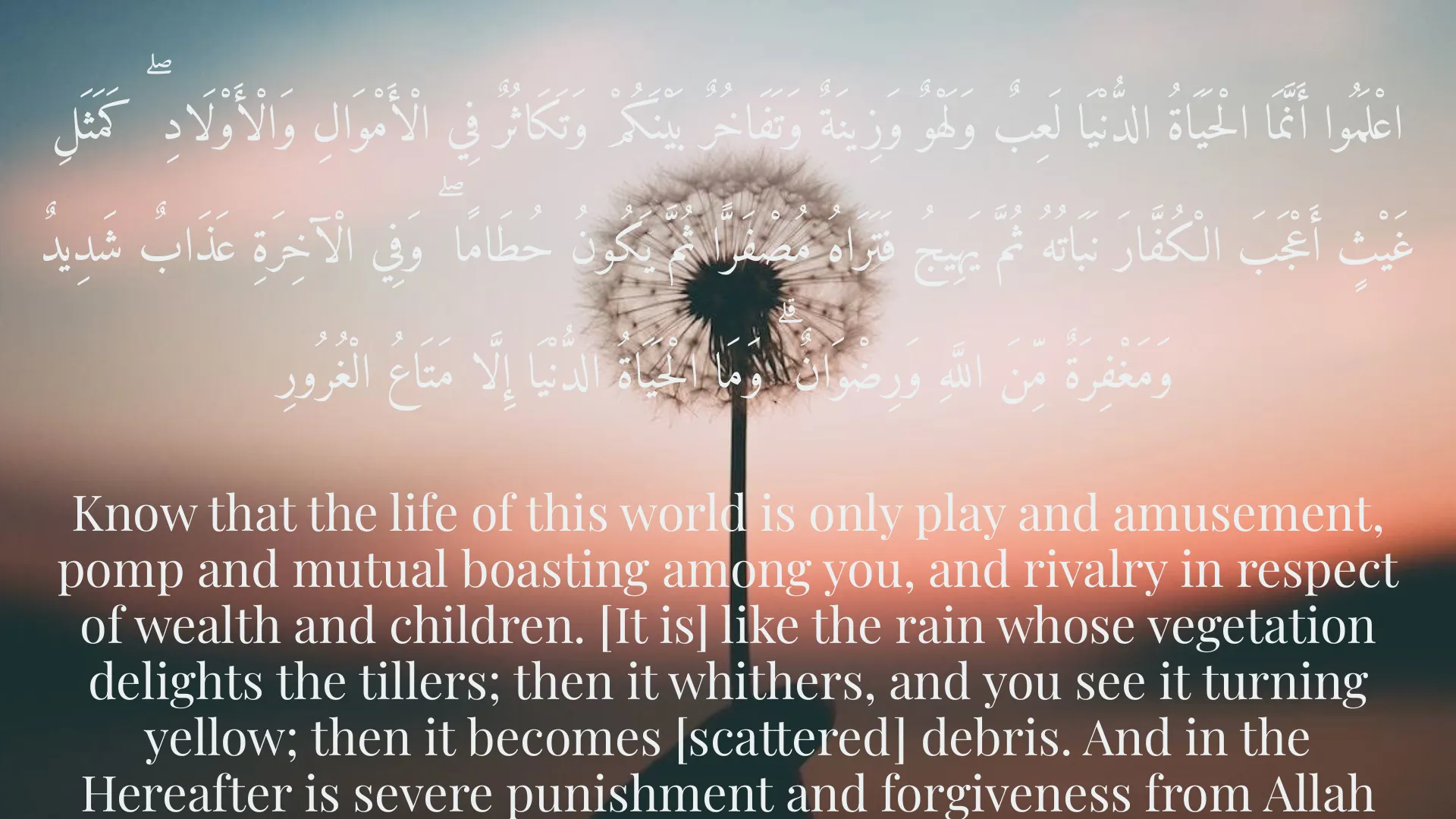
How can one learn to detach from the world? This is a profound and fundamental question rooted in our understanding of the nature of life, the purpose of creation, and our place in this universe. From the perspective of the Holy Quran, detachment from the world (often understood as zuhd or asceticism) does not mean abandoning worldly responsibilities or retreating from society. Rather, it signifies a correct understanding of the world's reality, avoiding excessive attachment to it, and prioritizing the Hereafter. The Quran invites us to a balanced approach: neither complete renunciation of the world and monasticism, nor absolute immersion in its fleeting pleasures. This concept, known as 'zuhd' in Islam, means a heart's disinterest in the world and its glitter, while a person's hands and feet can still be engaged in work and effort in this world, but their heart remains unattached to these perishable provisions. One of the most crucial teachings of the Quran for achieving this state is understanding the ephemeral and transient nature of this world. Allah Almighty expresses this truth in various ways across numerous verses. For instance, in Surah Al-Hadid, verse 20, He states: "Know that the life of this world is only play and amusement, pomp and mutual boasting among you, and rivalry in respect of wealth and children. [It is] like the rain whose vegetation delights the tillers; then it withers, and you see it turning yellow; then it becomes [scattered] debris. And in the Hereafter is severe punishment and forgiveness from Allah and [His] approval. And what is the life of this world except the enjoyment of delusion." This verse vividly likens worldly life to play, amusement, adornment, mutual boasting, and an increase in wealth and offspring. The analogy of rain nourishing plants that then wither, turn yellow, and become scattered debris powerfully illustrates its instability and perishability. When a person fully comprehends that everything in this world is transient, their heart becomes free from the chains of excessive attachments. This deep understanding helps us to grasp the true essence rather than clinging to shadows and emptiness, and to utilize what is perishable to attain what is eternal and everlasting. This perspective shifts our view on acquiring wealth, status, beauty, and everything else in this world, transforming them from goals into means for achieving the Hereafter. The Quran also repeatedly prioritizes the Hereafter over this world, describing it as better and more enduring. In Surah Al-A'la, verses 16 and 17, we read: "But you prefer the worldly life, while the Hereafter is better and more lasting." These verses admonish humanity for preferring the worldly life over the Hereafter, even though the Hereafter is superior and everlasting. This Quranic statement establishes a fundamental criterion for our lives. If the choice is between the fleeting pleasures of this world and the eternal bliss of the Hereafter, sound intellect and true faith will undoubtedly choose the Hereafter. This choice does not imply ignoring the world or abandoning responsibilities, but rather utilizing it as a field for cultivating the Hereafter. Every action we perform in this world is a seed that we will harvest in the Hereafter. Therefore, detachment from the world means that our ultimate goal should not be this world itself, but rather that this world should be a means to achieve a greater purpose: Allah's pleasure and eternal Paradise. Allah also says in Surah Al-An'am, verse 32: "And the worldly life is nothing but amusement and diversion; but the home of the Hereafter is best for those who fear God. So will you not reason?" These verses remind us that if we employ our intellect, we will understand that what is lasting and valuable is the Hereafter, not this world. Another path to detachment from the world is recognizing its true nature as a place of trial and tribulation. The Quran states that this world is a test for humans to determine who among us is best in deeds. In Surah Al-Mulk, verse 2, it is mentioned: "Who created death and life to test you [as to] which of you is best in deed." When a person views the world as a divine testing ground, their perspective on wealth, status, beauty, and other worldly attractions changes. These are no longer ends in themselves but rather tools that can either aid or hinder one on the path of divine examination. This viewpoint frees a person from purely material concerns and guides them towards spiritual goals and earning Allah's pleasure. This shift in perspective is the cornerstone of freeing the heart from the bonds of the world. Strengthening one's faith and love for Allah Almighty is a fundamental pillar of detachment from the world. The more one's heart is filled with the remembrance and love of Allah, the less attachment one feels towards anything else. Dhikr (remembrance of Allah), Salat (prayer), recitation of the Quran, and pondering over divine verses are all ways to strengthen this love in the heart. In Surah At-Tawbah, verse 24, Allah censures those who prefer the love of this world and its people over the love of Allah and His Messenger. This verse indicates that the root of worldly attachment is a deficiency in divine love within the heart. When a person truly becomes devoted to Allah and considers Him their ultimate aspiration, wealth, status, and other worldly manifestations appear small and insignificant in their eyes, and this is where detachment from the world becomes a natural and spontaneous process, because the heart has become the abode of a higher love. Practical steps to achieve this state: 1. Reflection and pondering on Quranic verses: Studying and contemplating verses that address the nature of this world and the Hereafter provides profound insight and increases one's understanding of the transience of this world and the permanence of the Hereafter. 2. Remembrance of death: Constantly reminding oneself that life is finite and that we will all one day depart from this world helps us to be less attached to it and more concerned with accumulating provisions for the Hereafter. The Prophet Muhammad (PBUH) said: "Remember the destroyer of pleasures (i.e., death)." 3. Voluntary asceticism (Wara'): This does not mean extreme deprivation or self-denial but rather abstaining from excessive worldly pursuits and being content with true needs. This helps the heart to be freed from material attachments and allows one to achieve inner contentment and satisfaction. 4. Giving in charity and helping the needy: Giving from what we love and spending our wealth in the way of Allah is one of the most effective ways to reduce attachment to worldly possessions. When a person gives, they are, in essence, freed from the bondage of wealth and experience the spiritual pleasure of generosity and giving. 5. Associating with people of spiritual insight and those mindful of the Hereafter: Companionship with those who view the world as insignificant and are always mindful of the Hereafter positively influences one's spirit and outlook, guiding them towards spirituality. 6. Strengthening prayer and acts of worship: Prayer and other acts of worship deepen one's connection with Allah and foster a spirit of contentment, gratitude, and disinterest in the deceptive manifestations of the world. These acts of worship connect a person to the true source of peace and free them from worldly anxieties. Ultimately, detachment from the world signifies inner contentment and freedom of the heart, not poverty or lack of possessions. A person can be wealthy but not attached to their wealth, viewing it as a means for good, while another can be poor but harbor immense longing for worldly things and accumulation. The goal is for the world to be in our hands, not in our hearts. This spiritual freedom enables a person to utilize the world in the best possible way to achieve ultimate success in the Hereafter and to remain resilient and patient in the face of worldly trials and tribulations. This path guides humanity towards true peace, inner satisfaction, and ever-closer proximity to Allah, making one's life more fruitful and purposeful.
Related Verses
اعْلَمُوا أَنَّمَا الْحَيَاةُ الدُّنْيَا لَعِبٌ وَلَهْوٌ وَزِينَةٌ وَتَفَاخُرٌ بَيْنَكُمْ وَتَكَاثُرٌ فِي الْأَمْوَالِ وَالْأَوْلَادِ ۖ كَمَثَلِ غَيْثٍ أَعْجَبَ الْكُفَّارَ نَبَاتُهُ ثُمَّ يَهِيجُ فَتَرَاهُ مُصْفَرًّا ثُمَّ يَكُونُ حُطَامًا ۖ وَفِي الْآخِرَةِ عَذَابٌ شَدِيدٌ وَمَغْفِرَةٌ مِّنَ اللَّهِ وَرِضْوَانٌ ۗ وَمَا الْحَيَاةُ الدُّنْيَا إِلَّا مَتَاعُ الْغُرُورِ
Know that the life of this world is only play and amusement, pomp and mutual boasting among you, and rivalry in respect of wealth and children. [It is] like the rain whose vegetation delights the tillers; then it whithers, and you see it turning yellow; then it becomes [scattered] debris. And in the Hereafter is severe punishment and forgiveness from Allah and [His] approval. And what is the life of this world except the enjoyment of delusion.
Al-Hadid : 20
بَلْ تُؤْثِرُونَ الْحَيَاةَ الدُّنْيَا
But you prefer the worldly life,
Al-A'la : 16
وَالْآخِرَةُ خَيْرٌ وَأَبْقَىٰ
while the Hereafter is better and more lasting.
Al-A'la : 17
وَمَا الْحَيَاةُ الدُّنْيَا إِلَّا لَعِبٌ وَلَهْوٌ ۖ وَلَلدَّارُ الْآخِرَةُ خَيْرٌ لِّلَّذِينَ يَتَّقُونَ ۗ أَفَلَا تَعْقِلُونَ
And the worldly life is nothing but amusement and diversion; but the home of the Hereafter is best for those who fear God. So will you not reason?
Al-An'am : 32
Short Story
Sa'di, the sweet-tongued poet, tells a tale from the time of Sultan Mahmud Subuktigin. There was once a very wealthy and influential merchant who possessed vast riches. He was constantly traveling and trading, yet he was never at peace; his mind was always preoccupied with increasing his wealth. One day, he visited another merchant and, with pride, spoke of his perilous journeys and countless gains, declaring his intention to travel again. His wise merchant friend said to him, "Will you never be satiated with this world, as if you won't taste the sleep of death?!" The wealthy merchant replied, "I intend to earn a bit more, then I will retire and spend the rest of my life in peace and contentment." The wise man smiled and said, "Brother, you have spent a lifetime accumulating wealth; how do you know that death will not come one day, and you will not be able to reach what you have collected? Your heart is bound by this world, and you will never attain contentment unless you free yourself and break this chain of attachment." The merchant paid no heed to his words and set off on his journey. During that very journey, his ship sank, and all his possessions were lost. He returned empty-handed, and only then did he truly understand the meaning of the wise man's words: that contentment is an endless treasure, and detachment from the world is a peace incomparable to any wealth. He realized that true wealth lies in inner tranquility and non-attachment to what is transient.