Quranic Answer
Moving past the past is an important and sensitive process that can often shape our lives and mindset. In the quest for personal development and healing, psychological experts and spiritual leaders alike emphasize the significance of overcoming past traumas and mistakes. In particular, the Quran provides profound guidance and teachings that encourage believers to let go of their sorrows, embrace forgiveness, and embark on a path of redemption. Among the many verses that encompass this theme, verse 53 of Surah Az-Zumar stands out as a beacon of hope and reassurance for those struggling with guilt and remorse. The verse states: 'Say, O My servants who have believed, fear your Lord. For those who do good in this world is good, and the earth of Allah is spacious. Indeed, the patient will be given their reward without account.' This verse powerfully conveys Allah's immense mercy and forgiveness. It reminds us that no matter how heavy the burden of our past sins may weigh on us, God's mercy is so much greater. The invitation to believers is clear: rather than wallowing in regret, we should focus on doing good and seeking His favor, which opens the door to new beginnings and possibilities. Allah's call for His servants to fear Him is both a warning and an encouragement. It emphasizes the importance of faith and maintaining a righteous path while also highlighting the kind of relationship believers should cultivate with their Creator. This balances the awareness of one’s shortcomings with the understanding that Allah’s grace is limitless. It serves as a motivation to rise above our pasts and engage in acts of kindness, paving the way for better futures. Moreover, the mention of Allah's vast earth symbolizes the opportunities that lie ahead, signifying that there is room for growth and improvement, regardless of previous mistakes. Complementing this message of hope is verse 28 of Surah Al-Furqan, which states: 'And [those who] say, "Our Lord, avert from us the punishment of Hell. Indeed, its punishment is ever adhering."' The essence of this verse further solidifies the core idea of seeking forgiveness and turning back to Allah for mercy. Understanding that regret can lead us to repentance is a vital step in the journey of moving forward. Here, the emphasis is on taking conscious actions toward change, which can ultimately liberate one from despair. The underlying principle in these verses is that reflecting on past actions is not inherently negative; rather, it is an opportunity for growth. Accepting our mistakes as lessons allows us to evolve as individuals, fostering resilience. Whether it be through the daily trials that life presents or the significant life-altering decisions, deriving wisdom from the past enables us to cultivate a brighter tomorrow. The Quran underscores that learning from one’s past does not mean being shackled by it. Instead, it is a pathway to personal growth and spiritual elevation. In the face of challenges, it is vital for believers to harness their faith and reliance on Allah. This reliance fosters a deep sense of peace, guiding individuals through chaos and uncertainty. Engaging in prayers and strengthening one’s relationship with Allah acts as a source of comfort and support. This practice not only allows for the expiation of sins but also helps in nurturing a heart that is at peace, paving the way for emotional healing and resilience. Prayer can be a profound instrument for personal reflection. During moments of worship, individuals have the opportunity to voice their regrets and seek solace from their Creator. It serves as a powerful reminder that they are not alone in their struggles and that Allah is always near, ready to assist in their journey toward redemption. Furthermore, forgiveness is not merely a concept unique to the Quran; it is a virtue that transcends religious teachings. It is essential for emotional and mental well-being, as holding onto past grievances can lead to hindered progress and perpetual sadness. The teachings on forgiveness urge individuals to not only seek Allah’s pardon but also extend mercy to themselves and others. This not only lightens the heart but also fosters a sense of community and understanding, reinforcing the notion that everyone is on a journey of trials and tribulations. The Quran’s messages empower believers to harness their experiences, regardless of how painful or regretful they may be. The journey of moving past the past is uniquely personal yet universally relatable. By reflecting on past actions, individuals can identify areas for growth, facilitating the transition toward a better self. The critical takeaway is that transitioning from the past requires an active effort to cultivate hope, engage in forgiveness, and align oneself with a higher purpose. In conclusion, the lines from the Quran provide profound encouragement for anyone wishing to move forward. Through verses such as those from Surah Az-Zumar and Surah Al-Furqan, one finds not only a divine command to embrace goodness and cut ties with sorrow but also a promise of Allah's immense mercy and forgiveness. It emphasizes that while our past shapes us, it does not define our future. We are encouraged to rise up, learn, and continue down the path of righteousness. Thus, moving past the past becomes not only a journey of self-discovery and healing but also a beautiful opportunity to reconnect with one’s faith and purpose underneath the compassionate gaze of Allah.
Related Verses
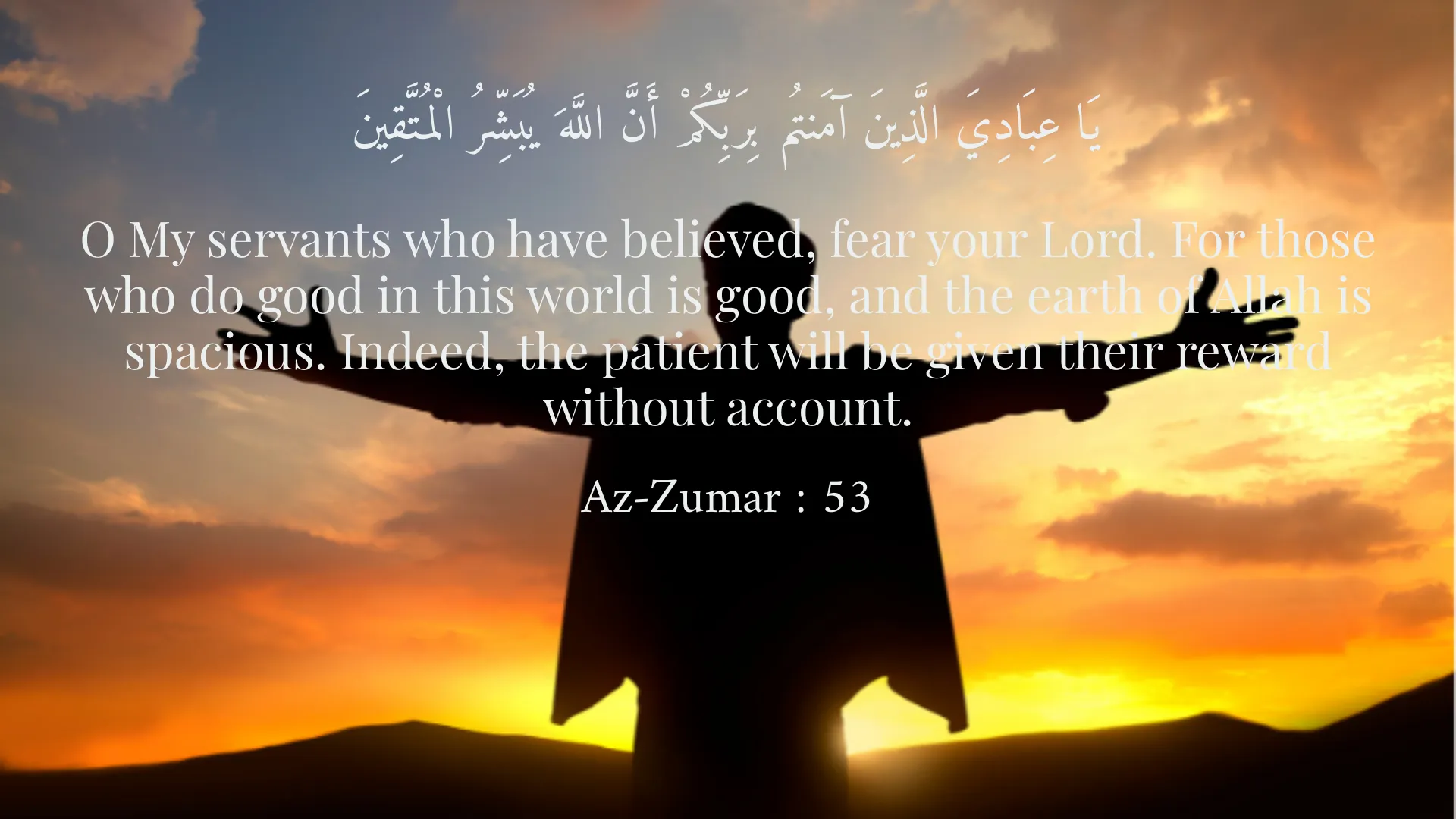
يَا عِبَادِيَ الَّذِينَ آمَنتُم بِرَبِّكُمْ أَنَّ اللَّهَ يُبَشِّرُ الْمُتَّقِينَ
O My servants who have believed, fear your Lord. For those who do good in this world is good, and the earth of Allah is spacious. Indeed, the patient will be given their reward without account.
Az-Zumar : 53
وَالَّذِينَ إِذَا فَعَلُوا فَاحِشَةً أَوْ ظَلَمُوا أَنفُسَهُمْ ذَكَرُوا اللَّهَ فَاسْتَغْفَرُوا لِذُنُوبِهِمْ
And those who, when they commit an immorality or wrong themselves, remember Allah and seek forgiveness for their sins.
Al-Furqan : 28
Short Story
A story about a man named Ali, who contemplated his past mistakes and felt alone. One day, sitting by the sea, he decided to pray to God and seek forgiveness. Immediately after his prayer, he felt a wave of peace and understood that he could start anew and learn from his mistakes.