Quranic Answer
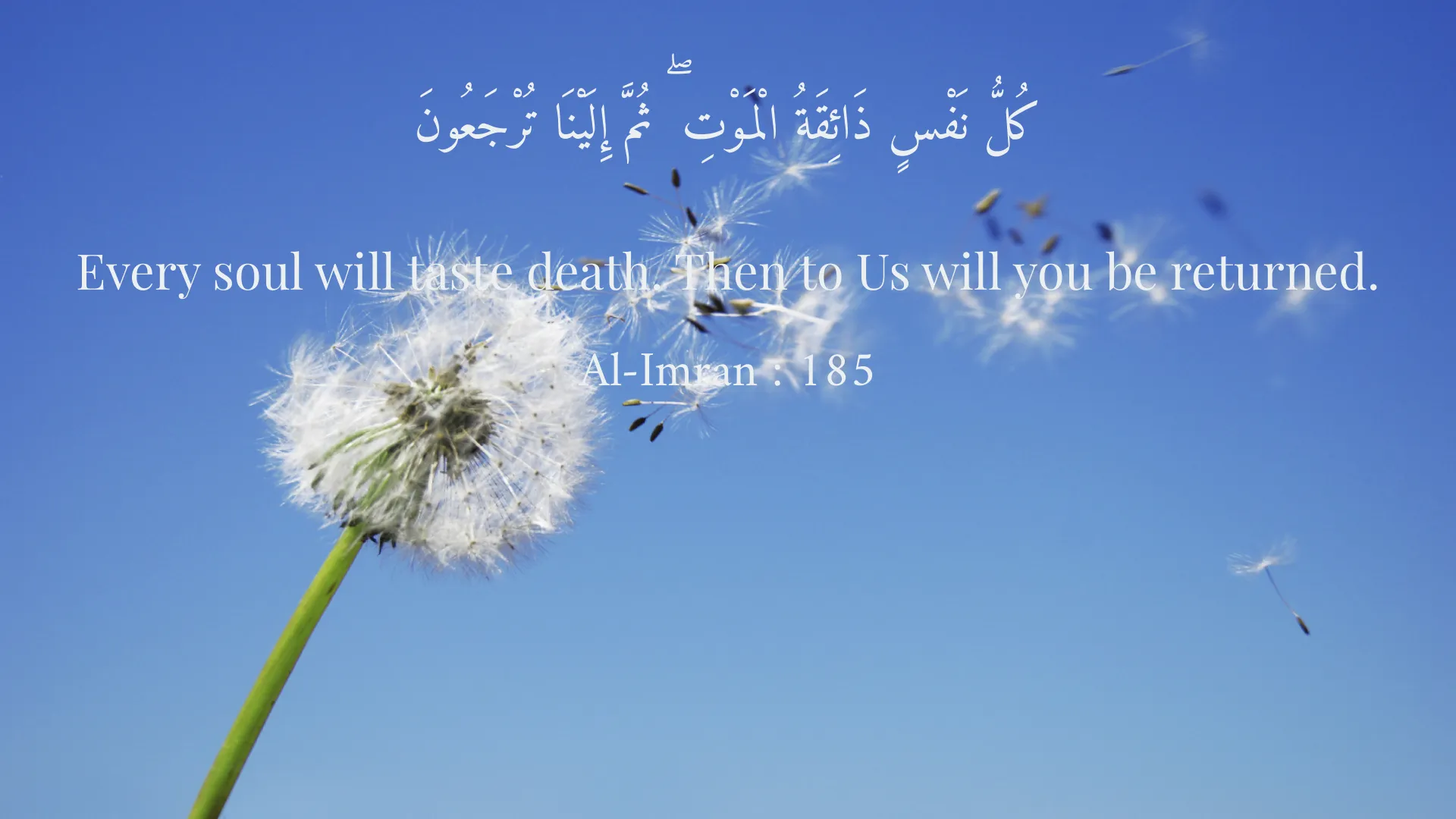
Fear of death is a natural feeling that many people struggle with. It is one of the most profound emotions that can affect anyone at various stages of life. This fear can stem from various sources, such as the unknown aspects of what lies beyond the grave, the separation from loved ones, and the inevitability of one's mortality. However, within the Islamic perspective, there is a profound reassurance about death that can serve to alleviate this fear for believers. In the Quran, God enlightens us about death, worldly life, and the Hereafter, providing a hopeful framework for understanding our existence. One of the most important concepts reiterated in the Quran is that death is not an end but a stage in the journey towards eternal life. This fundamental concept is encapsulated clearly in Surah Al-Imran, verse 185, which states: "Every soul will taste death. Then to Us will you be returned." This verse serves as a powerful reminder that life is temporary and fleeting and that the ultimate destiny of all human beings is a return to their Creator. Understanding this truth can dramatically reduce the fear of death. Instead of perceiving death as a terrifying end, it can be viewed as a transition into a new and everlasting stage of existence. Moreover, the role of faith and good deeds becomes crucial in how one perceives death. If a person believes wholeheartedly in their faith and engages in righteous actions, death transforms from a frightful ordeal into a peaceful departure. Surah Al-Baqarah, verse 155, emphasizes this point by stating: "And We will surely test you with something of fear and hunger and a loss of wealth and lives and fruits, but give good tidings to the patient." This verse highlights the inevitability of trials and tribulations during one’s earthly journey, extending beyond the fear of death. Enduring such challenges with patience can encourage an individual to view death as a natural progression toward a better existence rather than a fearful conclusion. Additionally, the Quran continuously reassures believers of God's immense mercy, forgiveness, and the paradise awaiting them in the afterlife. Such reminders are imperative in alleviating the fear of death. For instance, Surah Ar-Rahman, verses 13 to 26, eloquently describe Paradise, illustrating its beauty, bounties, and the serenity that characterizes this ultimate abode for the faithful. It depicts gardens beneath which rivers flow, a state of eternal bliss, companionship with angels, and closeness to God—concepts that can shift one’s mindset when contemplating death. When an individual comprehends that their ultimate destination, if they lead a life aligned with faith, is Paradise, they can approach death with tranquility and see it as a positive transformation rather than a source of fear. Furthermore, the broader Islamic teaching emphasizes the importance of remembering death as a significant and necessary part of life. Reflecting on mortality allows believers to appreciate life more fully, promoting gratitude for the time they have and motivating them to engage in meaningful acts. Believers are encouraged to prepare for death through acts of worship, seeking forgiveness, and doing good deeds. This preparatory mindset fosters a healthy relationship with death, steering individuals away from anxiety and dread. Moreover, it is crucial to understand that the fear of death is not something to be ashamed of; rather, it is an emotion shared by many. Even prominent figures throughout history have expressed this concern. Nevertheless, many religious and spiritual traditions offer insights that can help reframe this narrative. In Islam, understanding God’s justice and mercy assures believers that there is peace and comfort on the other side. The process leading up to the final breath is equally significant; as mentioned in the Hadith, the Prophet Muhammad (peace be upon him) stated that dying is one of the most important moments of life. It is a time for reflection, repentance, and seeking forgiveness. In the face of adversity or the fear of death, believers have a powerful tool—their faith. The connection with God, cultivated through prayer, reflection, and good deeds, can act as a shield against despair and anxiety regarding death. When faced with death, believers can turn to their spiritual practices, providing comfort and peace. Such practices reinforce a sense of belonging and purpose, affirming that they are part of a greater plan and that their lives have significance. In conclusion, the fear of death is a profound emotion that everyone grapples with at some point in their life. However, within the context of faith, particularly the teachings of Islam, there exists a wealth of understanding and reassurance about this inevitable reality. By contemplating the Quranic verses highlighting the transient nature of life and the promise of eternal peace in the Hereafter, believers can confront the fear of death with grace and acceptance. Such mindset fosters resilience in facing life’s trials, allowing individuals to view death as a pivotal chapter in their journey towards eternal life, as they ultimately return to their Creator. Understanding death in this light not only alleviates fear but also enhances one's appreciation of life itself.
Related Verses
كُلُّ نَفْسٍ ذَائِقَةُ الْمَوْتِ ۖ ثُمَّ إِلَيْنَا تُرْجَعُونَ
Every soul will taste death. Then to Us will you be returned.
Al-Imran : 185
وَلَنَبْلُوَنَّكُم بِشَيْءٍ مِّنَ الْخَوْفِ وَالْجُوعِ وَنَقْصٍ مِّنَ الْأَمْوَالِ وَالْأَنفُسِ وَالثَّمَرَاتِ ۗ وَبَشِّرِ الصَّابِرِينَ
And We will surely test you with something of fear and hunger and a loss of wealth and lives and fruits, but give good tidings to the patient.
Al-Baqarah : 155
فَبِأَيِّ آلَاءِ رَبِّكُمَا تُكَذِّبَانِ
So which of the favors of your Lord would you deny?
Ar-Rahman : 13
Short Story
One day, a young monk went to his teacher and complained about his fear of death. The teacher said: "Oh young one, death is in truth an open door to eternal life. If you uphold your good deeds in this world, death will merely be a transformation, not an end." Upon hearing this, the monk calmed down and decided to build his life based on goodness and faith.