Quranic Answer
Your question is profound and wise, and its answer lies in understanding the true meaning of 'fear of God' in the Holy Quran. At first glance, the word 'fear' might evoke feelings of dread or anxiety. However, the Quran and the Sunnah of the Prophet (PBUH) present a much richer and more constructive interpretation of this concept, one that is inextricably linked with respect, love, and hope. This fear is not about paralyzing terror, but rather a profound sense of 'Khawf', 'Taqwa', and 'Haybah' – an awareness of God's infinite majesty and constant presence, which compels us to avoid His displeasure and consistently strive for His approval. From a Quranic perspective, 'fear of God' (Taqwa) is less about being terrified of punishment and more about piety, abstaining from sins, and being mindful of one's duties and prohibitions. All of this stems from an understanding of God’s boundless greatness, power, justice, and wisdom. This piety originates from deep love and profound respect for the Almighty, not from mere terror. A person who truly knows God – by understanding His perfect attributes such as His boundless Mercy (Ar-Rahman, Ar-Rahim), Forgiveness (Al-Ghaffar), All-Knowing (Al-Alim), All-Wise (Al-Hakim), and All-Powerful (Al-Qadeer) – will never experience paralyzing fear. Instead, a balanced state of 'Raja'' (hope in God's mercy and grace) and 'Khawf' (awe and consciousness of God's justice and the consequences of sin) will develop within them. These two 'wings' enable the believer to soar towards perfection in their servitude. God Himself says in the Quran: "Inform My servants that it is I who am the Forgiving, the Merciful. And that My punishment is the painful punishment" (Al-Hijr: 49-50), illustrating the balance between mercy and punishment. This balance helps the believer neither despair of God's mercy nor feel secure from His divine plan. Respect for God stems from comprehending these sublime and unique attributes. When a person understands that God is the Creator, Sustainer, Administrator, the All-Hearing, the All-Seeing, and is All-Capable over everything, and that all good and evil emanate from Him, and every soul will return to Him, His grandeur and majesty take root in their heart. This majesty is not frightening in the sense of wanting to flee, but rather inspiring in the sense of obedience and submission. Respecting God means obeying His commands, avoiding His prohibitions, being grateful for His blessings, and trusting in Him in all matters. This type of respect not only eliminates fear but also brings peace and reassurance, as one knows they are under the protection and governance of an infinitely merciful and wise Power. To achieve the goal of not fearing God but only respecting Him, you must build your relationship with God on a foundation of profound love and knowledge. The more you study God’s beautiful names and attributes and reflect upon His signs in the universe and within yourselves, the more you will comprehend His greatness. Instead of fear, feelings of love, awe, and wonder will grow within you. Reciting the Quran with contemplation, remembering God (Dhikr) in all circumstances, performing acts of worship with sincerity, not out of compulsion or mere fear of hell, and serving God's creation for His sake, are all ways that lead us to this level of respect and love for the Lord. In this state, the 'fear' of sin gains meaning as an act of disobedience to the Beloved, not as a dread of merciless punishment. God is far too Merciful to needlessly instill fear in His servants. His 'fear' is akin to the loving concern of a mother warning her child away from fire, not out of enmity, but out of compassion and affection. In summary, to respect God without fear, one must: a) Have a correct understanding of 'fear of God' (Taqwa and Khashya), which means awareness and piety stemming from knowledge and love. b) Reflect upon God’s beautiful names and attributes, especially His attributes of mercy and forgiveness. c) Establish a deep relationship based on love, gratitude, and hope in His grace. d) Focus on divine rewards and His pleasure, rather than solely on punishment. e) Perform worship out of love and obedience, not just out of fear. In this way, our respect for God will be accompanied by inner peace and reassurance, and fear in the sense of dread and anxiety will dissipate, giving way to a sacred awe and majesty that aids one in their journey of servitude. Ultimately, this way of viewing one's relationship with God not only removes anxiety from the heart but also brings profound peace and reassurance into life. God is the source of peace and certainty, and knowing Him correctly leads humanity to the shores of salvation. This balance between 'Khawf' and 'Raja', the fear of justice and hope in grace, is a strong pillar for our life of faith. Indeed, the best way to achieve this state is to increase one's knowledge and understanding of the Lord. The more you know God, the less you will fear Him, and instead, you will worship Him lovingly and comprehend His majesty with your heart and soul. This knowledge will guide you towards fulfilling obligations and avoiding prohibitions, not out of coercion or fear, but out of profound love and respect for the True Beloved.
Related Verses
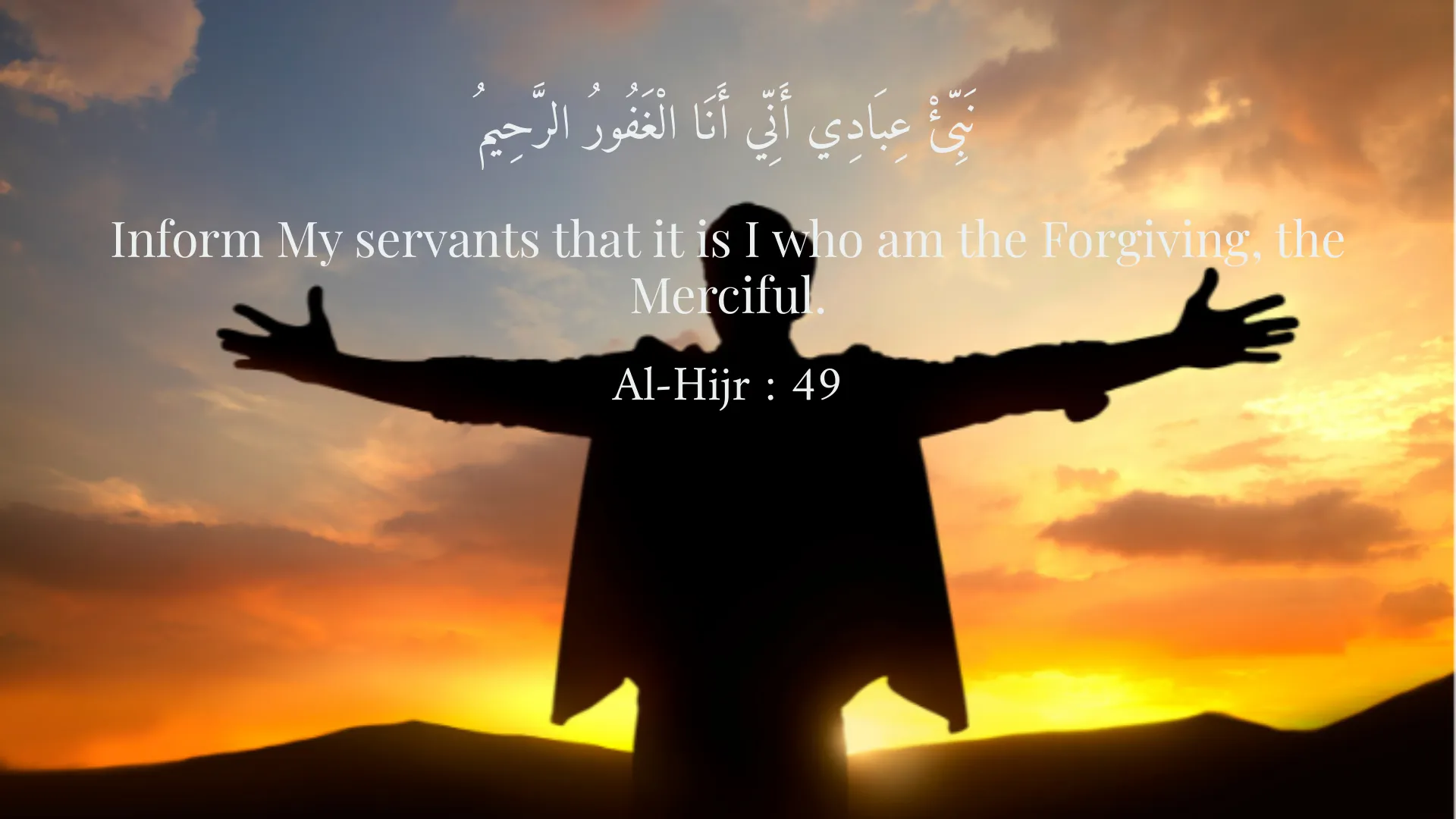
نَبِّئْ عِبَادِي أَنِّي أَنَا الْغَفُورُ الرَّحِيمُ
Inform My servants that it is I who am the Forgiving, the Merciful.
Al-Hijr : 49
وَأَنَّ عَذَابِي هُوَ الْعَذَابُ الْأَلِيمُ
And that My punishment is the painful punishment.
Al-Hijr : 50
قُلْ يَا عِبَادِيَ الَّذِينَ أَسْرَفُوا عَلَىٰ أَنفُسِهِمْ لَا تَقْنَطُوا مِن رَّحْمَةِ اللَّهِ ۚ إِنَّ اللَّهَ يَغْفِرُ الذُّنُوبَ جَمِيعًا ۚ إِنَّهُ هُوَ الْغَفُورُ الرَّحِيمُ
Say, 'O My servants who have transgressed against themselves [by sinning], do not despair of the mercy of Allah. Indeed, Allah forgives all sins. Indeed, it is He who is the Forgiving, the Merciful.'
Az-Zumar : 53
وَمِنَ النَّاسِ وَالدَّوَابِّ وَالْأَنْعَامِ مُخْتَلِفٌ أَلْوَانُهُ ۗ إِنَّمَا يَخْشَى اللَّهَ مِنْ عِبَادِهِ الْعُلَمَاءُ ۗ إِنَّ اللَّهَ عَزِيزٌ غَفُورٌ
And among people and moving creatures and grazing livestock are various colors. Only those who have knowledge among His servants fear Allah. Indeed, Allah is Exalted in Might and Forgiving.
Fatir : 28
Short Story
One day, a wise man visited a great master and asked with concern, "Master, how can I obey and respect God without a paralyzing fear settling in my heart?" The master smiled and said, "Be careful! True seekers of knowledge respect a king not for his power, but for his justice and mercy. I have heard that once in a city, there was a ruler whom people greatly feared, not for his might, but for his injustice. But when another ruler came who governed with wisdom and justice and listened to the people's problems, people did not fear him; instead, they respected and loved him with all their hearts. He knew that whenever he made a mistake, the more compassionate and wiser ruler would attend to his condition, not with anger, but with guidance and forgiveness." The master continued, "Is not God, the Most Merciful of the merciful and the Most Knowing of the knowing, more worthy of being approached with love and trust, not with fear? His greatness lies in His mercy, not solely in His power. The more you know Him, baseless fear will give way to deep love, assurance, and profound respect. Your heart will find peace in the shade of this knowledge."