Quranic Answer
Reviving divine love in the heart is a profound spiritual journey rooted deeply in the teachings of the Holy Quran and the Sunnah of the Prophet Muhammad (peace be upon him). This love is not a fleeting emotion but a perpetual state of connection, knowledge, and devotion to the Almighty Creator, permeating and giving meaning to every aspect of human life. The Quran repeatedly invites humanity to contemplate, remember, and seek closeness to God, for this path is the very means of igniting and sustaining this inner divine affection. Indeed, every human being is intrinsically endowed with an innate yearning for absolute perfection, which is the very essence of God Almighty, and cultivating this yearning is the core purpose of a believing life. The first step in kindling divine love is through deep 'knowledge' (Ma'rifah) and 'understanding' of God. How can one truly love someone they do not know? The Quran, in numerous verses, points to God's majesty, power, boundless mercy (Ar-Rahman) and compassion (Ar-Rahim), and His other beautiful names and attributes, inviting humanity to reflect upon these qualities. The more we learn about God, the more we become aware of His greatness, beauty, wisdom, and benevolence, and this knowledge plants and nurtures the seed of love in the heart. Contemplation of the creation of the heavens and the earth, the unparalleled order of the universe, and the countless blessings bestowed upon us every moment, are all signs of the Creator’s power and wisdom that draw the heart towards Him. Surah Al-Imran, verse 191, states: “Those who remember Allah while standing or sitting or [lying] on their sides and reflect on the creation of the heavens and the earth, [saying], ‘Our Lord, You did not create this in vain. Exalted are You! Then protect us from the punishment of the Fire.’” This profound reflection is the prelude to true knowledge and the wellspring of divine love. The second crucial step is 'Dhikr' (remembrance) and a 'constant recollection' of God. Dhikr is not merely the repetition of words but a heartfelt presence in the divine presence. The Holy Quran, in Surah Ar-Ra'd, verse 28, emphatically declares: “Those who have believed and whose hearts are assured by the remembrance of Allah. Unquestionably, by the remembrance of Allah hearts are assured.” The remembrance of God purifies the heart from heedlessness and the stains of worldly attachments, preparing it to receive divine love. Prayer (Salah), recitation of the Quran, supplication (Du'a), and even silent, internal remembrance throughout daily life are all tools for maintaining this connection and renewing the covenant of love. The more we remember God, the more we feel His pervasive presence in our lives, and this presence nourishes our love. Dhikr extends beyond verbal acts; it encompasses actions as well. Fulfilling religious obligations, abstaining from prohibitions, and serving God's creation are all manifestations of practical Dhikr that strengthen divine love. This consistent remembrance transforms the heart into a sanctuary for divine connection, where love can flourish without hindrance. The third pathway is 'obedience' and 'following' God's commands and the Sunnah of the Prophet Muhammad (PBUH). The Quran, in Surah Al-Imran, verse 31, explicitly states: “Say, [O Muhammad], 'If you should love Allah, then follow me, [so] Allah will love you and forgive you your sins. And Allah is Forgiving and Merciful.'” This verse sets a clear criterion for claiming divine love: obedience to the Messenger of Allah. True love is not merely expressed in words but is demonstrated through action and submission to the will of the Beloved. Performing religious duties such as prayer, fasting, zakat, and Hajj, as well as abstaining from sins and forbidden acts, are all signs of this obedience that strengthen the bond between the servant and their Lord. Every act of worship performed with sincerity and for the sake of Allah's pleasure is a step towards the pinnacles of love and knowledge. This obedience springs not from compulsion but from an inherent love and desire to please the Beloved, transforming duties into acts of devotion and bringing immense spiritual satisfaction. The fourth crucial factor is 'gratitude' (Shukr) and 'appreciation' for God's countless blessings. In Surah Ibrahim, verse 7, we read: “And [remember] when your Lord proclaimed, 'If you are grateful, I will surely increase you [in favor]; but if you deny, indeed, My punishment is severe.'” Gratitude directs the human being towards the source of all goodness and fills the heart with thankfulness and praise. When a person realizes that everything they possess, from the smallest breath to the greatest successes, is from God's grace and generosity, their affection and love for God increase manifold. Gratitude is not only verbal but also practical; it means using blessings correctly, in ways that please the Giver. This conscious recognition of divine bounty cultivates a profound sense of indebtedness and affection, making the heart more receptive to divine love. The fifth point is continuous 'repentance' (Tawbah) and 'seeking forgiveness' (Istighfar). Humans are prone to error, and sins tarnish the heart, clouding the loving connection with God. Sincere repentance, meaning a genuine return from error and true remorse, opens the path for the heart to be cleansed and the connection to be renewed. Allah Almighty describes Himself in the Quran as “At-Tawwab” (the Acceptor of Repentance) and “Al-Ghafour” (the Forgiving), and this expansive divine mercy keeps hope alive in the servant's heart. Each time a servant humbly returns to their Lord, seeking forgiveness, a door of divine mercy and love opens to them, strengthening the bond of love. Finally, 'struggle against the self' (Mujahadat an-Nafs) and 'purification of character' (Tahdhib al-Akhlaq) are other ways to revive divine love. The Quran, in many verses, emphasizes self-purification and abstaining from blameworthy traits. When a person cleanses their heart from envy, malice, arrogance, and selfishness, filling it instead with humility, generosity, kindness, and forgiveness, their heart becomes a suitable vessel for receiving the light of divine love. Divine love finds it difficult to settle in a heart still entangled with worldly attachments and undesirable traits. This struggle is not only internal but also manifests in interactions with others and in performing good deeds and serving God's creation, for serving creation is serving the Creator, and thus a way to express practical love for God Almighty. In summary, reviving divine love in the heart is a continuous process achieved through deep knowledge, constant remembrance, sincere obedience, perpetual gratitude, continuous repentance and seeking forgiveness, and purification of the self and good character. This love illuminates the heart, gives direction to life, and keeps a person steadfast on the path to divine closeness. This journey, with every step taken towards God, becomes deeper and sweeter, bringing unparalleled tranquility and contentment to the soul.
Related Verses
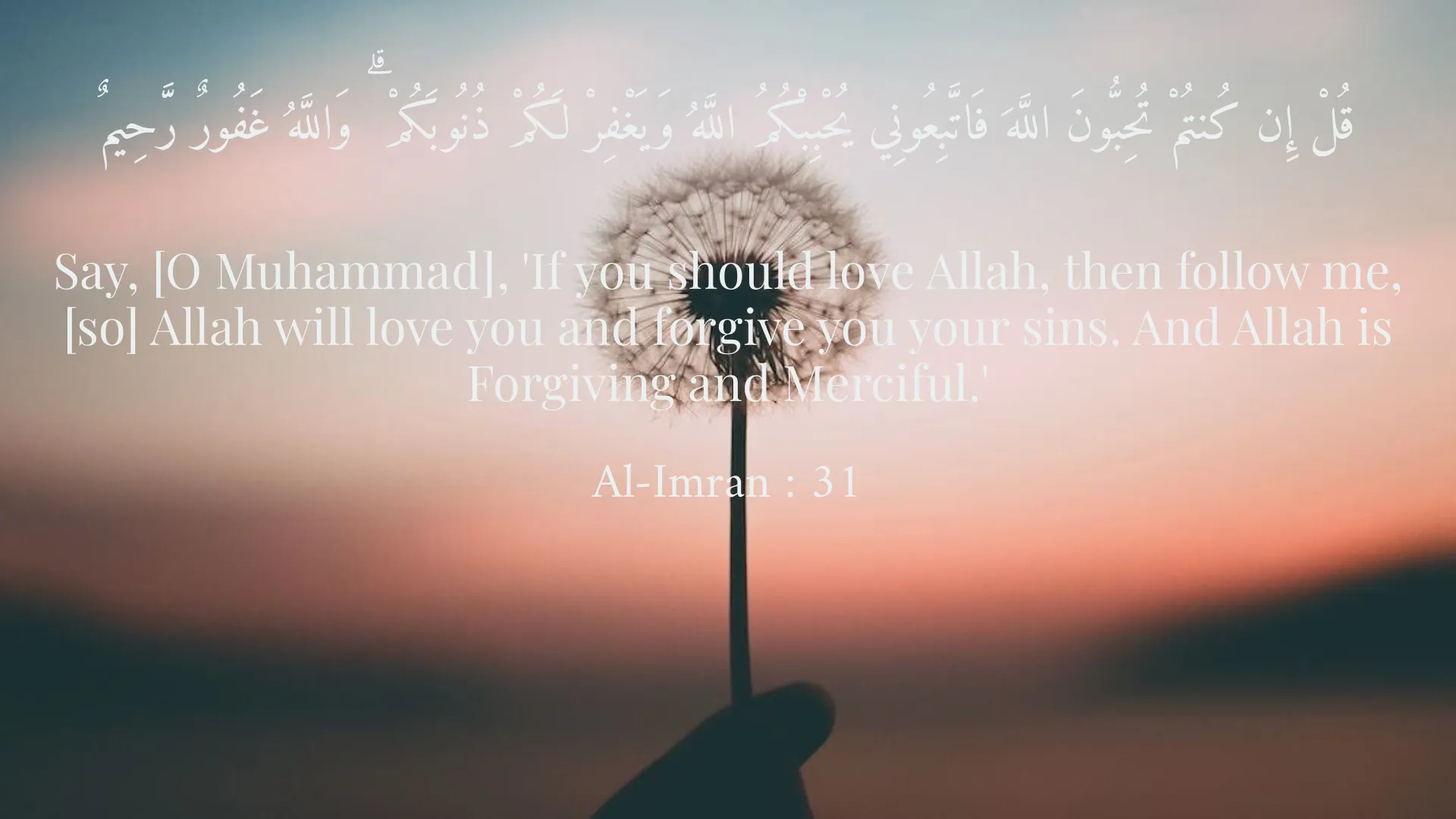
قُلْ إِن كُنتُمْ تُحِبُّونَ اللَّهَ فَاتَّبِعُونِي يُحْبِبْكُمُ اللَّهُ وَيَغْفِرْ لَكُمْ ذُنُوبَكُمْ ۗ وَاللَّهُ غَفُورٌ رَّحِيمٌ
Say, [O Muhammad], 'If you should love Allah, then follow me, [so] Allah will love you and forgive you your sins. And Allah is Forgiving and Merciful.'
Al-Imran : 31
الَّذِينَ آمَنُوا وَتَطْمَئِنُّ قُلُوبُهُم بِذِكْرِ اللَّهِ ۗ أَلَا بِذِكْرِ اللَّهِ تَطْمَئِنُّ الْقُلُوبُ
Those who have believed and whose hearts are assured by the remembrance of Allah. Unquestionably, by the remembrance of Allah hearts are assured.
Ar-Ra'd : 28
وَإِذْ تَأَذَّنَ رَبُّكُمْ لَئِن شَكَرْتُمْ لَأَزِيدَنَّكُمْ ۖ وَلَئِن كَفَرْتُمْ إِنَّ عَذَابِي لَشَدِيدٌ
And [remember] when your Lord proclaimed, 'If you are grateful, I will surely increase you [in favor]; but if you deny, indeed, My punishment is severe.'
Ibrahim : 7
Short Story
It is narrated that one day, a king asked a wise sage, "What is the secret to true peace of heart and genuine happiness?" The sage replied, "O King! The heart is like a treasure chest that must be filled with precious jewels. These jewels are not of gold and silver, but of the remembrance of God and love for Him. The more you empty your heart of worldly desires and attachments, and fill it with the light of divine knowledge and remembrance, the greater tranquility you will find – a tranquility that all the treasures of the world cannot buy." The king, who had spent years pursuing worldly riches, was deeply moved by the sage's wise words. He understood that the true treasure lay in reviving divine love in the heart. From that day forward, instead of accumulating more wealth, he dedicated himself to increasing his faith and drawing closer to God, tasting the sweet fruit of this path.