Quranic Answer
Supplication (Du'a) is a bridge that connects humanity to the Creator of the universe; it is an intimate and direct conversation with the Lord who is closer to us than our jugular vein. However, for this conversation to be effective and accepted, it requires a 'right intention.' A right intention in supplication is not merely a superficial condition but rather the soul and essence of its acceptance. In the Holy Quran, the importance of sincere intention and pure devotion is repeatedly emphasized. Allah Almighty invites us to supplicate in numerous verses and promises to respond, but this response is contingent upon sincerity and purity in intention. The first and most fundamental pillar of a right intention in supplication is 'Ikhlas' (sincerity). Ikhlas means that everything one does, including supplicating, is solely for the pleasure of Allah and to draw closer to Him, not to seek attention from others, not for showing off or hypocrisy, and not even primarily for worldly gains. When a supplication is made with Ikhlas, it emanates directly from the depths of the heart and ascends to the Divine Presence. The Quran explicitly emphasizes this point, as stated in Surah Az-Zumar, verse 2: "So worship Allah, [being] sincere to Him in religion." This verse articulates the most fundamental principle for every act of worship, including supplication: complete sincerity for Allah. The second dimension of a right intention is 'Hudhur al-Qalb' (presence of heart). Supplication is not merely a verbal utterance; it must be expressed from the depths of one's being with full attention and mental focus. When the heart and tongue are in harmony, and the mind is not distracted by other matters during supplication, that supplication gains new life. Imagine speaking to a loved one; would you not look at them and listen to their words? The connection with Allah should be with the same level of presence and respect. Surah Al-A'raf, verse 55 states: "Call upon your Lord in humility and privately." Humility signifies presence of heart, subservience, and reverence, all of which are essential components of a correct intention. The third aspect of intention is 'complete trust and reliance on Allah' (Tawakkul). When we supplicate, we must have full conviction that Allah is the All-Hearing, the All-Knowing, and the All-Powerful, and that He will respond to our supplication in the best possible way. This trust does not mean expecting every request to be answered exactly as we imagine, but rather believing that Allah ordains what is best for us, whether by direct fulfillment, by saving it for the hereafter, or by averting a calamity from us. Surah Al-Baqarah, verse 186 states: "And when My servants ask you, [O Muhammad], concerning Me - indeed I am near. I respond to the invocation of the supplicant when he calls upon Me." This verse itself is a guarantee of Allah's hearing and responding, which strengthens the reliance in the supplicant's intention. The fourth crucial point is 'genuine desire and longing for divine acceptance and mercy.' Supplication should not be a mere habit or obligation. There must be a yearning and eagerness to converse with Allah, just as a thirsty person seeks water. This eagerness indicates that our need for Allah is a true and profound one. This need shapes a sincere intention that springs from within. Fifth, 'avoidance of showing off and ostentation' (Riya'). A right intention means steering clear of any display or effort to gain the admiration of others. Supplication should be a personal and private connection between the worshipper and the Worshipped. If a supplication is made to be heard by others or to earn their praise, the spirit of sincerity departs from it, and it holds no value with Allah. Sixth, 'repentance and seeking forgiveness before supplication.' For a supplication to be made with a pure intention and a pure heart, it is best to repent from sins and seek forgiveness from Allah before supplicating. This purifies the heart and removes barriers between the servant and the Creator. Repentance and seeking forgiveness are, in a way, preparing the heart for a sincere conversation with Allah. Ultimately, a right intention in supplication means understanding the truth that we are nothing before the grandeur of Allah, and it is from Him alone that we seek help and acceptance. This understanding, combined with humility, hope, and sincerity, elevates our supplication to the peak of acceptance. So, when supplicating, not only utter the words but also direct your heart with all your being, sincerely and with all hope and reliance, towards Him. For as the prophetic tradition states, "Indeed, actions are by intentions," and this applies to our supplications as well. This approach not only impacts the acceptance of the supplication but also paves the way for our spiritual growth and perfection, helping us to maintain a conscious and spiritual presence in every moment of life.
Related Verses
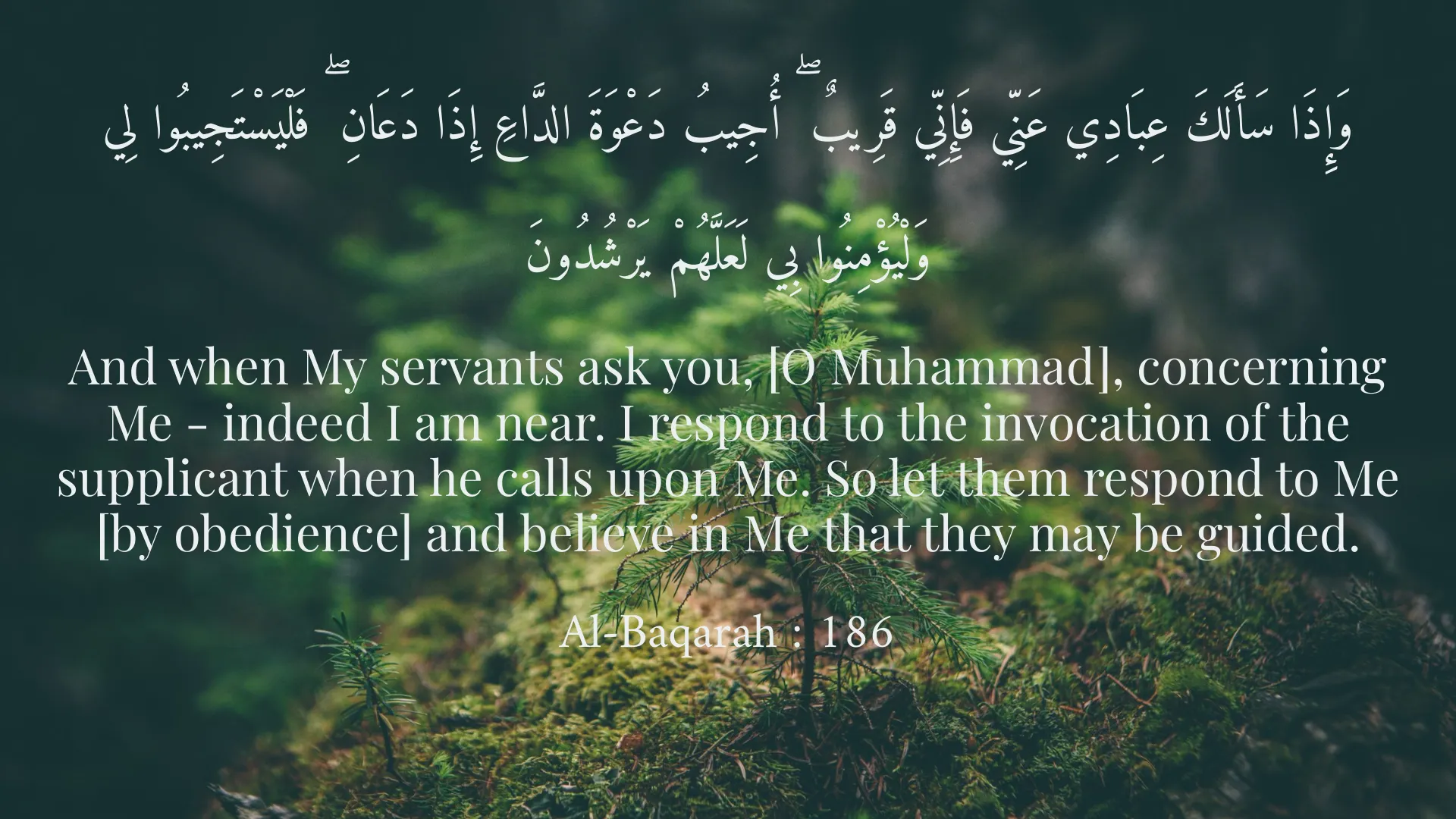
وَإِذَا سَأَلَكَ عِبَادِي عَنِّي فَإِنِّي قَرِيبٌ ۖ أُجِيبُ دَعْوَةَ الدَّاعِ إِذَا دَعَانِ ۖ فَلْيَسْتَجِيبُوا لِي وَلْيُؤْمِنُوا بِي لَعَلَّهُمْ يَرْشُدُونَ
And when My servants ask you, [O Muhammad], concerning Me - indeed I am near. I respond to the invocation of the supplicant when he calls upon Me. So let them respond to Me [by obedience] and believe in Me that they may be guided.
Al-Baqarah : 186
إِنَّا أَنزَلْنَا إِلَيْكَ الْكِتَابَ بِالْحَقِّ فَاعْبُدِ اللَّهَ مُخْلِصًا لَّهُ الدِّينَ
Indeed, We have sent down to you the Book in truth, so worship Allah, [being] sincere to Him in religion.
Az-Zumar : 2
ادْعُوا رَبَّكُمْ تَضَرُّعًا وَخُفْيَةً ۚ إِنَّهُ لَا يُحِبُّ الْمُعْتَدِينَ
Call upon your Lord in humility and privately; indeed, He does not like transgressors.
Al-A'raf : 55
Short Story
It is said that in ancient times, there were two men: one was a renowned ascetic who, wherever he went, would supplicate loudly and with a tone full of pretension, seeking the admiration of people and their testimony to his greatness. The other was an unknown man who, in his solitude, with a broken heart and tearful eyes, shared his needs directly with his Lord, without any intermediary. One day, both prayed to God for rain. The ascetic proclaimed loudly, "O God, for the sake of my devotions, send Your merciful rain!" But the sky remained clear. The unknown man went to a quiet corner, prostrated himself, and whispered with utmost humility: "My Lord, I am a sinful servant and unworthy of Your grace, but You are the Most Merciful, the Most Compassionate. For the sake of Your boundless mercy, have pity on Your servants and send rain." Before his words had even finished, clouds appeared in the sky, and a torrential rain began. The bewildered people asked, "How was this unknown man's prayer answered sooner than that of the famous ascetic?" A wise old man replied: "Because the ascetic's prayer was from his tongue and for the eyes of people, but this man's prayer was from his heart and for the pleasure of God. Any prayer that arises from sincerity and with a pure intention will undoubtedly reach the heavens and be answered."