Quranic Answer
Transforming earthly love into divine love is a profound and intricate journey that beckons individuals to delve deep into the nature of their affections. It is a sacred metamorphosis that requires not only understanding but also unwavering willpower and spiritual awareness. In the essence of Islamic teaching, particularly illuminated in the Holy Quran, this transformative process is articulated as a journey towards a higher love — the love for Allah, the Creator, who deserves the utmost devotion from His creation. The Holy Quran serves as a guiding beacon, providing the believer with profound insights into the nature of love and affection. In Surah Al-Baqarah, verse 165, Allah discusses a common phenomenon, where some individuals mistakenly prioritize their love for worldly possessions, people, and transient pleasures over their love for Him. The verse highlights a critical conflict many face: an attachment to earthly delights, which can obscure one's path to divine love. True love, as conveyed in the Quran, transcends the ephemeral nature of worldly bonds. It resides solely with Allah, the eternal and unchanging. In order to initiate the transformation from earthly love to divine love, it is essential for an individual to realign their affections. This requires a shift of focus from the created to the Creator. A meaningful relationship with Allah should supersede any attachment to worldly entities, including family, career, or material possessions. For instance, in the Quran, we are encouraged to foster a connection with Allah in such a way that our love for Him eclipses our love for others. It illustrates that our bond with Allah must be prioritised above all else, including familial relationships. This is not merely a call to duty but an affirmation of trust in Allah as the ultimate planner of our lives. Allah’s wisdom surpasses that of any human counselor or guide. Believers are taught to embrace their love for Allah with a conviction that He is the best of planners and overseers. This attitude cultivates a sense of peace and reliance on Allah, particularly through life's uncertainties. Moreover, verse 24 of Surah At-Tawbah serves as a poignant reminder of the dangers of misplaced priorities. It cautions that if one’s affection for things of this world — their family, wealth, or status — is greater than their love for Allah and striving for His cause, they must prepare for the repercussions of such an imbalance. This lesson is vital, as it invites believers to periodically reassess their values and the source of their affection, ensuring that their ultimate loyalty and love are directed towards Allah. Practically speaking, the transformation of love from earthly to divine can be approached through deliberate actions in our daily lives. This can include engaging in righteous deeds, acts of kindness, and community service, which not only nurture our character but also foster an environment where love for Allah flourishes. By intertwining our affections for those we love with a commitment to remember Allah, we cultivate a holistic approach to our relationships. For example, praying for loved ones, serving them, and embodying kindness while invoking Allah's name strengthens the divine connection woven through our earthly relationships. Additionally, engaging in regular acts of worship, such as prayer (Salah), recitation of the Quran, and remembrance of Allah (Dhikr) can significantly aid in this transformation. These acts not only serve as reminders of Allah's presence but also assist in detoxifying the heart from excessive reliance on material gains or relationships. By consistently engaging in these spiritual practices, our hearts become aligned with the love of Allah, reshaping our desires to reflect His will and guidance. Moreover, another essential aspect of this transformation is understanding the nature of love itself. Love, in its purest form, is based on respect, sacrifice, and commitment. When we love Allah, we naturally yearn to embody His attributes, which include mercy, compassion, and justice. By recognizing Allah’s exalted qualities, we are encouraged to infuse our earthly love with these characteristics. Therefore, our interactions with others become a reflection of our divine love for Allah, as we strive to embody His ideals in our daily engagements. In recognizing the temporality of earthly existence, believers are gently nudged towards an everlasting connection with Allah. In shifting our focus, we find that every ounce of earthly love can be a conduit to accessing divine love. Jesus (peace be upon him) once taught about love being inherent to our existence, and by nurturing this love in accordance with Allah's will, we can experience the depths of divine love that await us. In conclusion, the journey from earthly love to divine love is a significant process that requires a deliberate effort to foster a relationship with Allah, prioritizing our attachments in a way that reflects our understanding of true love. Through continued self-reflection, virtuous actions, and the practice of faith, individuals can cultivate an unshakeable love for the Divine. This transformation ultimately leads to inner peace, fulfillment, and a deeper understanding of love that transcends the mundane. It is through this profound shift in love that believers can realize their purpose in this life, fostering connections that not only bring joy and happiness but also align with the divine will and provide a pathway towards eternal love and acceptance in the hereafter.
Related Verses
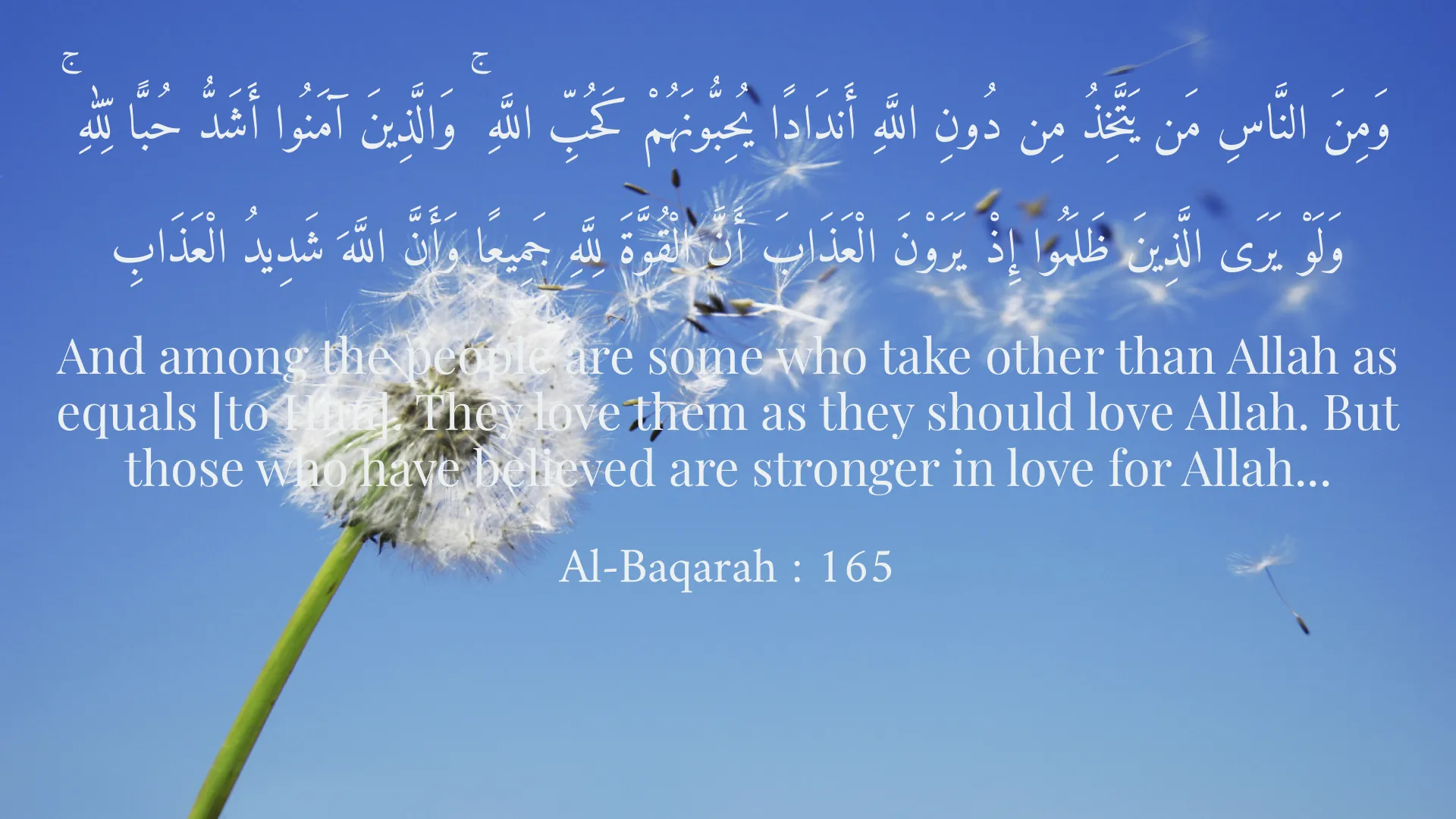
وَمِنَ النَّاسِ مَن يَتَّخِذُ مِن دُونِ اللَّهِ أَندَادًا يُحِبُّونَهُمْ كَحُبِّ اللَّهِ ۚ وَالَّذِينَ آمَنُوا أَشَدُّ حُبًّا لِّلهِ ۚ وَلَوْ يَرَى الَّذِينَ ظَلَمُوا إِذْ يَرَوْنَ الْعَذَابَ أَنَّ الْقُوَّةَ لِلَّهِ جَمِيعًا وَأَنَّ اللَّهَ شَدِيدُ الْعَذَابِ
And among the people are some who take other than Allah as equals [to Him]. They love them as they should love Allah. But those who have believed are stronger in love for Allah...
Al-Baqarah : 165
قُلْ إِن كَانَ آبَاؤُكُمْ وَأَبْنَاؤُكُمْ وَإِخْوَانُكُمْ وَأَزْوَاجُكُمْ وَعَشِيرَتُكُمْ وَأَمْوَالٌ اقْتَرَفْتُمُوهَا وَتِجَارَةٌ تَخْشَوْنَ كَسَادَهَا وَمَسَاكِنُ تَرْضَوْنَهَا أَحَبَّ إِلَيْكُمْ مِّنَ اللَّهِ وَرَسُولِهِ وَجِهَادٍ فِي سَبِيلِهِ فَتَرَبَّصُوا حَتَّى يَأْتِيَ اللَّهُ بِأَمْرِهِ ۚ وَاللَّهُ لَا يَهْدِي الْقَوْمَ الْفَاسِقِينَ
Say, 'If your fathers, your sons, your brothers, your wives, your relatives, the wealth which you have obtained, and the commerce in which you fear decline, and the dwellings in which you delight are more beloved to you than Allah and His Messenger and jihad in His cause, then wait until Allah executes His command. And Allah does not guide the defiantly disobedient people.'
At-Tawbah : 24
Short Story
One day, a young man named Sohrab was sitting in a beautiful garden, gazing at the fragrant trees. He was thinking about his earthly love for a girl in the village. Suddenly, he recalled a saying from the Quran: ‘Stronger in love for Allah.' He felt the need to direct his love from the created to the Creator. With this thought, he went towards prayer and began his day with a pure intention. With a heart filled with love for Allah, he experienced a deep peace as he redirected his affection.