Quranic Answer
Mental peace is a precious commodity in our contemporary world, a world brimming with challenges, stress, and countless anxieties. Achieving a stable state of mental and spiritual tranquility often seems unattainable. However, the profound and comprehensive teachings of Islam, especially those found in the Holy Quran, offer clear and practical pathways to attain this inner peace. Spirituality in Islam is not merely a collection of dry, ritualistic acts of worship; rather, it is a complete and holistic way of life that encompasses all dimensions of human existence. Its ultimate goal is to achieve well-being in this world and the Hereafter, and indeed, true peace in both realms. The Holy Quran repeatedly emphasizes the importance of connecting with the Creator of the universe and remembering Him, presenting this connection as the primary source of tranquility for hearts. One of the most famous verses in this regard is Surah Ar-Ra'd, verse 28, which states: “Those who have believed and whose hearts are assured by the remembrance of Allah. Unquestionably, by the remembrance of Allah hearts are assured.” This verse encapsulates the essence of your question. The remembrance of Allah (dhikr Allah) is the only true path to the tranquility of hearts and mental peace. Dhikr Allah takes various forms: from reciting the Quran and contemplating its verses to glorifying and praising God, and even reflecting on Divine majesty and wisdom in natural phenomena. When a person genuinely remembers God, and this remembrance takes root deep within their being, worldly attachments, fears, and anxieties stemming from material desires diminish. They come to understand that a superior, compassionate power is always watching over them and supporting them. This sense of divine support bestows an indescribable peace upon them. Another pivotal pillar of spirituality that plays an unparalleled role in mental peace is 'Salat' (prayer). Prayer is the pillar of faith and the ascension of the believer. This five-times-a-day connection offers an opportunity to temporarily disconnect from the clamor of the world and connect with the eternal source of peace. In every unit of prayer, a person stands humbly and submissively before their Lord, surrendering their problems and concerns to Him, and seeking His aid. The Holy Quran states in Surah Al-Ankabut, verse 45: “Recite, [O Muhammad], what has been revealed to you of the Book and establish prayer. Indeed, prayer prohibits immorality and wrongdoing, and the remembrance of Allah is greater. And Allah knows that which you do.” This verse not only highlights prayer's deterrent effect against evil but also implicitly points to the peace derived from this profound connection. 'Patience' (Sabr) and 'Trust' (Tawakkul) are also two wings of spirituality without which flight towards mental peace is impossible. Life is full of trials and tribulations, and no human being is exempt from suffering and difficulties. However, the difference lies in how one faces these challenges. The Holy Quran invites believers to patience and steadfastness: “O you who have believed, seek help through patience and prayer. Indeed, Allah is with the patient.” (Al-Baqarah: 153). When a person is patient, meaning they do not despair or complain in the face of calamities and trust in Divine wisdom, and alongside it they practice 'Tawakkul,' meaning they surrender their affairs to God and leave the outcome to Him, the heavy burden of anxiety is lifted from their shoulders. They know that whatever happens, Divine will is inherent in it, and God desires what is best for them. This inner certainty grants them deep peace. 'Gratitude' (Shukr) is also one of the most beautiful manifestations of spirituality that directly impacts mental peace. Many mental distresses stem from ingratitude and focusing on what one lacks. However, the Holy Quran invites us to be grateful for Allah's countless blessings. When a person focuses on what they possess instead of what they lack, and expresses gratitude for it, their focus shifts from deficiencies to abundance. This change in perspective is itself a great source of peace and contentment. In Surah Ibrahim, verse 7, we read: “If you are grateful, I will surely increase you [in favor]; but if you deny, indeed, My punishment is severe.” This verse indicates that gratitude not only brings peace but also increases divine blessings. Finally, a correct understanding of 'this world' (Dunya) and the 'Hereafter' (Akhirah) also contributes significantly to mental peace. The Holy Quran repeatedly emphasizes the transient nature of this world and the eternal nature of the Hereafter. When a person understands that this world is merely a temporary passage and the primary goal is eternal life in the Hereafter, their attachments to the world diminish. Consequently, the loss of wealth or status, or facing failures, no longer devastates them. This perspective frees them from the stresses of the relentless worldly race and allows them to navigate life with greater peace. This profound understanding of the philosophy of existence liberates a person from futile worries and helps them continue their life's journey with trust and tranquility in any situation. Therefore, Islamic spirituality, centered on the remembrance of God, prayer, patience, trust, gratitude, and a correct understanding of existence, is not only a path to eternal salvation but also a high road to achieving stable mental peace in this tumultuous world. These are but a few drops from the boundless ocean of Quranic teachings that can serve as a guiding light for our peace.
Related Verses
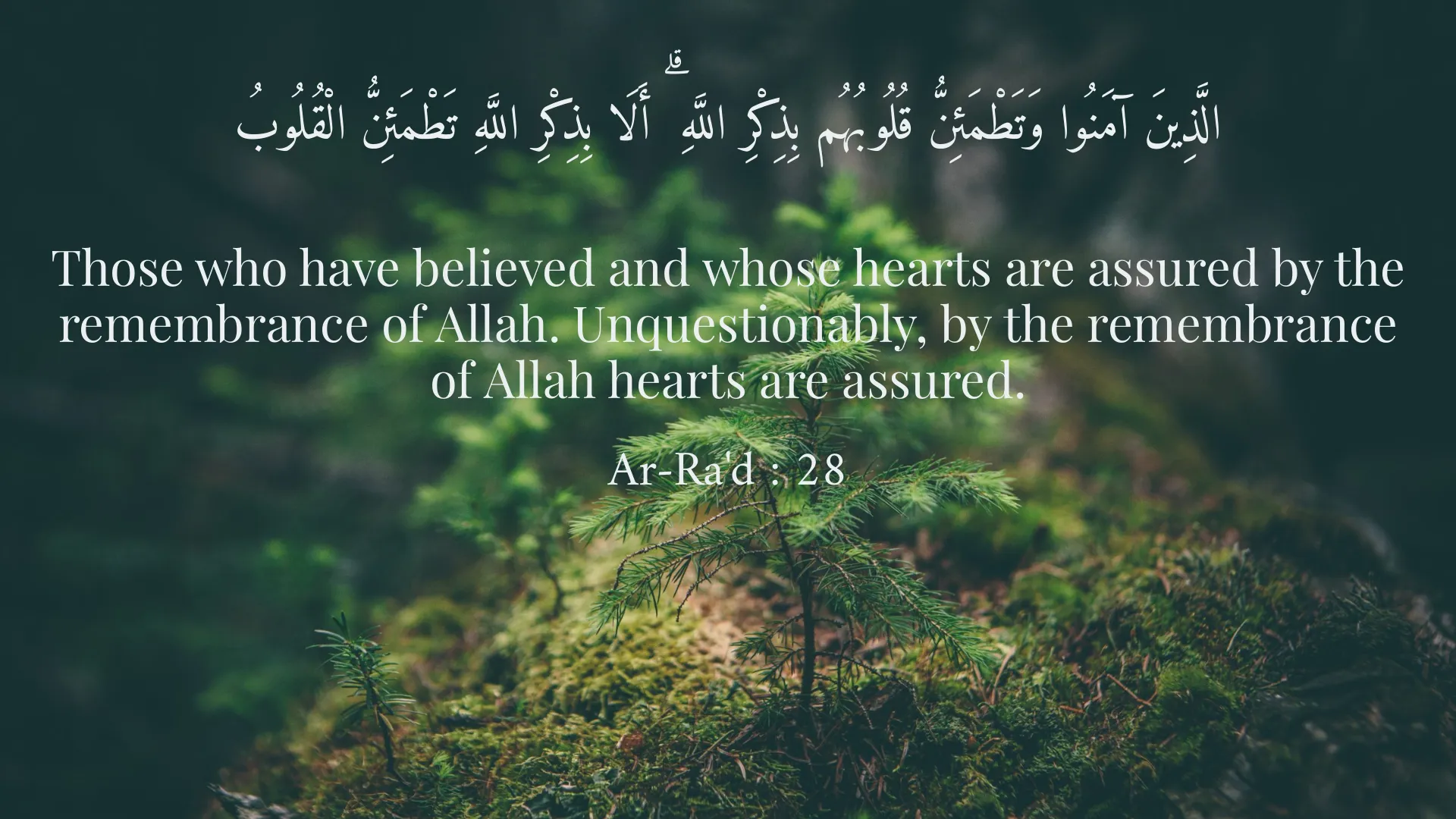
الَّذِينَ آمَنُوا وَتَطْمَئِنُّ قُلُوبُهُم بِذِكْرِ اللَّهِ ۗ أَلَا بِذِكْرِ اللَّهِ تَطْمَئِنُّ الْقُلُوبُ
Those who have believed and whose hearts are assured by the remembrance of Allah. Unquestionably, by the remembrance of Allah hearts are assured.
Ar-Ra'd : 28
يَاأَيُّهَا الَّذِينَ آمَنُوا اسْتَعِينُوا بِالصَّبْرِ وَالصَّلَاةِ ۚ إِنَّ اللَّهَ مَعَ الصَّابِرِينَ
O you who have believed, seek help through patience and prayer. Indeed, Allah is with the patient.
Al-Baqarah : 153
وَمَن يَتَوَكَّلْ عَلَى اللَّهِ فَهُوَ حَسْبُهُ ۚ إِنَّ اللَّهَ بَالِغُ أَمْرِهِ ۚ قَدْ جَعَلَ اللَّهُ لِكُلِّ شَيْءٍ قَدْرًا
And whoever relies upon Allah – then He is sufficient for him. Indeed, Allah will accomplish His purpose. Allah has already set for everything a [decreed] extent.
At-Talaq : 3
Short Story
It is narrated in Saadi's Gulistan that there was a wealthy and powerful king, yet he was always anxious and restless. One day, he saw a dervish, who despite his apparent poverty, sat cheerfully and peacefully by a stream, singing. The king asked him, 'O dervish, with all your destitution, how do you possess such a tranquil heart, while I, with all my blessings, have no peace?' The dervish smiled and replied, 'O King, you have attached your heart to things that are perishable, and every loss brings a new sorrow. But I have entrusted my heart to One who is eternal, and whatever comes from Him is good. The remembrance of the Great Lord frees the heart from every bondage, and when the heart is free, peace comes naturally. The sorrow of what is lacking and the fear of losing what one has are veils to peace. Occupy your heart with the remembrance of the Friend, and sorrow will depart from you.' The king learned a lesson from the dervish's words and realized that peace lies not in possessions, but in entrusting one's heart to the Creator from whom all peace originates.