Quranic Answer
In the rich and profound teachings of the Holy Quran, although the term "conscience" (وجدان) in its modern philosophical sense may not be explicitly mentioned, numerous concepts and directives are emphasized that significantly contribute to awakening, strengthening, and guiding this inner moral force that we call conscience. The Quran not only alludes to the existence of such a force but also provides practical strategies for its cultivation, enabling individuals to walk the path of truth and justice and to refrain from errors. One of the most significant concepts discussed in the Quran that directly relates to conscience is Nafs al-Lawwamah, often translated as 'the blaming self' or 'the self-reproaching soul.' In Surah Al-Qiyamah, verse 2, Allah says: "And I swear by the self-reproaching soul!" This verse points to the existence of an inner faculty that, after committing a sin or error, reproaches the individual, prompting regret and a return to the right path. Awakening the conscience means activating and strengthening this Nafs al-Lawwamah so that it can effectively fulfill its guiding role. The foundation of awakening conscience in the Quran is Taqwa, or God-consciousness. Taqwa is not merely the fear of divine punishment; it encompasses a deep sense of responsibility towards Allah and a continuous awareness of His presence. This sense of responsibility compels individuals to constantly review their actions and intentions. When a person possesses Taqwa, they have an internal guardian that warns them against temptations and desires. In Surah Al-Baqarah, verse 197, we read: "...And take provision, for indeed, the best provision is righteousness (Taqwa)..." Taqwa acts as a light that illuminates the correct path for the conscience, keeping it away from heedlessness and darkness. To cultivate Taqwa, the Quran strongly emphasizes Dhikr, the remembrance of Allah. The remembrance of Allah brings tranquility to the heart and purifies it from impurities. In Surah Ar-Ra'd, verse 28, it is stated: "Those who have believed and whose hearts are assured by the remembrance of Allah. Unquestionably, by the remembrance of Allah hearts are assured." Constant Dhikr is like nourishment for the soul, keeping the conscience alive and active, empowering it to stand firm against adversities and temptations. This continuous reminder makes individuals less prone to sin and more inclined to consider the afterlife consequences of their actions. Furthermore, contemplation and reflection (Tafakkur and Tadabbur) on divine signs and the wonders of creation are other Quranic methods for awakening conscience. The Holy Quran repeatedly invites humanity to ponder and reflect upon the creation of the heavens and the earth, the alternation of night and day, and the diversity of creation. In Surah Aal-e-Imran, verses 190-191, we read: "Indeed, in the creation of the heavens and the earth and the alternation of night and day are signs for those of understanding. Who remember Allah while standing or sitting or [lying] on their sides and reflect upon the creation of the heavens and the earth..." This deep reflection allows individuals to realize the Creator's magnificence and understand their place in existence. This understanding strengthens their sense of responsibility and makes their conscience more alert regarding the rights of others and adherence to moral values. Witnessing order and wisdom in the universe leads individuals to believe that life has a purpose and that every action has consequences, both in this world and the hereafter. This belief is the driving force of conscience. Belief in the Day of Judgment and the concept of the afterlife plays a crucial role in awakening and activating conscience. The Quran emphatically states that everyone is accountable for their deeds, and a day will come when all actions, whether small or large, will be weighed. In Surah Az-Zalzalah, verses 7 and 8, we read: "So whoever does an atom's weight of good will see it. And whoever does an atom's weight of evil will see it." This awareness that no action goes unaccounted for creates a strong motivation for individuals to ask themselves, before performing any action, whether it pleases Allah and what consequences it will entail. This belief in the afterlife transforms the conscience into a constant monitor that prevents individuals from easily overlooking their undesirable actions or violating the rights of others. Finally, Tawbah (repentance) and Istighfar (seeking forgiveness) are also vital Quranic tools for purifying and awakening conscience. Humans are prone to error and may sometimes act contrary to their conscience. The Quran always keeps the door of return open and advises wrongdoers to regret their deeds and turn back to Allah. Sincere repentance not only cleanses sins but also removes the dust from the conscience, allowing it to function clearly and transparently once again. In Surah An-Nisa, verse 110, it states: "And whoever does evil or wrongs himself then seeks forgiveness of Allah will find Allah Forgiving and Merciful." This opportunity for repentance keeps hope alive in the heart and gives the conscience a chance to become active and dynamic again by rectifying errors. In summary, awakening conscience, from a Quranic perspective, is a continuous process that requires Taqwa, Dhikr (remembrance of Allah), Tafakkur and Tadabbur (reflection and contemplation), belief in the afterlife and the Day of Judgment, and readiness for Tawbah and returning to Allah. These are all tools that Allah has provided for humanity to listen to their inner voice and walk the path of salvation.
Related Verses
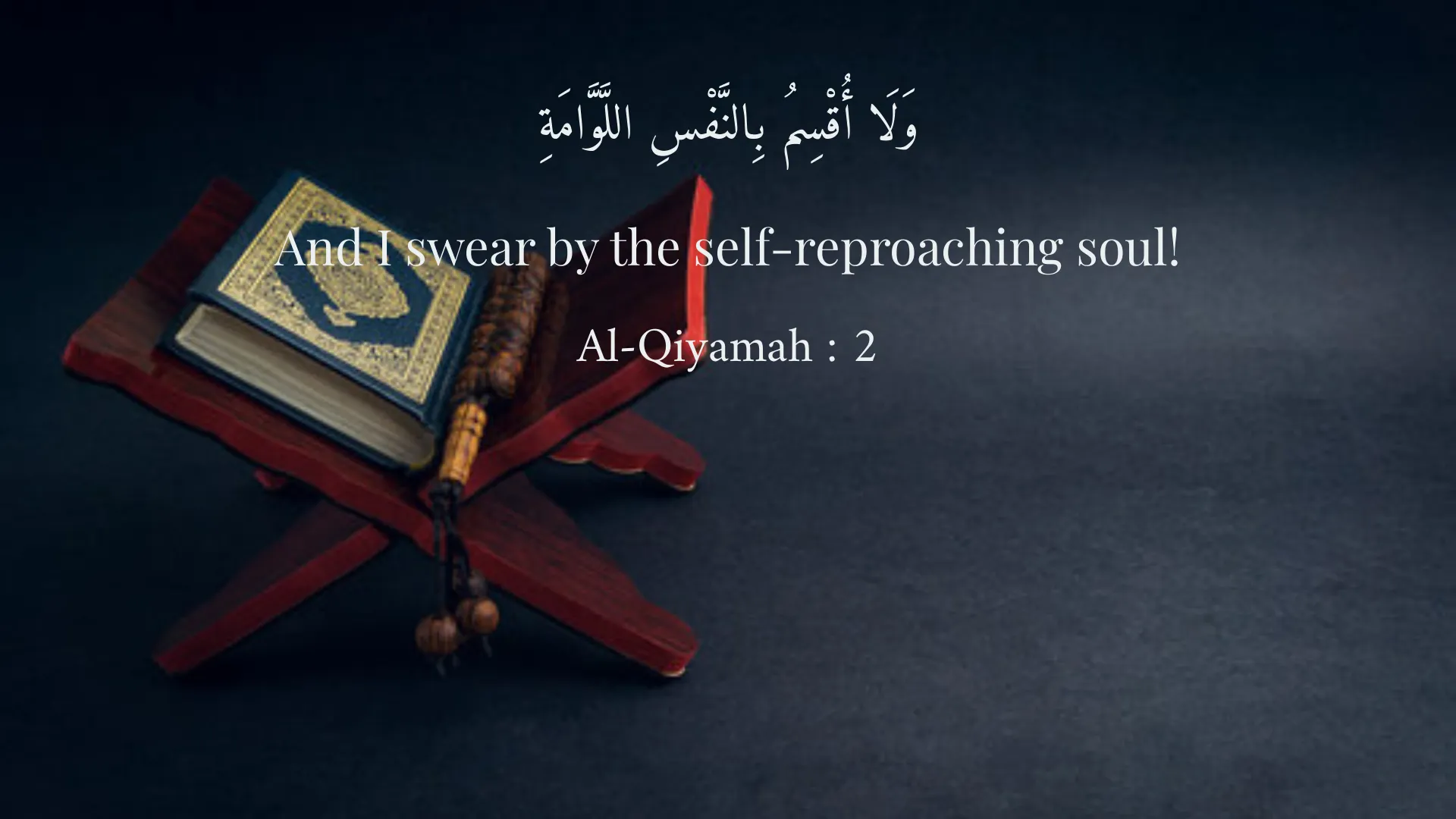
وَلَا أُقْسِمُ بِالنَّفْسِ اللَّوَّامَةِ
And I swear by the self-reproaching soul!
Al-Qiyamah : 2
الْحَجُّ أَشْهُرٌ مَّعْلُومَاتٌ ۚ فَمَن فَرَضَ فِيهِنَّ الْحَجَّ فَلَا رَفَثَ وَلَا فُسُوقَ وَلَا جِدَالَ فِي الْحَجِّ ۗ وَمَا تَفْعَلُوا مِنْ خَيْرٍ يَعْلَمْهُ اللَّهُ ۗ وَتَزَوَّدُوا فَإِنَّ خَيْرَ الزَّادِ التَّقْوَىٰ ۚ وَاتَّقُونِ يَا أُولِي الْأَلْبَابِ
Hajj is [during] well-known months. So whoever has made Hajj obligatory upon himself therein [by entering the state of ihram], there is to be no sexual relation and no disobedience and no disputing during Hajj. And whatever good you do - Allah knows it. And take provision, for indeed, the best provision is righteousness. And fear Me, O you of understanding.
Al-Baqarah : 197
الَّذِينَ آمَنُوا وَتَطْمَئِنُّ قُلُوبُهُم بِذِكْرِ اللَّهِ ۗ أَلَا بِذِكْرِ اللَّهِ تَطْمَئِنُّ الْقُلُوبُ
Those who have believed and whose hearts are assured by the remembrance of Allah. Unquestionably, by the remembrance of Allah hearts are assured.
Ar-Ra'd : 28
الَّذِينَ يَذْكُرُونَ اللَّهَ قِيَامًا وَقُعُودًا وَعَلَىٰ جُنُوبِهِمْ وَيَتَفَكَّرُونَ فِي خَلْقِ السَّمَاوَاتِ وَالْأَرْضِ رَبَّنَا مَا خَلَقْتَ هَٰذَا بَاطِلًا سُبْحَانَكَ فَقِنَا عَذَابَ النَّارِ
Who remember Allah while standing or sitting or [lying] on their sides and reflect upon the creation of the heavens and the earth, [saying], 'Our Lord, You did not create this in vain; exalted are You [above imperfection], so protect us from the punishment of the Fire.'
Aal-e-Imran : 191
Short Story
It is narrated that a powerful and wealthy king was heedless of the suffering of his subjects. He indulged in feasts and merriment, deaf to the cries of the oppressed. One night, in a dream, he saw scenes of injustice and the distress of the people that shook his heart. The next morning, he awoke with a troubled soul and sought refuge with a wise dervish. The dervish calmly told him: "O King! Your true throne and crown are built upon justice and fairness, and true tranquility is the crown of your awakened conscience. The lamentations of the oppressed echo not only in the heavens but also deep within your heart." The king, moved by these words, immediately attended to the grievances of the oppressed, respected their rights, and from that day forward, ruled with justice and compassion. He found that the peace he had sought for years was not in wealth and power, but in an awakened conscience and service to humanity.