Quranic Answer
Job burnout is a modern phenomenon that affects many individuals in today's fast-paced world. While the term itself is not explicitly mentioned in the Holy Quran, the profound principles and teachings of the Quran offer comprehensive and practical solutions to address the root causes of burnout, namely stress, anxiety, despair, and a sense of meaninglessness. The Quran, as a book of guidance, provides a roadmap for a balanced and peaceful life, which can be highly effective in dealing with occupational and psychological challenges. The first and perhaps most crucial step is to strengthen "reliance upon Allah (Tawakkul)." Job burnout often stems from feeling overwhelmed by responsibilities, fear of failure, and anxiety about the future. The Quran repeatedly emphasizes reliance on Allah, instilling in the hearts of believers the conviction that He is the true Provider, and no power is greater than His. In Surah At-Talaq, verse 3, we read: "And whoever relies upon Allah, He is sufficient for him. Indeed, Allah will accomplish His purpose. Allah has already set for everything a [decreed] extent." This verse teaches us that by entrusting our affairs to Allah, a significant portion of our psychological burden is lifted. This reliance does not mean abandoning effort but rather striving diligently and then entrusting the outcomes to divine decree, which itself brings immense tranquility. Another aspect is "patience and perseverance (Sabr)." Working, especially under difficult conditions, requires patience and endurance. The Quran calls believers to patience in the face of hardships and difficulties, promising that Allah is with the patient. In Surah Al-Baqarah, verse 153, it states: "O you who have believed, seek help through patience and prayer. Indeed, Allah is with the patient." This verse demonstrates that patience and spiritual connection (prayer) are two primary pillars for overcoming difficulties. When one faces professional challenges, this patience helps them avoid despair and persist in their work. Alongside patience, "gratitude (Shukr)" plays a vital role. Focusing on what we possess and appreciating our job opportunities and capabilities can shift our perspective from negativity and exhaustion towards positivity and contentment. In Surah Ibrahim, verse 7, we read: "If you are grateful, I will surely increase you [in favor]; but if you deny, indeed, My punishment is severe." "Moderation and Balance (Wasatiyyah)" is another key Quranic principle directly related to job burnout. Islam is not a religion of extremism or neglect, but rather one of moderation. The Holy Quran calls humanity to a balanced life where the rights of the body, soul, family, society, and work are all observed. Excessive work and neglecting other dimensions of life can lead to extreme fatigue and burnout. Allah states in the Quran: "Allah does not burden a soul beyond its capacity" (Al-Baqarah: 286). This verse reminds us to recognize our limits and avoid imposing excessive pressure upon ourselves. Furthermore, the importance of "rest and tranquility" is also emphasized. The night is made for rest, and the day for striving and earning a livelihood, as we read in Surah An-Naba, verses 9 and 10: "And We made your sleep a rest, and made the night a covering." These verses clearly indicate the necessity of sufficient rest for the restoration of physical and mental energy. Finally, "finding divine meaning and purpose in work" can be a significant factor in preventing job burnout. When work is merely a means of earning income and making a living, it might eventually lead to a sense of emptiness and fatigue. However, if work is viewed as a means to serve Allah's creation, gain divine pleasure, or fulfill a social duty, it transforms from a mundane activity into an act of worship. This perspective imbues our work with meaning and intrinsic motivation. Prophet Muhammad (peace be upon him) said: "The best among you are those who are most beneficial to people." This outlook transforms work from a mere burden into an opportunity for growth and elevation. Additionally, "prayer and remembrance of Allah (Dhikr)" are presented as tools for restoring peace and focus against the onslaught of pressures and stresses. Constant remembrance of Allah brings tranquility to hearts: "Unquestionably, by the remembrance of Allah hearts are assured" (Ar-Ra'd: 28). This inner peace serves as a strong shield against job burnout. Given these Quranic principles, combating job burnout requires a holistic and internal approach: reliance on Allah to reduce anxiety, patience and gratitude to strengthen endurance and a positive outlook, moderation in work and life to maintain balance, and finding divine meaning in work to cultivate lasting motivation. These teachings are not merely remedies for job burnout but also a comprehensive roadmap for a more meaningful and fruitful life in all its dimensions.
Related Verses
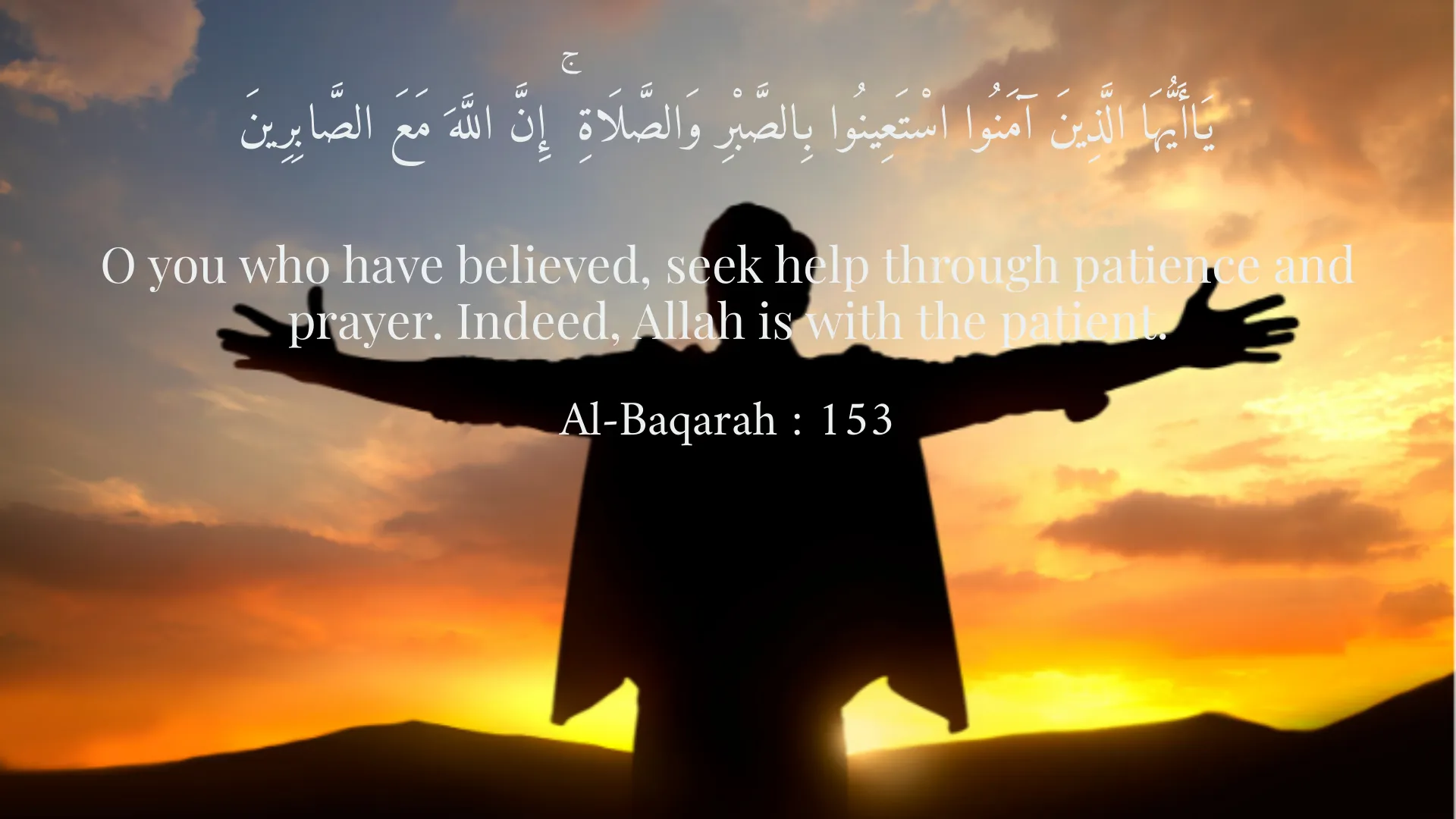
يَاأَيُّهَا الَّذِينَ آمَنُوا اسْتَعِينُوا بِالصَّبْرِ وَالصَّلَاةِ ۚ إِنَّ اللَّهَ مَعَ الصَّابِرِينَ
O you who have believed, seek help through patience and prayer. Indeed, Allah is with the patient.
Al-Baqarah : 153
وَمَن يَتَوَكَّلْ عَلَى اللَّهِ فَهُوَ حَسْبُهُ ۚ إِنَّ اللَّهَ بَالِغُ أَمْرِهِ ۚ قَدْ جَعَلَ اللَّهُ لِكُلِّ شَيْءٍ قَدْرًا
And whoever relies upon Allah, He is sufficient for him. Indeed, Allah will accomplish His purpose. Allah has already set for everything a [decreed] extent.
At-Talaq : 3
وَجَعَلْنَا نَوْمَكُمْ سُبَاتًا
And We made your sleep a rest.
An-Naba : 9
وَجَعَلْنَا اللَّيْلَ لِبَاسًا
And made the night a covering.
An-Naba : 10
الَّذِينَ آمَنُوا وَتَطْمَئِنُّ قُلُوبُهُم بِذِكْرِ اللَّهِ ۗ أَلَا بِذِكْرِ اللَّهِ تَطْمَئِنُّ الْقُلُوبُ
Those who have believed and whose hearts are assured by the remembrance of Allah. Unquestionably, by the remembrance of Allah hearts are assured.
Ar-Ra'd : 28
Short Story
In Sa'di's Golestan, it is recounted that a diligent and wealthy merchant, one day, became weary from the sorrow and anxiety stemming from his excessive work and endless worries. He had amassed immense wealth but found no peace. He worked from dawn till dusk, and even in his sleep, he was preoccupied with the market and his trade. One day, he encountered an old, wise man who was sitting in a corner of the bazaar with a cheerful face, speaking to people. The merchant asked, "O wise one, I have spent my entire life accumulating wealth, but the more I possess, the less peace I find. What should I do to free my heart from this heavy burden and find some rest?" The wise man smiled and said: "O good sir, your example is like that canary trapped in a golden cage, who believes its freedom lies in acquiring more seeds. The truth is that peace lies in balance. The body needs rest, and the soul needs tranquility. Every effort and endeavor must have an end, and every day its sunset. If you imagine that salvation lies in accumulation, you will never reach your goal. Look at your work with the intention of service, not just acquisition. And whenever you feel tired, instead of increasing your efforts, look up at the sky, take a fresh breath, and know that the true Provider is another. Reduce your work slightly, give time to yourself and your loved ones, and be grateful for what you have. Then you will see that the burden of burnout is lifted from your shoulders, and a blessing is hidden even in your current possessions that you had not realized before." The merchant took heed of the wise man's words and, by changing his perspective on work and life, tasted the true essence of peace.