Quranic Answer
Cultivating a kind and compassionate heart is one of the noblest human attributes and an aspiration for many who embark on the path of spiritual perfection. The Holy Quran, this book of guidance, shows us in various ways how we can free our hearts from hardness and harshness and adorn them with tenderness and kindness. This inner journey begins by returning to our divine innate nature (fitra); a nature that God has placed within all human beings, inclining them towards goodness and righteousness. Kindness, in essence, is a manifestation of divine attributes reflected in His servants, for God Himself is the source of kindness and mercy, and His blessed names like 'Ar-Rahman' (The Most Compassionate) and 'Ar-Rahim' (The Most Merciful) bear witness to this truth. Therefore, the first step towards having a kind heart is a deep understanding of this divine attribute and striving to align oneself with it. The Quran clearly explains how hearts become hard and how they can be softened. One of the main causes of hardness of heart is neglecting the remembrance of God and being heedless of divine verses. In Surah Al-Hadid, verse 16, Allah says: "Has the time not come for those who have believed that their hearts should become humbly submissive at the remembrance of Allah and what has descended of the truth? And let them not be like those who were given the Scripture before, and a long period passed over them, so their hearts hardened." This verse indicates that constant remembrance of God (dhikr), recitation of the Quran, and contemplation of its verses play a fundamental role in softening and kindling compassion in hearts. When the human heart is illuminated by divine words, the veils of heedlessness are removed, and a person views the world and its beings with greater insight, and this insight is the source of kindness and compassion. Another crucial way to acquire a kind heart is by emulating the Noble Prophet Muhammad (peace be upon him). In Surah Al-Imran, verse 159, Allah states: "And if you had been rude [in speech] and harsh in heart, they would have disbanded from about you. So pardon them and ask forgiveness for them and consult them in the matter." This verse clearly shows that the main characteristic of leadership and guidance is kindness and gentleness. The Prophet Muhammad (PBUH) was a perfect example of mercy and kindness for all of creation, as stated in Surah Al-Anbiya, verse 107: "And We have not sent you, [O Muhammad], except as a mercy to the worlds." Emulating the Prophet's character, which includes forgiveness, patience in adversity, refraining from anger and wrath, and displaying cheerfulness towards everyone, including those who may disagree with us, makes the heart kind. When a person strives to control their anger and treats others with gentleness and respect, the seeds of kindness sprout within them. Righteous deeds and acts of benevolence, especially towards the needy and the oppressed, have a profound effect on purifying the heart. The Quran repeatedly emphasizes kindness to parents, helping orphans, the poor, and those stranded on a journey. In Surah Al-Isra, verses 23 and 24, we read: "And your Lord has decreed that you not worship except Him, and to parents, good treatment..." and then continues: "If one or both of them reach old age [while] with you, say not to them [so much as], 'uff,' and do not repel them but speak to them a noble word." These divine commands, beyond being mere social duties, are exercises for softening the heart. When a person dedicates their wealth and time to help others, their sense of empathy and compassion is strengthened, and hardness of heart diminishes. Attending to the needs of the poor, the sick, and those facing difficulties opens the heart's doors to divine mercy. Abandoning sins and seeking forgiveness (istighfar) are also crucial factors in softening the heart. Sins accumulate like rust on the heart, making it hard and dark. Repentance and turning back to God, accompanied by genuine remorse for sins and a firm resolve to abandon them, remove this rust and make the heart pure and tender again. The Quran encourages us to seek forgiveness, as this act is a sign of humility before God and an awareness of one's shortcomings, which itself contributes to the softness of the heart. Ultimately, we must understand that having a kind heart is a continuous process that requires self-purification, spiritual discipline, and persistent effort. By paying attention to the verses of the Quran and acting upon its teachings, we can transform our hearts into a spring of mercy and kindness, finding inner peace ourselves and radiating light for others.
Related Verses
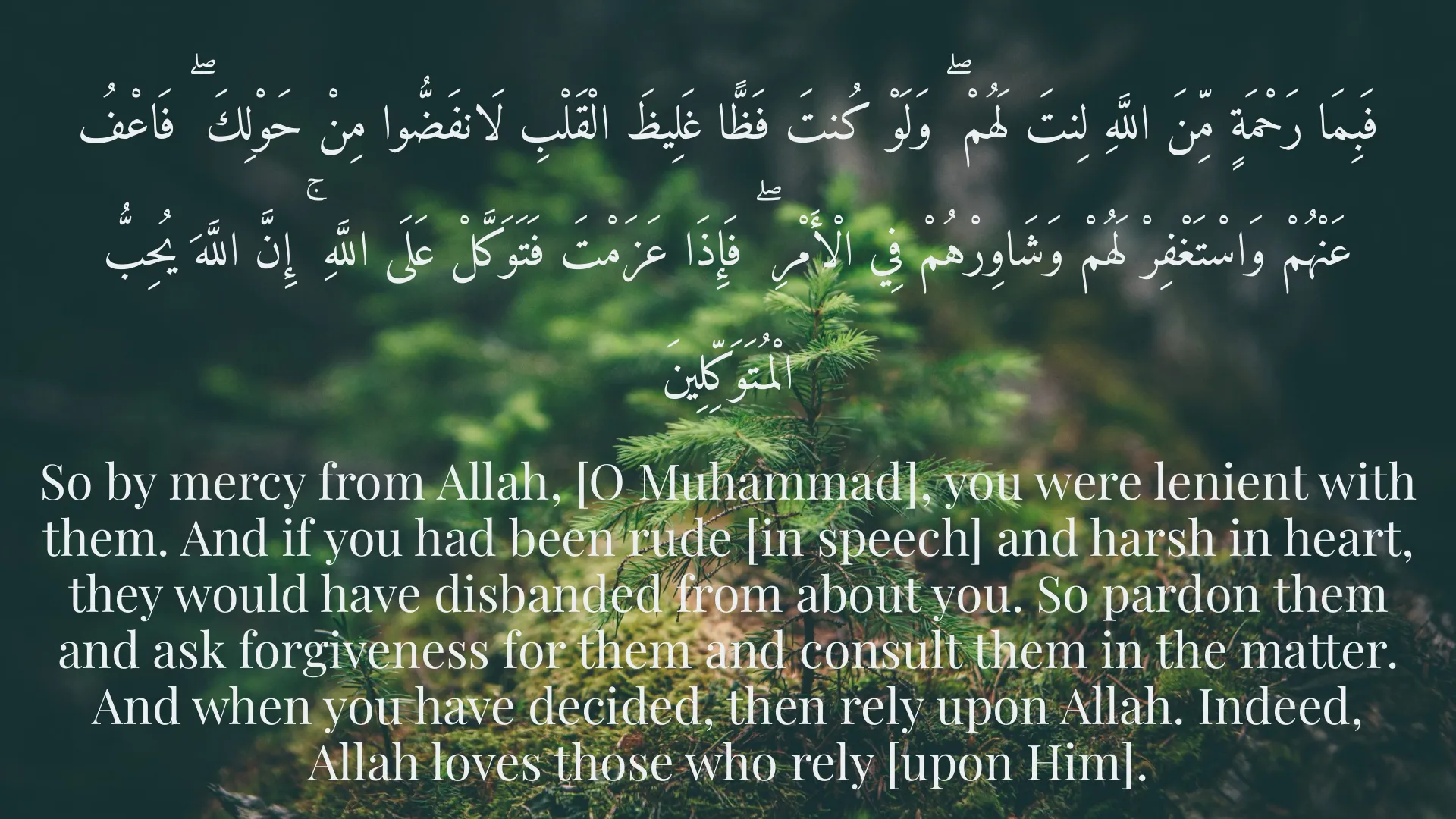
فَبِمَا رَحْمَةٍ مِّنَ اللَّهِ لِنتَ لَهُمْ ۖ وَلَوْ كُنتَ فَظًّا غَلِيظَ الْقَلْبِ لَانفَضُّوا مِنْ حَوْلِكَ ۖ فَاعْفُ عَنْهُمْ وَاسْتَغْفِرْ لَهُمْ وَشَاوِرْهُمْ فِي الْأَمْرِ ۖ فَإِذَا عَزَمْتَ فَتَوَكَّلْ عَلَى اللَّهِ ۚ إِنَّ اللَّهَ يُحِبُّ الْمُتَوَكِّلِينَ
So by mercy from Allah, [O Muhammad], you were lenient with them. And if you had been rude [in speech] and harsh in heart, they would have disbanded from about you. So pardon them and ask forgiveness for them and consult them in the matter. And when you have decided, then rely upon Allah. Indeed, Allah loves those who rely [upon Him].
Al-Imran : 159
وَمَا أَرْسَلْنَاكَ إِلَّا رَحْمَةً لِّلْعَالَمِينَ
And We have not sent you, [O Muhammad], except as a mercy to the worlds.
Al-Anbiya : 107
وَقَضَىٰ رَبُّكَ أَلَّا تَعْبُدُوا إِلَّا إِيَّاهُ وَبِالْوَالِدَيْنِ إِحْسَانًا ۚ إِمَّا يَبْلُغَنَّ عِندَكَ الْكِبَرَ أَحَدُهُمَا أَوْ كِلَاهُمَا فَلَا تَقُل لَّهُمَا أُفٍّ وَلَا تَنْهَرْهُمَا وَقُل لَّهُمَا قَوْلًا كَرِيمًا
And your Lord has decreed that you not worship except Him, and to parents, good treatment. Whether one or both of them reach old age [while] with you, say not to them [so much as], 'uff,' and do not repel them but speak to them a noble word.
Al-Isra : 23
Short Story
In Saadi's Golestan, it is narrated that a king ordered a thief's hand to be cut off. The thief, in that moment, began to curse and insult the king. A wise minister present there said to the king: 'O King! These hands of the thief have stolen much, but the king's hand of kindness and forgiveness is greater. If you forgive him and assign him an honorable task, perhaps the harshness and hardness of his heart will soften, and these hands will be engaged in good service to you.' The king was moved by the wise minister's words, and with a nascent compassion in his heart, he pardoned the thief. The thief, thereafter, repented and swore loyalty, entering the king's service. Truly, his heart was softened by this kindness and adorned with the quality of benevolence. This story demonstrates that kindness, even in dealing with wrongdoers, can soften hardened hearts and guide them to the right path.