Quranic Answer
Jealousy and resentment are two of the most common negative emotions that individuals can experience throughout their lives. Such feelings not only impact interpersonal relationships and mental health but can also detract from one's spiritual well-being. As we navigate through life, our experiences may trigger feelings of envy towards others, ultimately leading to resentment. The Holy Quran provides profound insights into the nature of these emotions and offers guidance on how to overcome them. In a world filled with competition and comparison, understanding how to deal with jealousy and resentment becomes essential for personal growth and emotional health. ### The Nature of Jealousy and Resentment Jealousy is often characterized by feelings of discontent or resentment arising from someone else's possessions, qualities, or luck. It can manifest in various forms, ranging from mild jealousy to intense envy that leads to vindictive actions. On the other hand, resentment is a lingering feeling of bitterness or indignation about perceived unfair treatment or wrongdoings. Both emotions can thrive on a negative mindset, leading to an unhealthy spiral of thoughts that consume one’s peace of mind. ### The Holy Quran Perspective The Quran addresses these feelings in several verses, emphasizing the necessity of self-awareness and the importance of submitting to God as a pathway to emotional healing. In Surah Al-Baqarah, verse 109, Allah notes, "Many of the People of the Scripture wish they could turn you back to disbelief after you have believed. From envy from themselves, even after it has become clear to them that the truth is from your Lord." This verse highlights the existence of envious feelings in human hearts and serves as a reminder to be cautious about harboring resentment against others, particularly when those feelings stem from their own insecurities or shortcomings. ### Cultivating Positive Emotions One of the effective strategies for mitigating jealousy and resentment is to nurture positive emotions in our hearts. In Surah Al-Imran, verse 134, Allah instructs believers: "And be not like those who say, ‘We have heard,’ while they do not hear." This command suggests cultivating a spirit of goodness and forgiveness in response to negativity. Instead of fostering envy, individuals are encouraged to cultivate love, understanding, and compassion, which can significantly counteract those negative feelings. When one actively chooses to respond to evil with goodness, the bitterness of jealousy cannot take root. ### The Importance of Gratitude A practical approach to combatting jealousy and resentment lies in practicing gratitude. In Surah Al-An'am, verse 32, Allah reveals that worldly life is merely amusement and play, and the greater reality resides in the hereafter. Understanding the transient nature of life can help mitigate envy, as individuals realize that comparing ourselves to others is futile. By focusing on one's blessings and the gifts that Allah has bestowed, individuals can redirect their energy from feelings of resentment and jealousy towards appreciating their unique journey. ### Spiritual Focus Aligning oneself with spiritual priorities can have a profound impact on how one experiences and expresses emotions like jealousy and resentment. By dedicating time to worship, reflection, and supplication, individuals can ground themselves in their faith and foster a sense of peace. Daily prayers, Quran recitations, and engaging in community service not only strengthen one's relationship with God but also contribute to emotional stability. When one feels fulfilled spiritually, it becomes easier to let go of negative feelings. ### The Role of Prayer Ultimately, seeking assistance from Allah through prayer is a crucial element in the journey to free oneself from jealousy and resentment. In moments of emotional turmoil, turning to God can provide solace and guidance. According to Surah Al-Baqarah, verse 153, Allah states, "O you who have believed, seek assistance through patience and prayer. Indeed, Allah is with the patient." This encouragement highlights the power of prayer as a means of finding relief and overcoming harmful emotions. ### Overcoming Jealousy and Resentment Overcoming jealousy and resentment requires a conscious effort and dedication to cultivating a more positive mindset. It involves recognizing the root causes of these feelings, whether they arise from insecurity or a sense of inadequacy and addressing them with compassion instead of judgment towards oneself. Engaging in self-reflection, seeking knowledge, and practicing mindfulness can prove beneficial in this process. ### Conclusion In conclusion, jealousy and resentment are detrimental emotions that can hinder one's happiness and spiritual growth. However, the teachings of the Holy Quran emphasize the importance of self-awareness, gratitude, and forgiveness. By nurturing positive feelings and redirecting our focus towards God and spiritual fulfillment, we can uproot jealousy and resentment from our hearts. Through prayer and trust in Allah's wisdom, we can find the strength to overcome these negative emotions, ultimately leading to a more peaceful and fulfilling life.
Related Verses
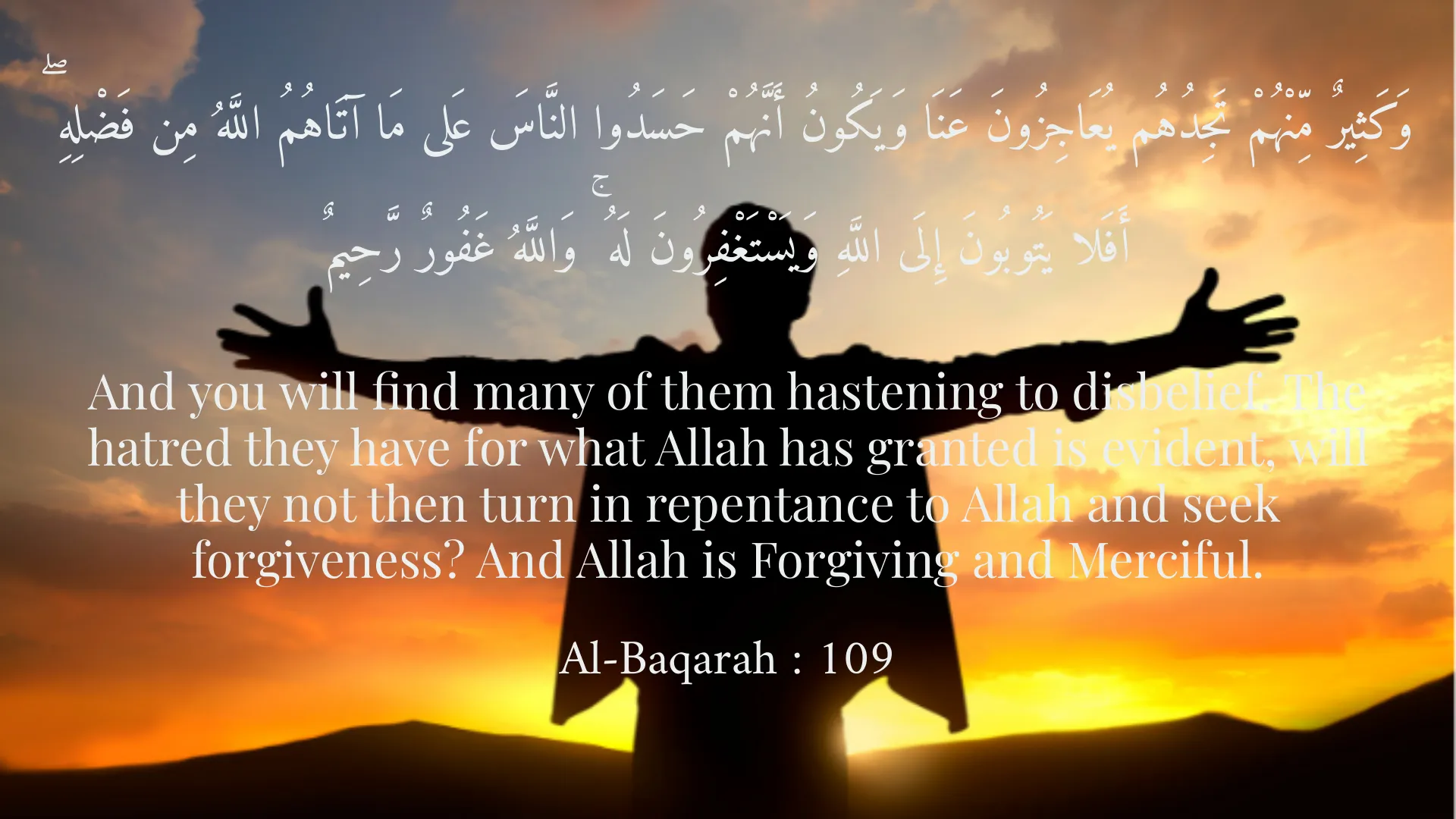
وَكَثِيرٌ مِّنْهُمْ تَجِدُهُم يُعَاجِزُونَ عَنَا وَيَكُونُ أَنَّهُمْ حَسَدُوا النَّاسَ عَلى مَا آتَاهُمُ اللَّهُ مِن فَضْلِهِ ۖ أَفَلا يَتُوبُونَ إِلَى اللَّهِ وَيَسْتَغْفِرُونَ لَهُ ۚ وَاللَّهُ غَفُورٌ رَّحِيمٌ
And you will find many of them hastening to disbelief. The hatred they have for what Allah has granted is evident, will they not then turn in repentance to Allah and seek forgiveness? And Allah is Forgiving and Merciful.
Al-Baqarah : 109
ٱلَّذِينَ يُنفِقُونَ فِى ٱلسَّرَّاء وَٱلضَّرَّاء وَٱلَّذِينَ كَاظِمِينَ ٱلْغَيْظَ وَٱلَّذِينَ يَعْفُونَ عَنِ ٱلنَّاسِ ۗ وَٱللَّهُ يُحِبُّ ٱلْمُحْسِنِينَ
Those who spend in ease and hardship and who restrain [their] anger and who pardon the people - and Allah loves the doers of good.
Al-Imran : 134
وَمَا ٱلْحَيَوَاةُ ٱلدُّنْيَا إِلَّا لَهْوٌ وَلَهْوٌ ۗ وَإِنَّ ٱلْآخِرَةَ هِىَ ٱلْحَيَوَانُ ۗ لَوْ كَانُوا يَعْلَمُونَ
And the worldly life is not but amusement and diversion, and indeed, the Hereafter - that is the true life, if only they knew.
Al-An'am : 32
Short Story
Once upon a time, there was a man named Hasan who was always envious of others. He expressed his jealousy through resentment. One day, while watching the sunset, he noticed the beauty of nature and remembered God's blessings. He decided to let go of jealousy and resentment and instead show kindness to others. Over time, Hasan realized how beautiful life was without jealousy.