Quranic Answer
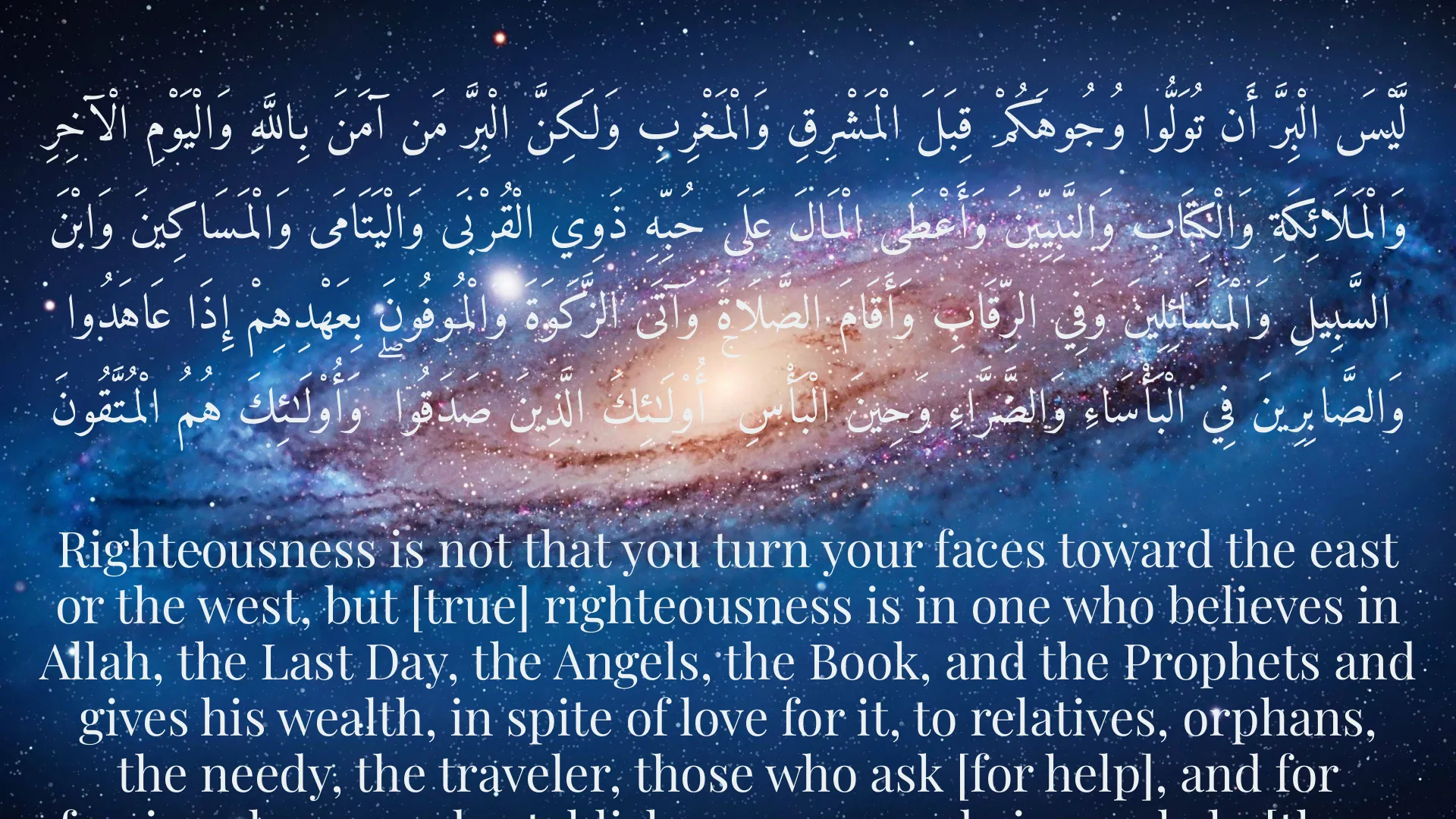
### The Concept of Love and Selflessness in the Holy Quran: A Deep Dive into Love Without Expectation The Holy Quran, revered as the ultimate guide for Muslims, encompasses a broad spectrum of themes, values, and teachings. Among these, the concepts of love and selflessness stand out as paramount. These ideas are not merely abstract notions but practical principles that can shape the way individuals relate to each other and to God. Although specific verses addressing 'love without expectation' may not appear explicitly in the sacred text, the profound essence of this concept resonates throughout various verses and themes. By examining these, one can uncover a deeper understanding of love and friendship in Islamic life—principles that should stem from a genuinely sincere intention and selflessness, devoid of expectations or rewards. #### Love and Its Foundations in Islamic Teachings Embarking on this exploration, we find Surah Al-Baqarah, Verse 177, where Allah elucidates the essence of virtue. He states that true righteousness is not merely about outward actions, such as facing a certain direction in prayer. Rather, it extends to deeper beliefs—including faith in God, the belief in the Day of Judgment, and the engagement in good deeds for others. This verse serves as a crucial reminder that true love should be born out of faith and pure intention. It teaches that when one extends their love, it should be for the sake of promoting good and aiding others, without any anticipation of rewards. #### Kindness and Love: The Quranic Framework Throughout the Quran, various verses encourage acts of kindness, charity, and benevolence. These qualities are woven into the fabric of Islamic ethics. For instance, the practice of charity (Sadaqah) is not only seen as a financial act but as an expression of love and selflessness. The Quran urges Muslims to give freely to those in need, ensuring that giving is done with the right intentions and an open heart. This encourages a system of love that thrives on giving without expectation, thereby highlighting the purity of intentions behind every act of kindness. #### Illustrative Stories of Selflessness The Quran recounts numerous stories of individuals who exemplified love and selflessness. These narratives provide invaluable lessons and serve as role models for believers. One such exemplary figure is Abu Al-Fadl, who is renowned for his steadfastness and the virtue of trustworthiness. His life exemplifies selflessness, illustrating that serving others without expectation can lead to divine love and favor. Consider also the story of the Prophet Muhammad (peace be upon him), who emerged as a paragon of love, compassion, and selflessness. He often prioritized the needs of others over his own, demonstrating that the essence of love is found in altruism and service. His countless acts of kindness toward his companions and the less fortunate reflect the Quranic ethos of caring for others without seeking recompense. #### The Importance of Intention (Niyyah) In Islam, intention (Niyyah) plays a crucial role in determining the sincerity and value of one's actions. The Prophet Muhammad (peace be upon him) stated, 'Actions are judged by intentions, and each person will get what they intended.' This hadith underlines the importance of having a pure intention when performing acts of love or charity. The more sincere the intention, the more profound the impact of the action, aligning with the Quranic principles of selflessness and love without expectation. #### Cultivating Relationships Based on Love Without Expectation As individuals navigate their relationships, the foundational principle of 'love without expectation' can significantly enhance the quality of connections. Whether in family dynamics, friendships, or community bonds, pursuing love devoid of expectations promotes healthy, fulfilling relationships. When individuals approach relationships with the mindset of giving without anticipating a return, they create an atmosphere of unconditional love and trust. The challenge often lies in society's tendency to associate love with transactional interactions—where affection is exchanged for expectations or benefits. However, the Quran urges believers to transcend these norms, emphasizing that the noblest form of love is that which is selfless and pure. Loving others for the sake of God nurtures the heart and fosters deeper connections. #### Conclusions: The Call to Action The discourse surrounding love without expectation is not just an abstract idea; it is a virtue deeply rooted in Islamic culture and practice. Engaging in acts of love and kindness without seeking rewards reflects a higher moral compass and spiritual maturity. The teachings of the Quran and the exemplary life of the Prophet Muhammad (peace be upon him) compel each of us to reflect on our motives and intentions in our daily lives. Ultimately, it becomes our duty to cultivate and express love in our lives consistently, transcending any desire for reciprocation. This transformative journey not only draws us closer to God but also enriches our community and nurtures the bonds that unify us as human beings. By embracing the principles found within the Quran concerning love and selflessness, we can effectively contribute to a society that embodies compassion, understanding, and unity. Through love without expectation, we can help create a world that genuinely reflects the divine attributes of mercy and kindness—key teachings instilled within the Holy Quran. ### References - The Holy Quran - Hadith Collections - Works on Islamic Ethics and Morality By exploring the multifaceted concept of love and selflessness in the Quran, we gain insights that urge us to reflect on our relationships, intentions, and actions, inviting us to embrace a life anchored in love devoid of expectation.
Related Verses
لَّيْسَ الْبِرَّ أَن تُوَلُّوا وُجُوهَكُمْ قِبَلَ الْمَشْرِقِ وَالْمَغْرِبِ وَلَكِنَّ الْبِرَّ مَن آمَنَ بِاللَّهِ وَالْيَوْمِ الْآخِرِ وَالْمَلَائِكَةِ وَالْكِتَابِ وَالنَّبِيِّينَ وَأَعْطَى الْمَالَ عَلَى حُبِّهِ ذَوِي الْقُرْبَى وَالْيَتَامَى وَالْمَسَاكِينَ وَابْنَ السَّبِيلِ وَالْمَسَائِلِينَ وَفِي الرِّقَابِ وَأَقَامَ الصَّلَاةَ وَآتَى الزَّكَوَةَ وَالْمُوفُونَ بِعَهْدِهِمْ إِذَا عَاهَدُوا وَالصَّابِرِينَ فِي الْبَأْسَاءِ وَالضَّرَّاءِ وَحِينَ الْبَأْسِ ۚ أُو۟لَـٰئِكَ الَّذِينَ صَدَقُوا ۖ وَأُو۟لَـٰئِكَ هُمُ الْمُتَّقُونَ
Righteousness is not that you turn your faces toward the east or the west, but [true] righteousness is in one who believes in Allah, the Last Day, the Angels, the Book, and the Prophets and gives his wealth, in spite of love for it, to relatives, orphans, the needy, the traveler, those who ask [for help], and for freeing slaves; and establishes prayer and gives zakah; [those who fulfill their promise when they promise]; and [those who are patient in hardship and during battle]. Those are the ones who have been true, and it is those who are the righteous.
Al-Baqarah : 177
Short Story
Once upon a time, there was a man named Hasan who always helped others and never asked for anything in return. One day, one of his friends asked him, 'Why do you show so much love for others without expecting anything?' Hasan replied, 'True love comes with a pure intention and faith in God. I ask for nothing, I just wish to see hearts happy.' This story inspired Hasan's friends to take him as a model and learn from him in their own lives.