Quranic Answer
Raising children with the Holy Quran requires attention and dedication. The Quran is not only the holy book of Muslims but also serves as a guide for life and the upbringing of future generations. One of the keys to child-rearing from the Quran lies in the stories and examples within it, which can be used as behavioral models for children. For instance, in Surah Luqman, verse 14, Allah advises Luqman to raise his son well and make him aware of God and his limits. This verse showcases the importance of instilling a strong moral compass in children from an early age, guiding them towards a life of piety and righteousness. Moreover, the Quran emphasizes the need for resilience and courage—traits that should be ingrained in children during their upbringing. Surah Taha, verse 29, discusses the story of Prophet Moses and his upbringing as a prophet, illustrating how proper guidance and a spiritually uplifting environment can profoundly impact a person’s future. Moses was chosen for a significant role in guiding his people, and this serves as a reminder that nurturing, supportive childhood experiences shape children’s destinies. In this nurturing process, the role of parents cannot be overstated. Parents are the primary figures in a child's life, serving as their first examples of faith and morality. As such, they must dedicate time to recite and read the Quran with their children. Engaging with the Quran together not only enhances the parent-child bond but also immerses children in the teachings of Islam. This engagement should not be limited to just reading; rather, parents should create an environment conducive to understanding and interpreting its verses. Understanding the Quran requires reflective thinking and interpretation, which can be facilitated through discussions between parents and children. Exploring the meanings of various verses together can make the principles outlined in the Quran more relatable and applicable to daily life. Children should be encouraged to ask questions and express their thoughts about the verses, fostering an environment of curiosity and inquiry. This open dialogue helps children not only to grasp the teachings more profoundly but also to apply them to their lives effectively. Clarifying moral values such as honesty, kindness, and respect for others can lay the foundations for the spiritual and ethical upbringing of a child. The Quran repeatedly emphasizes these values, presenting them as essential traits of believers. By highlighting stories of prophets and righteous figures who embodied these virtues, parents can provide practical examples for their children to emulate. For instance, the tale of Prophet Yusuf (Joseph) illustrates tremendous patience and integrity in the face of adversity, teaching children the importance of maintaining their principles, even when challenged. Moreover, the Quran underscores the significance of compassion and forgiveness. In Surah Al-Imran, verse 134, Allah describes the believers as those who are forgiving and patient. Integrating these teachings into everyday life can help children develop empathy and understanding for others. As they learn to practice forgiveness and compassion, they cultivate positive relationships, both within their families and with the wider community. A joyful and nurturing environment where parents maintain a close connection with their children is one of the essential aspects of raising children based on the teachings of the Quran. Creating such an environment involves more than just formal teachings; it requires emotional support, love, and a sense of security. Parents should strive to build a home that reflects the tranquility and beauty of Quranic teachings, where children feel valued and loved. Regular family activities can significantly reinforce this bond and encourage the application of Quranic principles. Families can gather to discuss lessons from the Quran, engage in charitable acts, and participate in community service together. Such shared experiences not only strengthen familial ties but also instill a sense of responsibility and commitment towards society. Furthermore, during moments of hardship, parents can use stories from the Quran to teach resilience. This can be particularly impactful in times of personal or communal strife, providing comfort and inspiration to persevere through challenges. The story of Prophet Ayyub (Job), who remained steadfast in his faith despite immense suffering, serves as a powerful narrative to illustrate patience in adversity. Sharing such stories with children can empower them, equipping them with the mindset needed to navigate life's challenges. In conclusion, raising children in line with the teachings of the Holy Quran is a profound journey that demands attention, dedication, and a holistic approach. By utilizing the Quran as a primary reference, parents can cultivate a nurturing environment filled with moral values and spiritual guidance. Storytelling, open discussions, and shared experiences can create a strong foundation for children’s faith and character development. Ultimately, the goal is to raise a generation that embodies the teachings of the Quran, contributing positively to their families, communities, and the world at large.
Related Verses
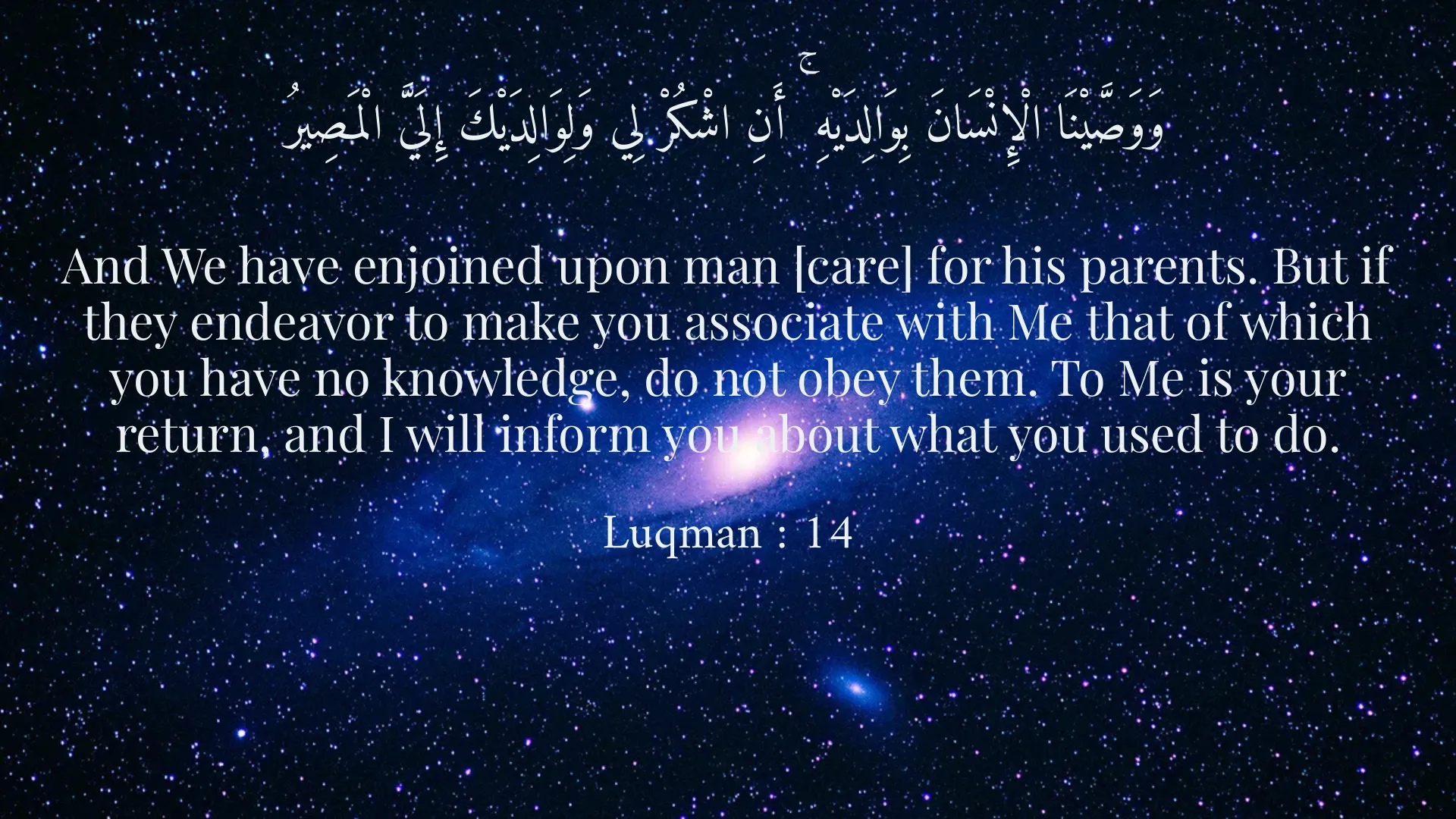
وَوَصَّيْنَا الْإِنْسَانَ بِوَالِدَيْهِ ۚ أَنِ اشْكُرْ لِي وَلِوَالِدَيْكَ إِلَيَّ الْمَصِيرُ
And We have enjoined upon man [care] for his parents. But if they endeavor to make you associate with Me that of which you have no knowledge, do not obey them. To Me is your return, and I will inform you about what you used to do.
Luqman : 14
وَقَالَ رَبِّ إِنِّي قَتَلْتُ مِنْهُمْ نَفْسًا فَأَخَافُ أَن يَقْتُلُونِ
And he said, 'My Lord, indeed I killed from among them one, and I fear they will kill me.'
Taha : 29
Short Story
On a beautiful day, a mother decided to tell her child a story from the Quran. She narrated the tale of Prophet Joseph, speaking about sacrifice, patience, and trust in God. The child listened intently, wishing to be honest and kind like Joseph. Seeing this, the mother thought how incredibly valuable this upbringing based on the Quran was!