Quranic Answer
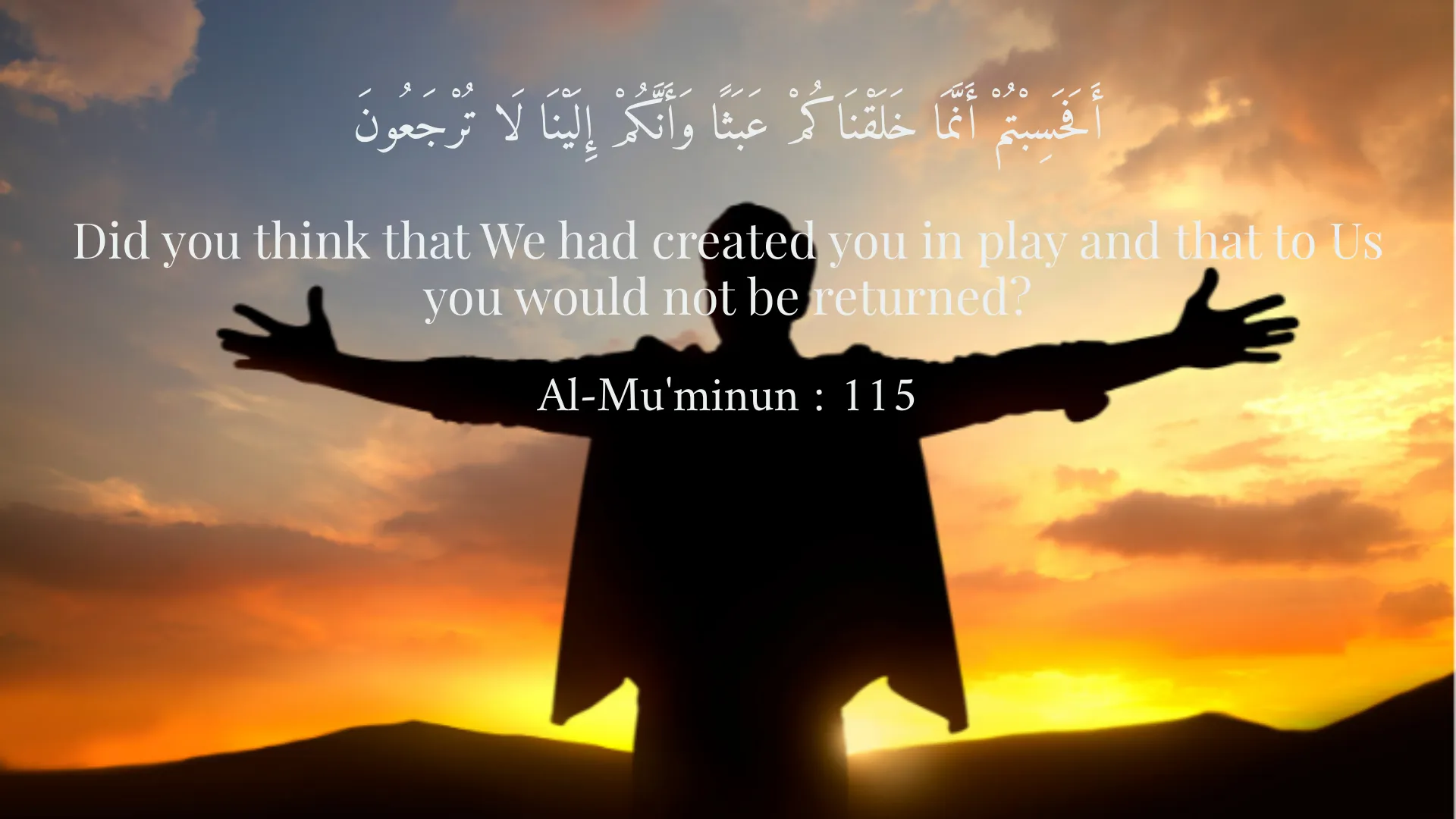
The feeling of meaninglessness and an existential void is a profound challenge that many individuals face in the modern era. In a world fraught with confusion, turmoil, and unanswered questions, finding meaning and purpose in life can seem daunting. However, the Holy Quran, as the divine word, not only offers definitive answers to these questions but also presents a clear and comprehensive path to liberation from meaninglessness and the attainment of true tranquility and purpose in life. By introducing a complete worldview connected to the Originator and the Hereafter, the Quran transforms life from a series of aimless events into a meaningful journey with a ultimate goal. One of the most fundamental ways the Quran eradicates meaninglessness is by clarifying the purposeful nature of creation. Contrary to nihilistic views that consider the universe a result of chance, without a creator or purpose, the Quran explicitly declares that God created the world and everything in it with wisdom and a specific aim. Verse 115 of Surah Al-Mu'minun clearly states: "Did you think that We had created you in play and that to Us you would not be returned?" This verse shatters the foundation of nihilism, reminding humanity that its existence has a profound meaning and an ultimate purpose. The Quran also identifies the primary purpose of human creation as the worship of God, as stated in Surah Adh-Dhariyat, verse 56: "And I did not create the jinn and mankind except to worship Me." This worship is not merely blind servitude but rather a deep understanding, submission, and profound connection with the Creator, leading to the realization of existential truth and the discovery of life's path. Understanding this purpose provides human life with a divine framework and direction, saving it from aimlessness and wandering. Furthermore, the Quran bestows upon humanity immense dignity and responsibility by depicting its status as "Khalifa Allah" (God's vicegerent) on Earth. In Surah Al-Baqarah, verse 30, we read that God said to the angels: "Indeed, I will make upon the earth a successive authority." This position grants humanity not just a personal goal but a global mission: to cultivate the earth, establish justice, and spread goodness and kindness. This heavy responsibility prevents feelings of meaninglessness because each individual sees themselves as an effective and dutiful member of a divine plan. Acting upon this responsibility means leading an active, constructive, and meaningful life that transcends fleeting worldly pleasures, instilling a sense of worth and impact in individuals. Additionally, the Quran, as a book of guidance and light, teaches humanity the way of life. In situations where individuals face challenges, doubts, and confusion, the verses of the Quran act like a compass, pointing to the correct path. This guidance includes moral principles, social relations, individual and collective rights, and how to deal with difficulties. Adhering to these directives provides humanity with a practical framework for life, preventing aimless decisions and a life without principles. This clear path prevents intellectual and moral wandering, giving life coherence and direction. When a person knows how to live and what goals to pursue, there is no room left for meaninglessness. The pinnacle of liberation from meaninglessness in the Quran is its emphasis on life after death and the concept of the Hereafter (Ma'ad). The Quran reminds humanity that this worldly life is merely a transient stage and a test, and thereafter, a true and eternal life awaits. This perspective imbues all human actions and endeavors in this world with eternal meaning. Good deeds will be rewarded, and wrongful actions will have their consequences. This belief saves individuals from despair in the face of hardships and provides them with endless motivation to strive for good. In Surah Az-Zalzalah, verses 7 and 8, it is stated: "So whoever does an atom's weight of good will see it, and whoever does an atom's weight of evil will see it." This teaching makes humanity understand that no action, however small, is ineffective or meaningless, and every action in this world will have a reflection in the Hereafter. Finally, the remembrance of God (Dhikr Allah) and a heartfelt connection with Him, which the Quran strongly recommends, is an unparalleled source of peace and a cure for meaninglessness. Verse 28 of Surah Ar-Ra'd states: "Those who have believed and whose hearts are assured by the remembrance of Allah. Unquestionably, by the remembrance of Allah hearts are assured." This inner peace is the result of connecting to the source of power and wisdom, assuring individuals that even in the darkest moments, they are not alone and have strong support. This connection strengthens the feeling of security and meaning within a person, saving them from sinking into nihilistic thoughts. Therefore, by offering a purposeful worldview, outlining humanity's noble position, providing practical guidance, emphasizing the Hereafter, and enabling a heartfelt connection with God, the Quran, in the most comprehensive way possible, liberates humanity from emptiness and meaninglessness, filling their lives with purpose, hope, and tranquility.
Related Verses
أَفَحَسِبْتُمْ أَنَّمَا خَلَقْنَاكُمْ عَبَثًا وَأَنَّكُمْ إِلَيْنَا لَا تُرْجَعُونَ
Did you think that We had created you in play and that to Us you would not be returned?
Al-Mu'minun : 115
وَمَا خَلَقْتُ الْجِنَّ وَالْإِنْسَ إِلَّا لِيَعْبُدُونِ
And I did not create the jinn and mankind except to worship Me.
Adh-Dhariyat : 56
الَّذِينَ آمَنُوا وَتَطْمَئِنُّ قُلُوبُهُم بِذِكْرِ اللَّهِ ۗ أَلَا بِذِكْرِ اللَّهِ تَطْمَئِنُّ الْقُلُوبُ
Those who have believed and whose hearts are assured by the remembrance of Allah. Unquestionably, by the remembrance of Allah hearts are assured.
Ar-Ra'd : 28
Short Story
It is narrated that in ancient times, there was a rich and powerful king who had everything he desired. Yet, despite all his possessions, a persistent feeling of emptiness and meaninglessness troubled him. One day, while passing through the marketplace, he saw a dervish who, despite his apparent poverty, was joyful and serene. The king, surprised, asked: "O Dervish, you possess nothing, yet how are you so happy and free from sorrow, while I, with all this wealth, am constantly in distress and restlessness?" The dervish, with a kind smile, replied: "O King! You count what you know you have and desire what you do not know you possess; thus, you always feel a lack. But I do not desire what I do not have, and I consider what I have to be sufficient, for I have entrusted my heart to the Creator of the world, who is the true King and Sustainer of all. He has given me a purpose and invited me to peace. Therefore, I see meaning in every day and fear nothing." The king was awakened by the dervish's words and understood that true wealth lies in contentment of the heart and connection to a higher meaning, not in worldly accumulation. He realized that outward kingship brings peace only when accompanied by inner peace and adherence to divine wisdom.