Quranic Answer
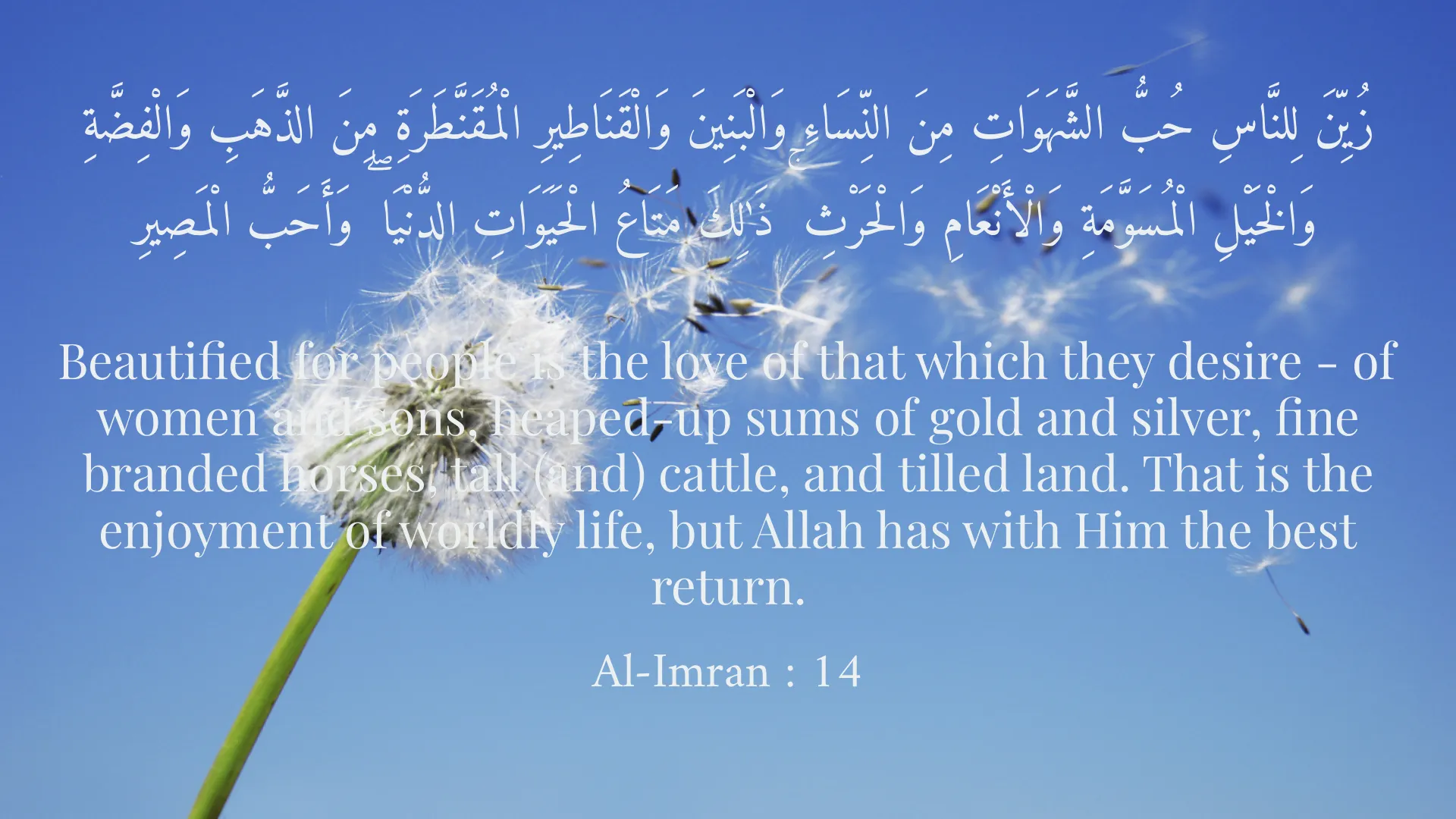
In the Holy Quran, the theme of attachment to the world and how to free oneself from it is discussed in various verses. The Quran emphasizes the concept of worldly attachments and the transient nature of life, encouraging believers to strive for a deeper connection with God and to seek the reward of the hereafter. This article will explore these themes as presented in the Quran, providing insights into how individuals can develop detachment from worldly desires while focusing on spiritual fulfillment. One of the primary ways to cultivate detachment from the world is to direct one's focus toward God and the hereafter. In Surah Al-Imran, verse 14, Allah states: "Beautified for people is the love of that which they desire - of women and sons, heaped-up sums of gold and silver, fine branded horses, tall (and) cattle, and tilled land. That is the enjoyment of worldly life, but Allah has with Him the best return." This verse serves as a powerful reminder that the pleasures and treasures of this world are fleeting. The excessive love for material possessions, status, and even family can, if left unchecked, distract individuals from the remembrance of God. It is essential for believers to remember that while these worldly pleasures are alluring, they are ultimately a test of faith. The phrase 'the best return' in this verse evokes the promise of eternal rewards that await those who remain steadfast in their devotion to Allah. Moreover, this notion is further reinforced in Surah Al-Anfal, verse 28, where Allah states, "Your wealth and your children are but a trial, and Allah has with Him a great reward." Here, the Quran acknowledges that wealth and family bonds are indeed significant aspects of life but also warns believers they can serve as distractions. Viewing them as trials allows one to keep their priorities aligned with Allah's expectations. The realization that these attachments may lead to spiritual distance can motivate believers to shift their focus toward Allah's approval and the pursuit of the hereafter. To cultivate detachment from worldly attachments, several practices can be beneficial. One of the most important is prayer (Salah). Engaging in regular prayer helps foster a strong spiritual connection with Allah. When individuals dedicate time to praying, they immerse themselves in the worship of God, which naturally creates a barrier against worldly distractions. The act of praying reminds the believer of their purpose in life, which is to serve and glorify God. It brings an awareness of the temporary nature of worldly pursuits and instills a sense of peace and contentment created through divine connection. Another powerful practice is the remembrance of death (Dhikr al-Mawt). By reflecting on mortality, individuals can gain a renewed perspective on their lives, challenging them to evaluate the importance of their attachments. In Surah Al-Imran, verse 185, it is stated, "Every soul will taste death, and you will only be given your full compensation on the Day of Resurrection. So he who is drawn away from the Fire and admitted to Paradise has certainly succeeded. And what is the life of this world except the enjoyment of delusion." This verse serves as a poignant reminder of the inevitable end that awaits all, calling believers to live meaningfully and prioritize their spiritual journeys over ephemeral worldly gains. Additionally, engaging in acts of charity (Sadaqah) towards others can contribute significantly to overcoming materialistic desires. Charity exemplifies the idea that true happiness is not derived from possession, but rather from giving and selflessness. It nurtures compassion and empathy, helping individuals redirect their attention from acquiring wealth to improving the lives of those around them. Surah Al-Baqarah, verse 261 illustrates this notion: "The example of those who spend their wealth in the way of Allah is like a seed of grain that sprouts seven ears; in every ear, there are a hundred grains. And Allah multiplies [His reward] for whom He wills." By investing in the welfare of others and prioritizing community well-being over personal gain, believers can foster a sense of interconnectedness and belonging, reinforcing their own spiritual well-being. The Quran also encourages believers to reflect on the signs of God in the universe. This reflection can displace some of the attachments individuals have on worldly possessions. Surah Al-Ghashiyah emphasizes the significance of contemplating nature and creation: "Do they not look at the camels, how they are created? And at the heaven, how it is raised? And at the mountains, how they are erected? And at the earth, how it is spread out?" This calls believers to turn their gaze toward the majesty of creation, redirecting their thoughts from worldly desires and possessions to the magnificence of the Creator. Such reflections can inspire a sense of awe that not only fills the heart with gratitude but also strengthens one's attachment to the divine. Additionally, building strong relationships with fellow believers and engaging in communal worship and discussions about faith can foster an environment that promotes spiritual growth. The Quran advises believers to help one another in righteousness and piety, as indicated in Surah Al-Ma'idah, verse 2: "And cooperate in righteousness and piety, but do not cooperate in sin and aggression." Surrounding oneself with a supportive community can provide motivations to remain detached from the material world, reminding individuals of their responsibilities toward God and each other. In conclusion, the theme of attachment to the world and how to free oneself from it is central to the teachings of the Holy Quran. By focusing on God and the hereafter, cultivating regular prayer, staying mindful of death, engaging in charity, reflecting on divine signs in creation, and building supportive communities, believers can detach from worldly desires. The path toward spiritual freedom is a journey that requires constant self-reflection and commitment, as individuals seek true fulfillment in their connection with Allah and the promise of eternal reward. The Quran serves as a timeless guide, illuminating the path towards liberation from worldly attachments, ultimately leading believers to a more meaningful and spiritually enriched life.
Related Verses
زُيِّنَ لِلنَّاسِ حُبُّ الشَّهَوَاتِ مِنَ النِّسَاءِ وَالْبَنِينَ وَالْقَنَاطِيرِ الْمُقَنَّطَرَةِ مِنَ الذَّهَبِ وَالْفِضَّةِ وَالْخَيْلِ الْمُسَوَّمَةِ وَالْأَنْعَامِ وَالْحَرْثِ ۚ ذَٰلِكَ مَتَاعُ الْحَيَوَاتِ الدُّنْيَا ۖ وَأَحَبُّ الْمَصِيرِ
Beautified for people is the love of that which they desire - of women and sons, heaped-up sums of gold and silver, fine branded horses, tall (and) cattle, and tilled land. That is the enjoyment of worldly life, but Allah has with Him the best return.
Al-Imran : 14
يَا أَيُّهَا الَّذِينَ آمَنُوا لَا تَغْرَكُمْ أَمْوَالُكُمْ وَلَا أَوْلَادُكُمْ عَن ذِكْرِ اللَّهِ ۖ وَمَن يَفْعَلْ ذَٰلِكَ فَأُولَـٰئِكَ هُمُ الْخَاسِرُونَ
O you who have believed, do not let your wealth and your children distract you from the remembrance of Allah. And whoever does that - then those are the losers.
Al-Anfal : 28
Short Story
Once upon a time, a hermit lived in the high mountains. He led a simple life, free from the worries of the world. One hot day, he decided to go to a nearby village to quench his thirst. On the way, he encountered a young man who was desperately trying to find treasure and was deeply absorbed in material pursuits. The hermit said to the young man, 'Is true treasure only found beneath the earth or in our hearts and acts of kindness?' The young man looked thoughtfully at the hermit and immediately realized he needed to reflect on what truly mattered.