Quranic Answer
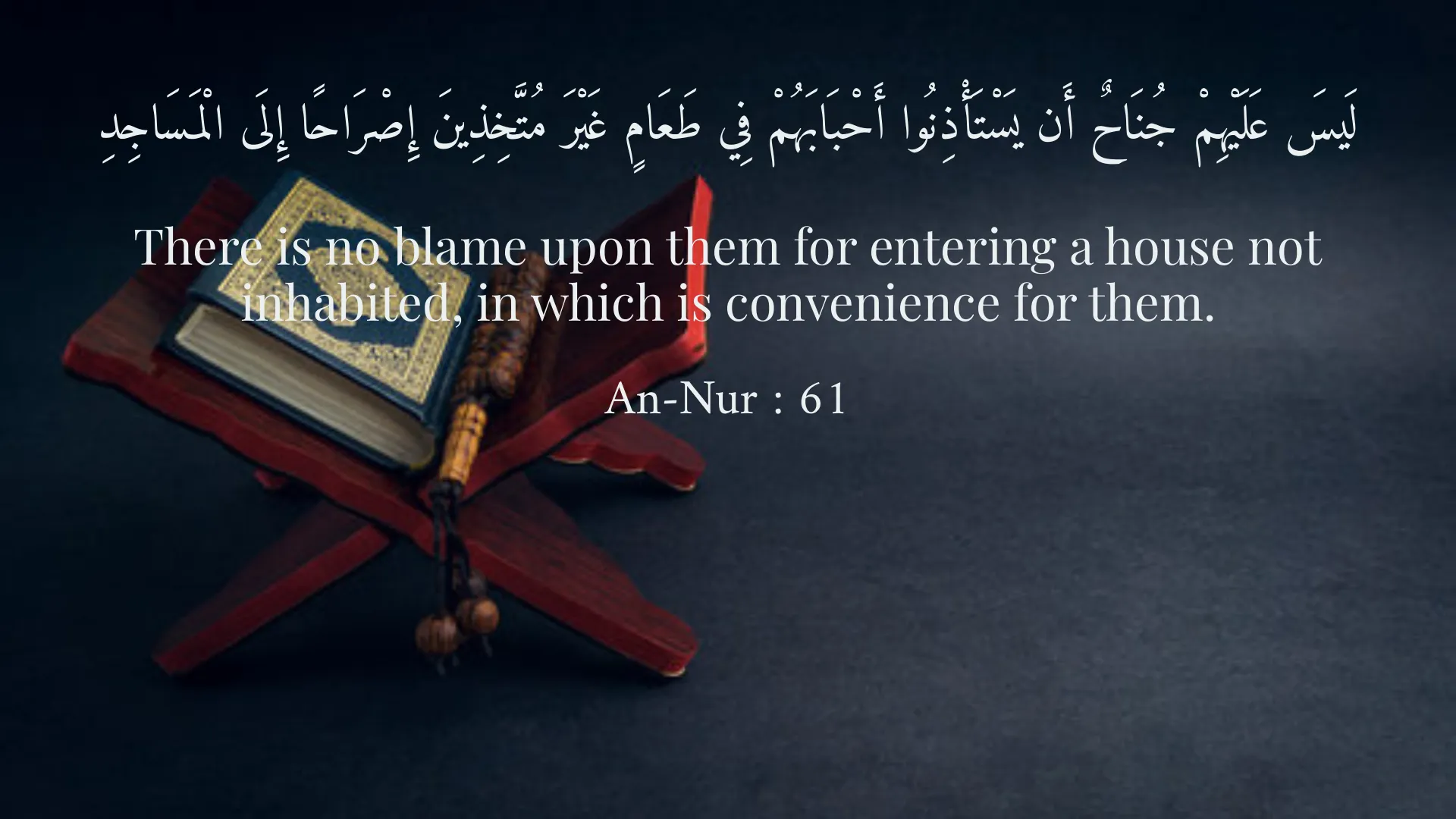
Bringing peace to others is one of the beautiful and ethical aspects of humanity, emphasized in the Holy Quran. The significance of peace in human interactions cannot be overstated; it is foundational to societal development and personal happiness. Humans are naturally in search of peace and tranquility, and it is our duty, not merely a choice, to gift this peace to one another. The quest for peace is embedded in our nature, driven by an innate desire for harmony and balance in our relationships. The Holy Quran serves as a guiding light in achieving this sacred duty, where Allah commands us to live in love and to assist one another in various circumstances of life. This directive is encapsulated in multiple verses, one being Surah An-Nur, verse 61, which states: "There is no blame upon them for entering a house not inhabited, in which is convenience for them..." This phrase might seem simple at first glance, but it carries profound implications about human interactions and the necessity of empathy and understanding within societal frameworks. It emphasizes that a loving approach enhances relationships and fosters a peaceful environment in both public and private settings. The atmosphere cultivated in a family or workplace can greatly affect individual well-being, and consequently, the collective peace experienced by the community. From a practical perspective, creating a supportive and loving atmosphere in our homes leads to greater tranquility. In families, where the foundation of social structures lies, encouraging expressions of love, compassion, and understanding can significantly reduce tensions. Open communication and shared moments of joy contribute towards emotional stability, making family members more resilient and unified in the face of challenges. Similarly, in workplaces, when employees feel respected, appreciated, and understood, their productivity and satisfaction increase, leading to a more harmonious work environment. Moreover, the significance of prayer and establishing a connection with God adds another layer to the importance of peace in our lives. It is not merely about external factors that grant us peace; it is also an internal journey towards tranquility. Surah Fussilat, verse 30 conveys God's promise that believers will experience peace in their lives: "Indeed, those who have said, 'Our Lord is Allah,' and then remained steadfast, the angels will descend upon them, [saying], 'Do not fear and do not grieve..." This verse reflects the divine aspect of peace. When we remain steadfast in our faith, we create a fortress of peace around ourselves, which, in turn, transcends to those around us. Receiving God's mercy and composing our hearts with His love can enable us to transmit tranquility to others. Faith can serve as a fountain of serenity. The steadfastness in prayer can fortify our spirits during tumultuous times, offering solace and a sense of purpose. The rituals associated with prayer, such as the moments of reflection, surrender, and gratitude, not only establish our connection with the Divine but also facilitate cognitive and emotional clarity. The repetitive nature of prayer nurtures a sense of routine and stability, acting as an anchor amid life's storms. When we are enveloped by this divine peace, the light of our tranquility can shine upon others, helping those around us to cope with their struggles and anxieties. In doing so, we become not only recipients of peace but also bearers of it, tasked with promoting harmony within our circles. Warm conversations, filled with sincerity and empathy, can dramatically uplift others' spirits, particularly in challenging times. A simple act of kindness—whether it be sharing encouraging words, listening attentively, or offering physical help—can change the realms of someone's life completely. It is important to remember the profound impact small gestures can make; they can serve as lifelines for individuals struggling with their circumstances. Encouraging dialogues, therefore, become the forays into nurturing relationships that stand the test of time. Sharing hope in times of adversity gives individuals the strength they need to persevere. Through establishing connections, we weave the threads of a compassionate network that inherently contributes to community peace. In an environment characterized by understanding and shared respect, individuals feel valued and empowered, subsequently fostering a sense of belonging. Creating such an environment is a collective endeavor; it involves embracing diversity, respecting differences, and cultivating love. Lastly, it is worth noting that promoting peace cannot be limited to our immediate environments or relationships. The message of peace ought to transcend borders and cultures. Embracing intercultural dialogue can enhance mutual understanding and respect among different groups. Sharing our narratives, lived experiences, and lessons learned through peaceful practices can foster empathy across communities. We can collectively work towards a peaceful world by facilitating exchanges that highlight shared human values and aspirations. In conclusion, the call to bring peace to others is a sacred and commendable endeavor rooted deeply in our humanity and spiritual teachings. The guidance provided by Allah in the Holy Quran underscores the irreplaceable role of love, understanding, and support in our lives. Creating a consistent atmosphere of peace and compassion within our families, workplaces, and beyond can fundamentally shift the dynamics of our interactions and encourage personal and collective growth. Prayer and a steadfast connection with the Divine not only guard us against despair but also empower us to pass on peace to others. As we traverse our unique journeys, let us remember the transformative power of our words and actions; let kindness be the legacy we leave behind, for it is through small acts of love that we can illuminate the path towards a peaceful existence.
Related Verses
لَيسَ عَلَيْهِمْ جُنَاحٌ أَن يَسْتَأْذِنُوا أَحْبَابَهُمْ فِي طَعَامٍ غَيْرَ مُتَّخِذِينَ إِصْرَاحًا إِلَى الْمَسَاجِدِ
There is no blame upon them for entering a house not inhabited, in which is convenience for them.
An-Nur : 61
إنَّ الَّذِينَ قَالُوا رَبُّونَا اللَّهُ ثُمَّ اسْتَقامُوا تَتَنَزَّلُ عَلَيْهِمُ الْمَلَائِكَةُ أَلَّا تَخَافُوا وَلَا تَحْزَنُوا
Indeed, those who have said, 'Our Lord is Allah,' and then remained steadfast, the angels will descend upon them, [saying], 'Do not fear and do not grieve.'
Fussilat : 30
Short Story
One day, a person named Hasan went to a park and saw individuals who were unhappy and concerned about life's difficulties. Hasan thought about how he could help them. He decided to approach them and comfort them with kind words. By sharing good experiences from his life, he was able to bring smiles to their faces. Hasan's actions brought peace to others, and he felt very satisfied with what he had done.