Quranic Answer
The power of speech is one of the fundamental aspects of human interaction. Language is not merely a tool for communication; it can create bonds, share ideas, convey emotions, and unfortunately, it can also be the source of conflict, misunderstanding, and harm. In the Holy Quran, there is profound guidance on the importance of controlling the tongue and avoiding undesirable speech, which can assist us in navigating the complexities of our interactions. The Quran teaches that the words we choose to use can either uplift or destroy, making it imperative to wield this power with care and intention. One significant verse that highlights the significance of speech in Islam is found in Surah Al-Ahzab (Chapter 33), verse 70: 'O you who have believed, fear Allah and speak words of appropriate justice.' This verse serves as a foundational reminder for believers to approach their speech with a sense of accountability. The Quran uses the term 'fear Allah,' which emphasizes the moral obligation to be truthful and just in our words. This is not merely a suggestion but a directive aimed at fostering a society where honesty prevails. Speaking words of justice encompasses not only factual truthfulness but also fairness and consideration towards others in our discourse. Moreover, the Quran gives us further insights into the manner in which we should express ourselves. In Surah Luqman (Chapter 31), verse 19, it states: 'And be moderate in your pace, and when you speak, lower your voice. Indeed, the most vile of sounds is the voice of donkeys.' This verse emphasizes moderation and self-restraint in our speech. The metaphor of the loud voice of donkeys serves as a stark reminder that excessive noise can be bothersome and detrimental. By lowering our voices and speaking with calmness, we can create an atmosphere of respect and peace in conversations. It suggests that the tone and demeanor with which we communicate are just as important as the content of our speech. Another crucial aspect covered in the Quran is the detrimental effects of gossiping and making false allegations against others. In Surah Al-Hujurat (Chapter 49), verse 12, it states: 'O you who have believed, avoid much [negative] assumption. Indeed, some assumption is sin. And do not spy or backbite each other.' This verse warns against engaging in harmful speech practices such as backbiting and spreading rumors. The Quran acknowledges the reality that negative assumptions about others can lead to discord and enmity in communities. By avoiding these practices, we not only protect others from harm but also safeguard our own moral integrity. The journey towards controlling our speech requires self-awareness and intentionality. The first step in this process is to be cognizant of our words and to carefully select what we say. This involves listening more than speaking, allowing us the opportunity to reflect on our responses rather than reacting impulsively. We can benefit immensely by considering the potential consequences of our words before we speak them into existence. Negative or false statements can cause irreparable damage, and as believers, we are urged to treat our speech as a sacred trust. Engaging in self-reflection can greatly assist us in improving our speech. Regularly assessing how our words affect others can be enlightening. It prompts us to think: Are our words encouraging or discouraging? Are they kind or harsh? By valuing kindness and compassion in our dialogue, we take significant strides towards better communication. We can also strive to create an ethos of positivity by complimenting others, offering constructive criticism, and expressing gratitude, thereby contributing to a more harmonious environment. Prayer also plays an essential role in purifying our speech. Turning to God in prayer and seeking forgiveness for our indiscretions with words can be transformative. Not only does prayer offer the chance for redemption, but it also helps cultivate humility, mindfulness, and a deeper understanding of the weight of our words. The act of seeking forgiveness encourages us to be more cautious and respectful in our day-to-day conversations. Furthermore, the Quran signifies the importance of community and accountability in refining our speech. Surrounding ourselves with those who uphold similar values can influence our speech positively. Engaging in conversations with people who are mindful of their speech serves as a constructive model for us. Communities that prioritize ethics in dialogue tend to foster kindness and love, leading to stronger, more cohesive bonds among individuals. In summary, controlling the tongue is vital in fostering a society where words build instead of break, where speech is seen as an opportunity for connection rather than conflict. The teachings found in the Quran regarding speech serve as guiding principles, reminding us to speak with justice, maintain moderation, and avoid gossip and negative assumptions. By being mindful of our words, engaging in self-reflection, seeking prayer and community support, we can not only enhance our personal growth but also contribute to a more positive and respectful society. As we internalize these teachings, we can discover the immense potential of our tongues—not just as instruments of speech, but as means to uplift, inspire, and connect with one another in meaningful ways.
Related Verses
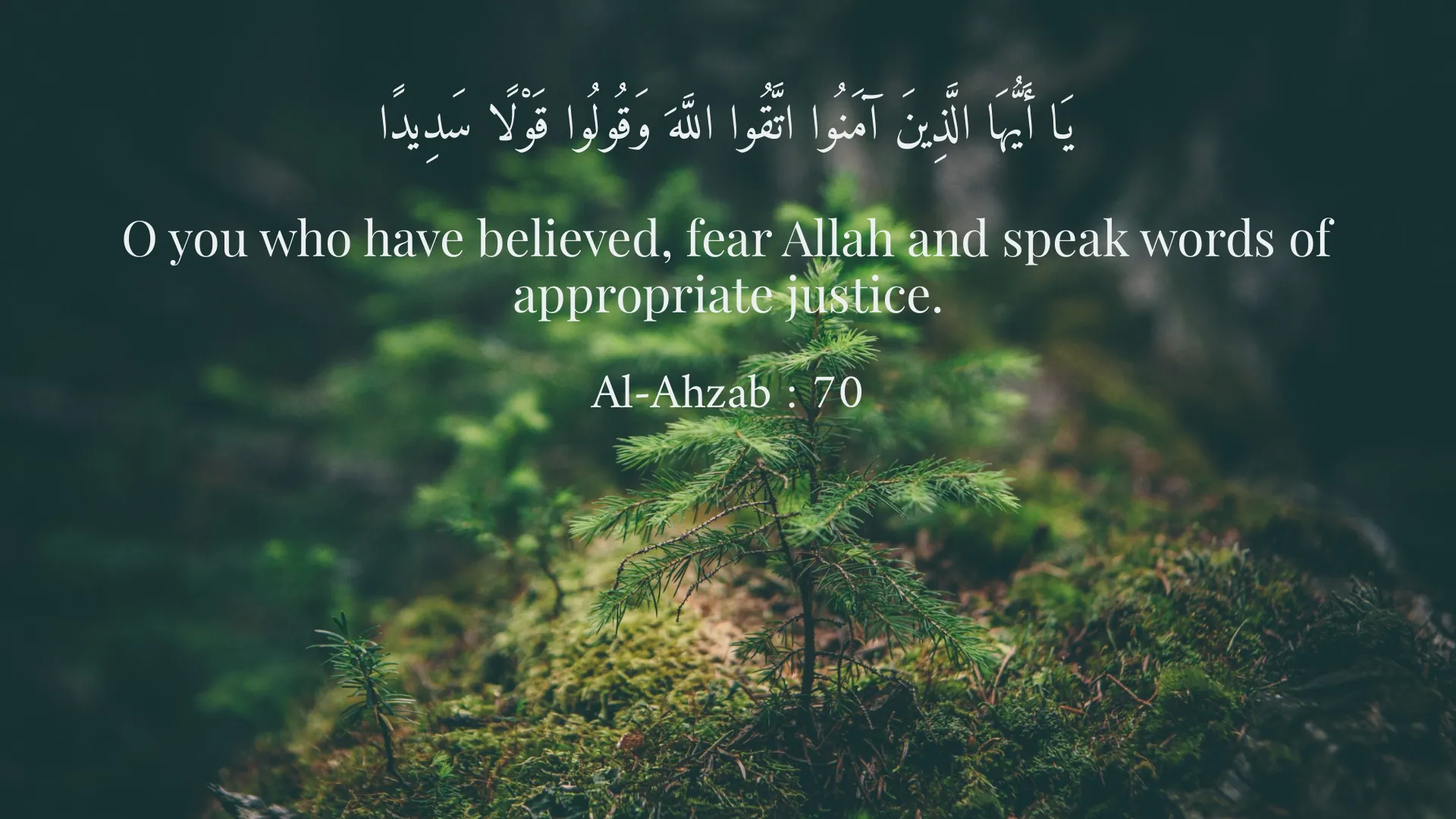
يَا أَيُّهَا الَّذِينَ آمَنُوا اتَّقُوا اللَّهَ وَقُولُوا قَوْلًا سَدِيدًا
O you who have believed, fear Allah and speak words of appropriate justice.
Al-Ahzab : 70
وَاقْصِدْ فِي مَشْيِكَ وَاغْضُضْ مِنْ صَوْتِكَ ۖ إِنَّ أَنكَرَ الْأَصْوَاتِ لَصَوْتُ الْخَسِّ
And be moderate in your pace and when you speak, lower your voice. Indeed, the most vile of sounds is the voice of donkeys.
Luqman : 19
يَا أَيُّهَا الَّذِينَ آمَنُوا اجْتَنِبُوا كَثِيرًا مِّنَ الظَّنِّ إِنَّ بَعْضَ الظَّنِّ إِثمٌۭ وَلَا تَجَسَّسُوا وَلَا يَغْتَبْ بَعْضُكُمْ بَعْضًا
O you who have believed, avoid much [negative] assumption. Indeed, some assumption is sin. And do not spy or backbite each other.
Al-Hujurat : 12
Short Story
Once, there was a man named Hasan who was accustomed to cursing and insulting others. He often spoke poorly and felt no discomfort about it. One day, a friend told him, 'Why don't you control your tongue?' Hasan realized that his problems stemmed from his words and decided to be more mindful. After some time, he noticed not only were his relationships improving, but he also felt a greater sense of peace.