Quranic Answer
In a world filled with transient pursuits and fleeting pleasures, the wisdom of detachment from worldly affairs and the focus on the Hereafter emerges as a profound and essential theme found within the teachings of the Quran. Humanity often finds itself engrossed in the demands of daily life, chasing after success, wealth, and recognition, sometimes losing sight of the eternal reality awaiting each soul beyond this life. The teachings of Allah, as presented through the verses of the Quran, serve as a guiding light for believers seeking to align their lives with the greater purpose of existence. This article aims to elaborate on the significance of moving away from worldly distractions and the essence of living a life dedicated to the Hereafter, focusing on the verses of the Quran and practical steps that can help individuals strengthen their connection to their spiritual beliefs. The transient nature of worldly life is emphasized prominently in Surah Al-Imran, specifically in verse 185, where Allah states, "Every soul will taste death." This verse encapsulates one of the most profound truths: life in this world is temporary, while the Hereafter is eternal. The verse is a reminder that all material accomplishments, possessions, and status will ultimately fade away. In contemplating this truth, individuals are encouraged to evaluate their pursuits and prioritize actions that will have a lasting impact not only on themselves but also on their families, communities, and society at large. Furthermore, in Surah At-Tawbah, verse 38, Allah cautions against the distractions that commerce and worldly ambitions can pose. The verse reads, "O you who have believed, what is [the matter] with you that, when you are told, 'Proceed in the cause of Allah,' you adhere heavily to the earth?" This plea serves as a challenge, urging believers to reflect on their intentions and priorities. It calls for movement beyond mere existence in the material world to a life committed to righteous deeds. The call to action here is not merely a suggestion but a divine imperative to strive for the cause of Allah—an encouragement to dedicate oneself to pursuits that will echo in eternity. In parallel, Surah Al-Ankabut, verse 46, reinforces the importance of reliance on Allah and encourages believers to avoid conflicts with those who deny the truth of faith. The verse acknowledges that building strong relationships based on faith and trust in Allah is vital in preparing for the Hereafter. As we navigate through life, we must prioritize our dependence on the divine rather than allowing the illusions of worldly success to shape our identities. To put these teachings to practice, believers can engage in various actions that align with their spiritual goals. One of the fundamental practices is prayer. Salah, or prayer, is a direct line of communication with Allah—it serves both as a means of worship and an opportunity to reflect on one's life and intentions. Establishing regular prayer can cultivate a sense of peace and alignment with spiritual objectives while distancing oneself from distractions that arise in everyday life. Additionally, acts of charity (sadaqah) play a crucial role in fostering a connection with the Hereafter. By sharing wealth with those in need, individuals not only enhance their own spiritual standing but also embody the ideals of compassion and generosity that are central to Islamic teachings. Engaging in charitable deeds serves as a reminder of the impermanence of material possessions and shifts focus from personal gain to collective welfare—thus nurturing a community spirit that supports the marginalized and underprivileged. Supplication (dua) also plays an important role in this spiritual journey. Regularly reaching out to Allah, seeking guidance and support, helps deepen our connection with the Creator. It is through sincere supplication that a believer acknowledges their humility and dependence on Allah, reinforcing the understanding that while life may present numerous challenges, ultimate control lies with the Divine. Moreover, participating in gatherings that remember Allah and recite the Quran provides invaluable opportunities for spiritual enrichment. Such gatherings foster a sense of community and shared purpose, allowing individuals to draw strength from one another’s faith. They serve as reminders of the teachings of the Quran and promote reflection on the path forward. In these moments of remembrance, the distractions of the world dissipate, allowing individuals to reconnect with their spiritual essence and renew their commitment to the Hereafter. To further enhance this journey of detachment from worldly pursuits, it is essential to focus on avoiding sins, as mentioned in various Quranic teachings. Sin has the potential to cloud one’s heart and distract from spiritual ambitions. Strengthening the intention to pursue righteousness and striving for pure intentions is critical in enriching one’s life. Having a clear set of values and goals aligned with Islamic teachings helps create a purposeful existence, enhancing the connection to the divine while distancing oneself from activities that may lead to regret in the Hereafter. It is paramount for individuals wishing to detach from the world and embrace a life of righteousness to engage in activities that promote spiritual growth. Reading and reflecting on the Quran is one such profound activity—each verse serves as a source of wisdom and guidance. The Quran provides lessons on morality, ethics, and spirituality that not only equip believers with the knowledge necessary for navigating life's challenges but also reinforce the metaphysical truths of faith and existence. Ultimately, it is critical to remember that life in this world is but a prelude to the eternal life that awaits in the Hereafter. The endeavors carried out in this temporal sphere directly influence one’s station in the Hereafter. This is underscored further by the Islamic concept of accountability, where every action is recorded and evaluated by Allah. As such, prioritizing the journey towards pleasing Allah and embodying the values of Islamic teachings shapes an individual’s legacy—leading them closer to the Hereafter. In conclusion, detach from worldly concerns and cultivate a sincere commitment to the Hereafter guided by the teachings of the Quran. By embracing prayer, charity, supplication, and righteous deeds, believers can transcend the superficialities of life and focus on what truly matters in their spiritual journey. By constantly reminding ourselves of the impermanence of this world and the significance of our actions, we prepare ourselves not just for life here but also for the eternal existence that lies ahead. Seeking Allah’s pleasure becomes the most transformative path—one that not only enriches life in this world but also elevates one’s status in the Hereafter. With this understanding, believers can navigate their lives purposefully, anchoring themselves to the eternal truths of faith.
Related Verses
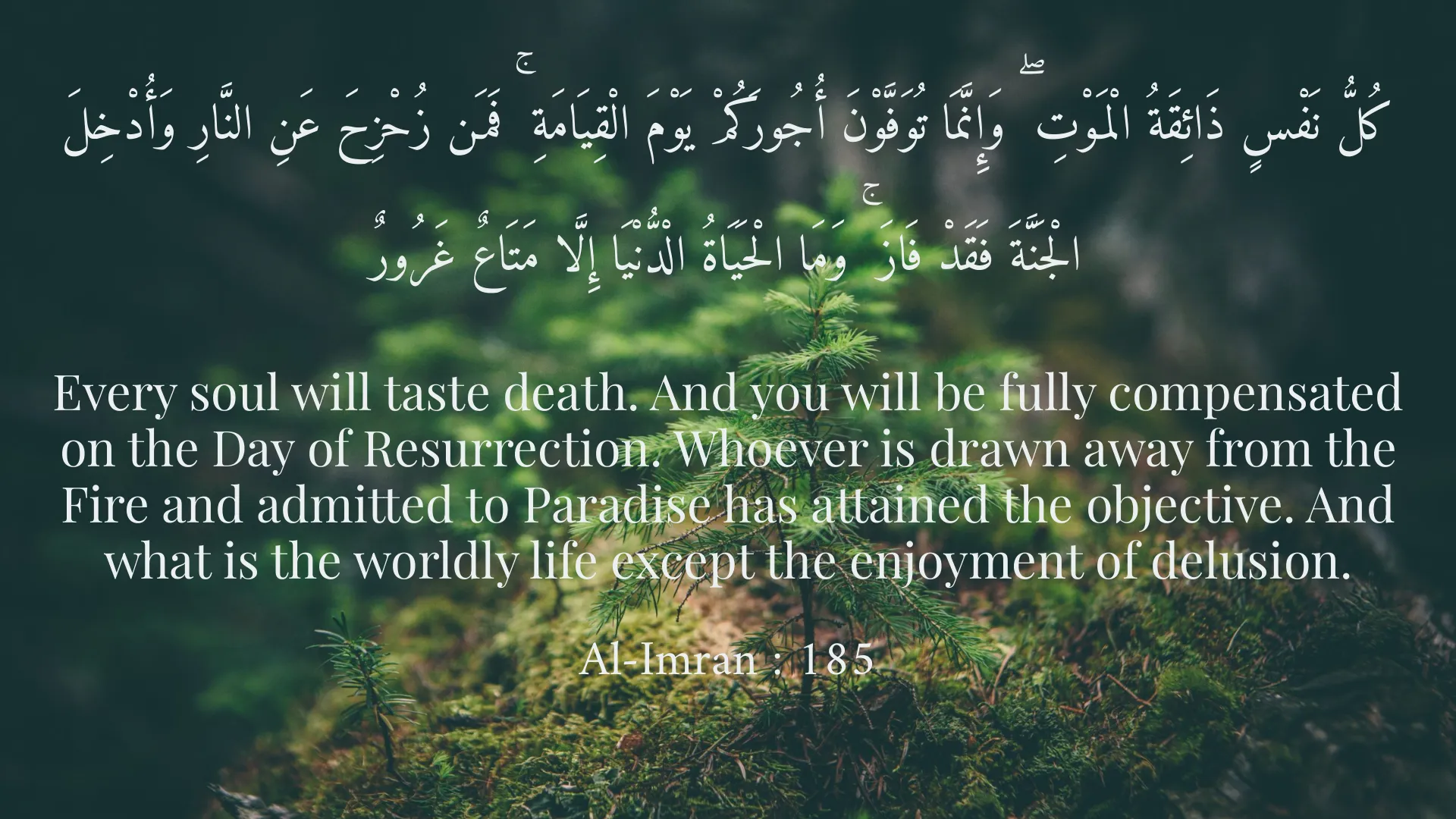
كُلُّ نَفْسٍ ذَائِقَةُ الْمَوْتِ ۖ وَإِنَّمَا تُوَفَّوْنَ أُجُورَكُمْ يَوْمَ الْقِيَامَةِ ۚ فَمَن زُحْزِحَ عَنِ النَّارِ وَأُدْخِلَ الْجَنَّةَ فَقَدْ فَازَ ۚ وَمَا الْحَيَاةُ الْدُّنْيَا إِلَّا مَتَاعٌ غَرُورٌ
Every soul will taste death. And you will be fully compensated on the Day of Resurrection. Whoever is drawn away from the Fire and admitted to Paradise has attained the objective. And what is the worldly life except the enjoyment of delusion.
Al-Imran : 185
يَا أَيُّهَا الَّذِينَ آمَنُوا مَا لَكُمْ إِذَا قِيلَ لَكُمْ انْفِرُوا فِي سَبِيلِ اللَّهِ ثَقُلَتْكُمْ أَرْضٌ قَصُرَتْ هُمُ وَيَنْفَرُوُا فِي حَرَقُمُ بِالْمَلَائِكَةِ مَوَالٍ لَّهُمْ مُّلَاسِقِينَ
O you who have believed, what is [the matter] with you that when you are told, 'Advance in the cause of Allah,' you become inclined to the earth?
At-Tawbah : 38
وَلَا تُجَادِلُوا أَهْلَ الْكِتَابِ إِلَّا بِالَّتِي هِيَ أَحْسَنُ إِلَّا الَّذِينَ ظَلَمُوا مِنْهُمْ ۖ وَقُولُوا آمَنَّا بِالَّذِي أُنزِلَ إِلَيْنَا وَأُنْزِلَ إِلَيْكُمْ وَإِلَٰهُنَا وَإِلَٰهُكُمْ وَاحِدٌ ۖ وَنَحْنُ لَهُ مُسْلِمُونَ
And do not argue with the People of the Scripture except in a good way, except for those who commit injustice among them. And say, 'We have believed in that which has been revealed to us and revealed to you. Our God and your God is one; and we are Muslims [in submission] to Him.'
Al-Ankabut : 46
Short Story
One day, a man named Ismail was heading to the market. On his way, he met a religious scholar. The scholar said to him, 'O Ismail, think! Does the world hold worth for all this effort?' This phrase struck Ismail’s heart. He decided to focus on the Hereafter and dedicate four hours of his day to prayer and worship of Allah. After a while, he felt a satisfaction and peace in his heart. Ismail realized that worldly life holds value only when aligned with the pleasure of Allah.