Quranic Answer
Inner peace is an essential human need that transcends cultural, societal, and religious boundaries. It is a state of mental and emotional calmness, a tranquility that provides solace amidst the tumult of life. Many people search tirelessly for this sense of peace, often seeking it in material possessions, relationships, or achievements. However, the Holy Quran offers profound insights and solutions to achieve inner peace, suggesting that true tranquility comes from a spiritual connection and a deep awareness of God. One of the pivotal verses that highlights this theme is found in Surah Ar-Ra'd (Chapter 13), verse 28, which states: 'Indeed, it is in the remembrance of Allah that hearts find peace.' This profound message indicates that engaging in dhikr (remembrance) of Allah and reciting His names can significantly enhance our emotional state and lead us to a calmer existence. In today's fast-paced world, overwhelmed with information and distractions, many individuals find themselves struggling with anxiety and stress. Making time to remember Allah, whether through prayer, meditation, or reflection, can help anchor us during challenging times. In moments of distress, invoking the divine name provides comfort and a sense of security, helping us navigate through life's inevitable storms. Moreover, in Surah Al-Baqarah (Chapter 2), verse 153, Allah advises believers: 'O you who have believed, seek help through patience and prayer. Indeed, Allah is with the patient.' This verse introduces patience and prayer as integral components for achieving inner tranquility. Life is a series of tests and trials, requiring us to exercise patience as we strive to overcome adversities. The act of prayer serves as a conduit for communication with the divine, allowing us to express our worries, fears, and hopes. This sacred ritual not only offers solace but reinforces the belief that we are never alone in our struggles. Cultivating these virtues — patience and prayer — fosters resilience, empowering us to confront difficulties with a composed mindset. Furthermore, living righteously and striving to perform good deeds are critical avenues toward attaining inner peace. In Surah Al-Mu'minun (Chapter 23), verses 1 and 2, it is narrated: 'Indeed, the believers have succeeded. They who are during their prayer humbly submissive and they who turn away from ill speech.' These verses delineate characteristics of true believers, emphasizing humility in prayer and the importance of distancing oneself from frivolous distractions. Focusing on spiritual growth, self-improvement, and serving others allows individuals to develop a balanced attitude toward life and the challenges it presents. These tenets outlined in the Quran are not just mere guidelines for spiritual success; they form a comprehensive framework for achieving peace within one’s self and in one’s interactions with others. Strengthening our faith and enhancing our routine prayers connect us to a greater purpose, thereby nurturing our sense of belonging and security. In times of trials, we can draw upon our faith as a source of comfort, enabling us to maintain a positive outlook even amidst adversity. In addition to personal spirituality, nurturing relationships with family and friends is crucial for our emotional well-being. The Quran stresses the importance of maintaining good relations with others, as demonstrated in Surah An-Nisa (Chapter 4), verse 36: 'And to parents, do good.' The exhortation to do good is not limited to our parents; it extends to our families, friends, and communities. Engaging in acts of kindness and cultivating strong bonds with those around us creates a supportive network that can bolster our quest for peace. Relationships play a vital role in shaping our mental health, and fostering open communication combined with empathy fortifies connections that can help in times of distress. Moreover, engaging in acts of charity and community service reinforces our understanding of belonging and engagement with the world. By extending compassion and generosity to others, we not only uplift them but also elevate our own spirits. The act of giving shifts our focus from self to others, thereby instilling a sense of purpose and fulfillment that contributes to our inner peace. Ultimately, happiness and peace emerge not from self-fulfillment alone but from a deep commitment to humanity. In summary, achieving inner peace requires a multifaceted approach, intertwining spiritual growth and communal engagement. The Holy Quran provides timeless guidance that emphasizes the importance of remembering Allah, maintaining patience and prayer, performing righteous deeds, and nurturing positive relationships. As we navigate the complexities of life, we must strive to incorporate these principles into our everyday existence to cultivate tranquility in our hearts. Embracing these teachings not only brings personal peace but also radiates harmony to those around us, creating a ripple effect of positivity that can transform communities. Ultimately, it becomes evident that the path to inner peace is not solitary. Through shared experiences, kindness, and connection with the divine, we can all find solace amidst the chaos of the world.
Related Verses
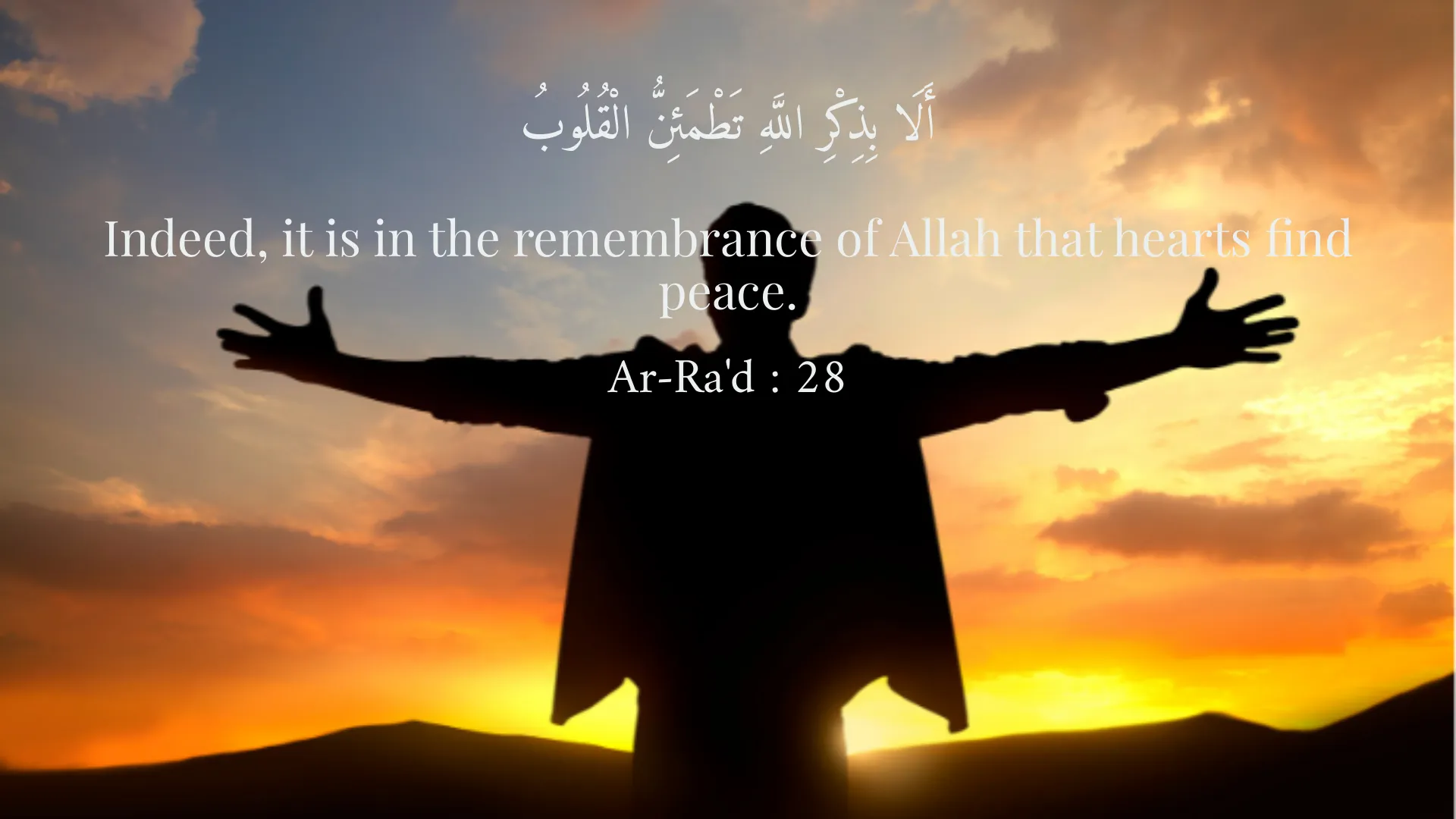
أَلَا بِذِكْرِ اللَّهِ تَطْمَئِنُّ الْقُلُوبُ
Indeed, it is in the remembrance of Allah that hearts find peace.
Ar-Ra'd : 28
يَا أَيُّهَا الَّذِينَ آمَنُوا اسْتَعِينُوا بِالصَّبْرِ وَالصَّلَاةِ ۚ إِنَّ اللَّهَ مَعَ الصَّابِرِينَ
O you who have believed, seek help through patience and prayer. Indeed, Allah is with the patient.
Al-Baqarah : 153
قَدْ أَفْلَحَ الْمُؤْمِنُونَ
Certainly will the believers have succeeded.
Al-Mu'minun : 1
Short Story
Once upon a time, a young man named Yusuf found himself troubled by life's hardships and was searching for peace. He sought the guidance of a great scholar, asking him for a path to tranquility. The scholar replied, 'O Yusuf, to find inner peace, you must first remember God and rely on Him in every circumstance. When faced with trials and difficulties, draw closer to Him through prayer and patience.' Yusuf, learning these principles, gradually felt better and found his inner peace.