Quranic Answer
Having control over our speech is one of the most significant aspects emphasized in the Quran. Language is a powerful tool; it can build bridges or create rifts, inspire hope or incite hatred, and foster understanding or breed confusion. The Quran, as a comprehensive guide for humanity, offers profound insights on the importance of speech and the responsibilities that come with our words. Understanding and implementing these teachings can radically enhance our interpersonal relationships and spiritual well-being. The Quran repeatedly stresses the importance of being mindful of our words and language, drawing our attention to the consequences of our speech. In our daily lives, our speech can reflect our inner selves, acting as a mirror that shows our true feelings, beliefs, and intentions. Our words can reveal who we are, what we stand for, and how we relate to those around us. This emphasis on speech signifies that every word carries weight and meaning, reinforcing the belief that we should choose our words wisely. One powerful verse that encapsulates this idea is found in Surah Luqman, verse 19, which states: 'And be moderate in your pace and when you speak, lower your voice; indeed, the worst of sounds is the braying of donkeys.' This passage highlights the importance of softness and gentleness in speech. The metaphor of the braying donkey vividly contrasts the expected beauty and grace in human communication with the harshness of a donkey's bray. The Quran teaches us that our manner of speaking should be a testament to our character; thus, we ought to be moderate, respectful, and gentle in our dialogue, reflecting a composed demeanor conducive to healthy interactions. Furthermore, the Quran emphasizes the significance of our relationships with others through our communication. In Surah Al-Baqarah, verse 83, it is mentioned: 'And [mention] when We took the covenant from the Children of Israel, [enjoining upon them], 'Do not worship except Allah and to parents, do good.' This verse underscores the responsibility of speaking kindly to others, especially to our parents, who deserve our utmost respect and honor. In a broader sense, it highlights the imperative of treating everyone with kindness and compassion, which is vital for fostering harmony and understanding within societal structures. To gain better control over our speech, one practical approach is to invoke sincere prayers. An example of this might be, 'O Allah, guide me to the words of truth.' This plea is not merely about seeking eloquence but is an acknowledgment of our limitations as humans and a request for divine guidance to articulate thoughts and feelings truthfully and compassionately. Prayer serves as a reminder to remain humble and conscious of the impact we have on others through our words. Moreover, consistent mindfulness regarding the blessings of speech is crucial. Our tongue is a divine gift that can be utilized for tremendous good. It is essential to reflect on how we can employ our words to uplift others, promote justice, and spread positivity. By recognizing our tongue as a treasure, we begin to appreciate the potential it has to foster peace, convey love, and nurture relationships. This perspective compels us to approach our interactions with a sense of responsibility, ensuring that what we say contributes positively to our communities. Contemplating the consequences of our words before expressing them can also provide clarity and balance in our speech. When we speak, we should ask ourselves whether what we're about to say could harm others. This practice requires us to pause and reflect, cultivating a habit of thoughtfulness rather than impulsiveness in our communication. It can serve to minimize misunderstandings and reduce conflicts that stem from hasty or thoughtless comments. The art of speech is not merely about what we say but how we say it. Tone, body language, and timing are integral components of effective communication that can significantly impact how our words are received. To embody the Quranic principles, we must strive for neither loud nor abrasive expressions. Instead, our voice should carry a tone of warmth, comfort, and encouragement. This is particularly crucial in an era where communication often takes on a digital form, further isolating individuals and leading to misinterpretations. In such an environment, gentle speech can be the catalyst for creating bonds and fostering understanding. Ultimately, maintaining a close relationship with Allah through prayer and supplication can profoundly impact our control over our speech. With the divine guidance received through regular communication with our Creator, we become more attuned to the spiritual significance of our words. This connection nurtures our consciousness and assures us of the importance of our speech as a form of worship. By making sincere attempts to align our words with our faith, we come closer to embodying the virtues outlined in the Quran, promoting kindness, respect, and understanding in our interactions. In various situations, from personal dialogues to public discourse, it is imperative to uphold the principles of good communication. As guided by the Quran, we must strive to embody compassion in our speech and reflect the divine values of mercy, patience, and honesty. When faced with challenging moments, recalling the Quran's teachings can offer the necessary fortitude to respond with grace instead of frustration. By doing so, we not only honor our commitments but also contribute to creating a society that values peaceful coexistence and mutual respect. In conclusion, having control over our speech is paramount in the life of a believer. The lessons derived from the Quran regarding our discourse invite us to recognize the potential that our words have in shaping our realities. By adhering to these principles—mindfulness in speech, kindness, and divine engagement—we can significantly improve our relationships and foster a more compassionate world. As we navigate the complexities of modern communication, let us allow the teachings of the Quran to guide us in our pursuit of meaningful and impactful speech, thus ensuring that our words echo the divine message of love and respect for one another.
Related Verses
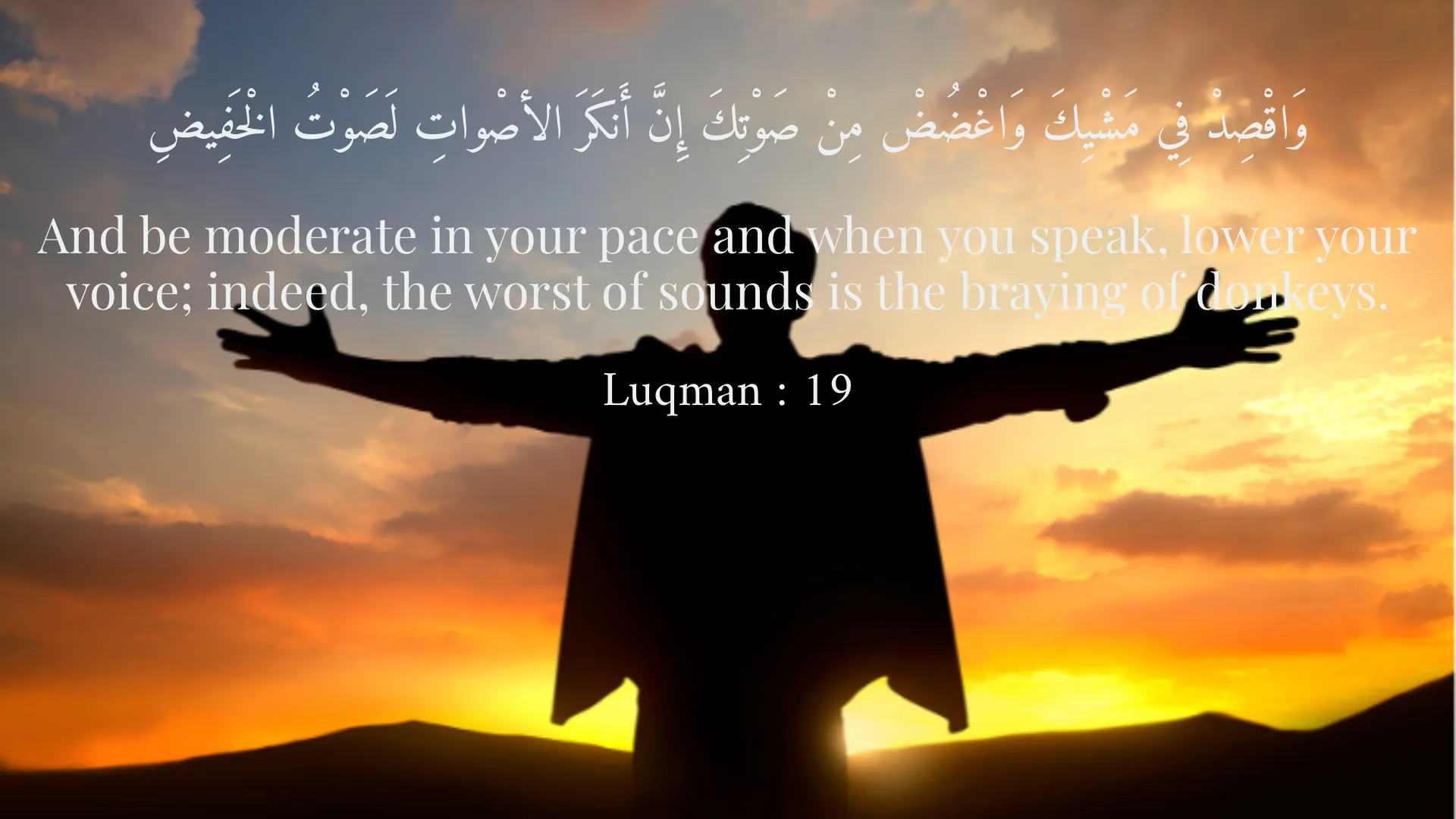
وَاقْصِدْ فِي مَشْيِكَ وَاغْضُضْ مِنْ صَوْتِكَ إِنَّ أَنكَرَ الأصْواتِ لَصَوْتُ الْخَفِيضِ
And be moderate in your pace and when you speak, lower your voice; indeed, the worst of sounds is the braying of donkeys.
Luqman : 19
وَإِذْ أَخَذْنَا مِيثَاقَ بَنِي إِسْرَائِيلَ لا تَعْبُدُونَ إِلَّا اللَّهَ وَبِالْوَالِدَيْنِ إِحْسَانًا
And [mention] when We took the covenant from the Children of Israel, [enjoining upon them], 'Do not worship except Allah and to parents, do good.'
Al-Baqarah : 83
Short Story
One day in the marketplace, a middle-aged man was arguing with a young man. He was speaking loudly and angrily. An old wise man approached them and said, 'If you allow me, I'd like to tell you that the power of words goes hand in hand with the power of anger. Therefore, control your tongue and use gentleness and kindness, as your words can create joy or sorrow.' The men reflected and decided to incorporate calmness and gentleness into their speech.