Quranic Answer
Comparing ourselves to others is a natural tendency, especially in today’s fast-paced and interconnected world. We are constantly bombarded with images and narratives of other individuals’ lives, achievements, and showcases of success through social media platforms, leading many to fall into the trap of self-comparison. The Holy Quran, however, serves as a timeless reminder that each person possesses unique traits, abilities, and destinies. This divine perspective encourages individuals to refrain from judgment over one another and instead focus on self-improvement and personal growth. In Surah Al-Hijr, verse 29, Allah states: "And when I have fashioned him and breathed into him of My Soul, then fall down to him in prostration." This verse illustrates that every individual is created as distinct and exceptional, demonstrating the divine intention behind human creation. Each person embodies a unique combination of talents, experiences, and qualities, which sets them apart from one another. Therefore, comparing oneself to others is effectively a form of disrespect, not only towards the Creator who designed our individual paths but also to our own essence as unique beings. The act of comparison can wrench individuals into feelings of inadequacy, jealousy, and discontent. These feelings can not only affect one's mental health but also lead one away from their true path. The Quran invites believers to redirect their focus from judging others to engaging in self-reflection and self-improvement. In Surah Al-Imran, verse 164, the importance of self-cultivation is emphasized, stating: "Indeed, Allah has conferred favor upon the believers when He sent among them a Messenger from themselves, reciting to them His verses and purifying them and teaching them the Book and wisdom." This verse lays the foundation for recognizing the value of personal growth through learning, reflection, and striving for excellence in oneself. Instead of engaging in futile comparisons, it is vital to focus on enhancing our skills and characteristics. Embracing a journey of self-improvement is inherently a personal undertaking, where individuals seek to align more closely with their true selves. In this pursuit, the connection to God is paramount. God is the ultimate judge, offering guidance, wisdom, and understanding. Recognizing that divine perspective should serve as the benchmark for our self-worth delivers individuals from the pitfalls of societal standards and expectations. The societal narratives we often encounter frequently showcase highlights of others’ lives—achievements that appear effortless and successes that seem readily accessible. These narratives often ignore the challenges and struggles faced by individuals on their journey and create an illusion of perfection. Such portrayals can inadvertently induce a constant sense of competition, where one's measure of success is derived based on the accomplishments of others. However, the awareness of the diversity of human experiences reveals that every person faces their unique struggles; thus, it is irrational and unjust to compare one’s entire life journey against someone else’s snapshot moment. In reflecting on our own individual paths, it becomes crucial to delve into our unique stories, understanding that everyone's journey is laced with lessons meant to cultivate resilience, wisdom, and comprehension of oneself and life. Apprehending the value of one's struggles allows individuals to appreciate their personal growth, leading to a deeper understanding of their purpose and the gifts bestowed upon them. Moreover, Islam encourages continuous learning and the acquisition of knowledge—the true measure of success rooted in understanding and wisdom rather than wealth or status. The aforementioned verse from Surah Al-Imran highlights the importance of learning and embracing knowledge to overcome ignorance and self-doubt. True fulfillment comes not from looking at others' lives but through self-discovery and cultivation of one's innate capabilities. Engaging in the practice of self-reflection also fosters a deeper understanding of our strengths and weaknesses, encouraging us to accept our flaws and celebrate our accomplishments without the need for outside validation. This leads to a more authentic self-image, aligned with individual abilities and aspirations. Self-reflection transforms complacency into a proactive desire for self-betterment—moving individuals toward fostering an internal dialogue that nurtures growth rather than comparison. The Allah-given responsibility of everyday life entails an unwavering commitment to personal growth and the betterment of ourselves and those around us. As we prioritize self-improvement, we also cultivate an attitude of compassion and empathy towards others, ultimately leading to a society grounded in support rather than competition. The ability to uplift others while working on oneself gives rise to a ripple effect—where shared growth enriches communities and nurtures positive connections among individuals. In conclusion, it is vital to acknowledge that the process of comparing oneself to others can inhibit growth and create undue pressure, steering individuals away from their unique paths. The verses of the Quran emphasize the importance of self-reflection, encouraging believers to embrace their individuality and strive for continual growth and learning. Rather than allowing others to dictate our sense of self-worth, we must find solace in the understanding that God is the only true judge of our actions and intentions. Ultimately, focusing on personal improvement and leading by example offers a more fulfilling life journey and a step toward breaking free from the toxic cycle of comparison. By doing so, we embrace our authentic selves—embracing the journey of growth while helping others along the way.
Related Verses
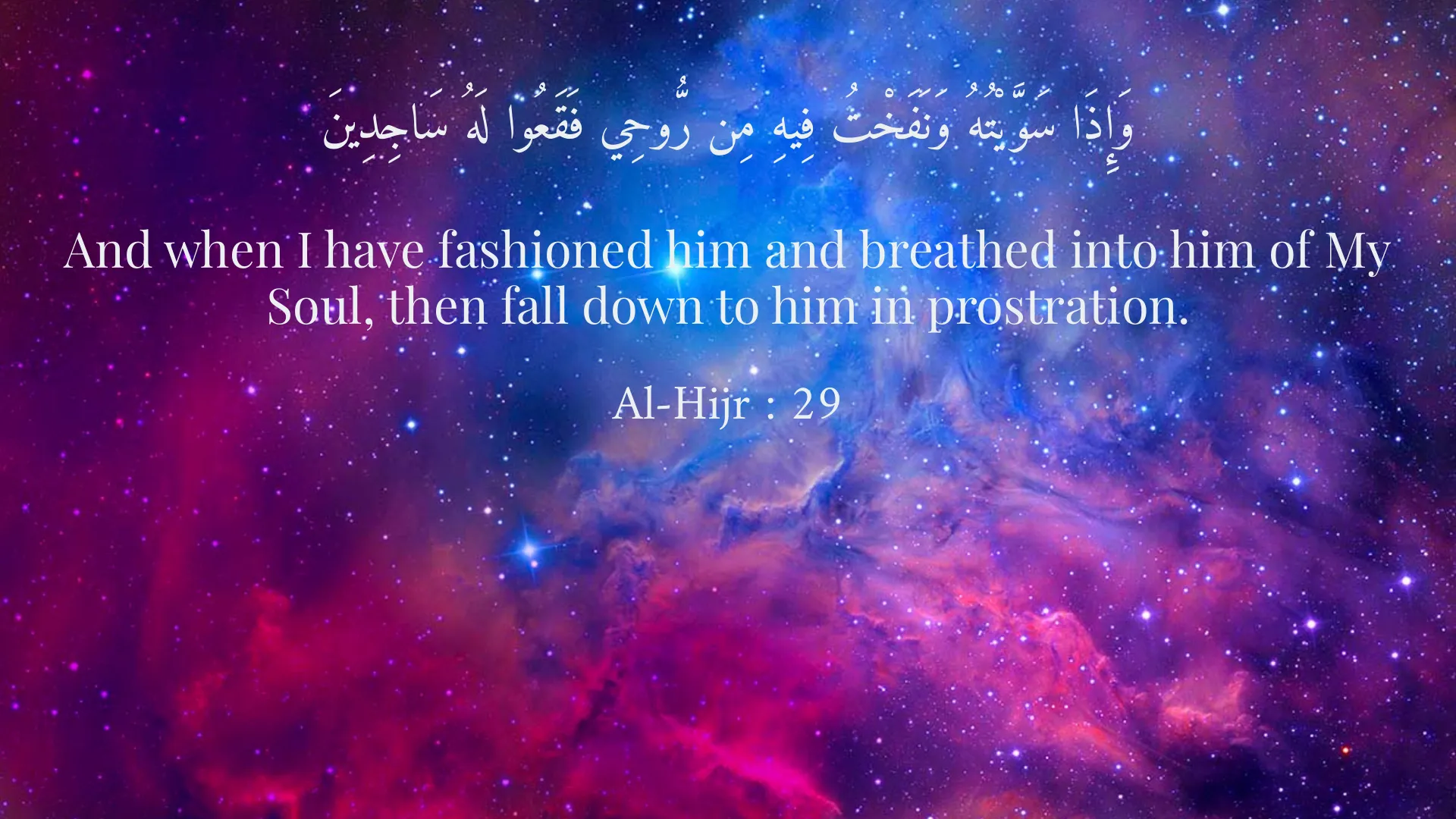
وَإِذَا سَوَّيْتُهُ وَنَفَخْتُ فِيهِ مِن رُّوحِي فَقَعُوا لَهُ سَاجِدِينَ
And when I have fashioned him and breathed into him of My Soul, then fall down to him in prostration.
Al-Hijr : 29
لَقَدْ مَنَّ اللَّهُ عَلَى الْمُؤْمِنِينَ إِذْ بَعَثَ فِيهِمْ رَسُولًا مِّنْ أَنفُسِهِمْ يُتْلُو عَلَيْهِمْ آيَاتِهِ وَيُزَكِّيهِمْ وَيُعَلِّمُهُمُ الْكِتَابَ وَالْحِكْمَةَ
Indeed, Allah has conferred favor upon the believers when He sent among them a Messenger from themselves, reciting to them His verses and purifying them and teaching them the Book and wisdom.
Al-Imran : 164
Short Story
One day, a young man named Mehran was pondering why he always compared himself to others. He decided to sit in the village's prayer hall and read the Quran. After reading the verses, he realized that each human is unique and exceptional, and he shouldn't measure himself against others. From that day on, he worked to understand himself better and focused on strengthening his own knowledge and skills instead of comparing.