Quranic Answer
In the name of Allah, the Most Gracious, the Most Merciful. This phrase sets the stage for an exploration into one of the most pivotal concepts presented in the Holy Quran—sincerity and pure intention. The Quran, a guide for Muslims across the globe, highlights the significance of these attributes in not just spiritual development, but also in nurturing and winning the hearts of others. The idea that one’s relationship with God and fellow humans is intrinsically tied to the purity of one’s intentions is a recurring theme throughout its verses. In Surah Al-Baqarah, verse 177, Allah elucidates what true goodness is. It states, "It is not righteousness that you turn your faces toward the East or the West, but [true] righteousness is in one who believes in Allah, the Last Day, the Angels, the Book, and the Prophets." This verse emphasizes that the essence of goodness is not merely in external acts of worship or rituals but is deeply rooted in faith and virtuous deeds. Allah further defines righteousness through acts of kindness towards family, relatives, orphans, and the needy—demonstrating that the foundation of genuine connections with others lies in sincere intentions and selfless deeds. The Quran elevates the moral duty to care for those in need and emphasizes that in doing so, we truly fortify our social fabric. This notion directly aligns with the principle that the purer our intentions, the stronger and more meaningful our relationships become. This guiding principle reminds us that acts of charity and kindness are not simply obligations, but vital aspects that facilitate the forging of deeper and more authentic relationships. There is also a profound promise found in Surah Al-Ma'idah, verse 54, which states, "O you who have believed, whoever of you should revert from his religion - Allah will bring forth [for] a people He will love and who will love Him." This verse illustrates that when believers embody true faith, characterized by sincere intentions, they attract love and camaraderie from those around them. The reciprocity of love among believers starkly contrasts with feelings of isolation that can stem from insincerity and hypocrisy. Thus, this verse provides not only a divine assurance of companionship but also a guide to elevate one’s character. Indeed, the essence of building genuine connections with others lies in our avoidance of hypocrisy. To genuinely connect with others, one must exhibit compassion and kindness—qualities firmly rooted in sincerity. Acts performed merely for the sake of gaining praise or recognition often lead to superficial relationships, serving as a feeble foundation for any connection. Instead, when our motivations are genuinely altruistic, we instinctively exude warmth and attract respect from those we interact with. Sincerity manifests in a variety of contexts, including interpersonal relationships, community engagements, and even in our interactions with oneself. In friendships, sincerity breeds trust. When friends harbor genuine intentions, they foster environments where honesty prevails, allowing for open communication and mutual understanding. Conversely, insincerity can create fissures that ultimately lead to the disintegration of relationships. Likewise, in families, the importance of sincere intentions is paramount. Parents nurturing their children with pure love and care cultivate an atmosphere of security and belonging, instilling values that endure beyond generations. Moreover, in professional settings, sincerity and good intentions can translate into effective teamwork, creating a culture where employees feel valued and recognized. By embracing the spirit of collaboration and altruism, organizations can thrive as individuals unite toward a common goal—fostering innovation, productivity, and ultimately, success. The Quran encourages this sense of unity among individuals, emphasizing collective well-being while inviting believers to reflect on their true intentions behind their actions. Islam teaches that not all outwardly commendable acts are regarded as virtuous if they stem from impure intentions, thereby highlighting the weight of one’s inner motivations. This is a principle echoed by various sayings of the Prophet Muhammad (peace be upon him), where he emphasized that deeds are judged by their intentions. Therefore, the Quran coupled with the prophetic teachings offers a comprehensive framework urging individuals to remind themselves of their fundamental motivations behind actions. Are we giving charity because we seek praise? Are we helping others for social status? Such reflections serve as vital checkpoints for anyone seeking to attain not just successful social interactions, but also a closer connection with Allah. Islam is more than a set of rituals; it is a way of life that requires constant strive toward goodness—fundamentally rooted in sincere intentions. The pursuit of a life characterized by sincerity is not always an easy task. It demands self-reflection, accountability, and above all, honesty with oneself. It is about stripping away the layers of ego, the desire for acknowledgment, and the need for approval—thereby confronting the reality of who we are when no one is watching. To foster this sincerity, Muslims are encouraged to engage in regular self-assessment, asking themselves critical questions about their motivations and actions. This practice enhances not just one's relationship with others but also lays the groundwork for a steadfast relationship with Allah. When we align our intentions with the teachings of the Quran, bearing in mind that sincerity acts as the key to unlocking human connections, we elevate our spiritual journey from merely seeking to fulfill obligations to genuinely embodying the essence of faith. In conclusion, the teachings of the Holy Quran illuminate the vital role of sincerity and pure intentions in winning the hearts of others. Through acts of kindness and compassion, driven by altruistic motives, we can steer our relationships toward deeper, more meaningful connections. Allah’s guidance assures us that through sincere intentions, we pave the way for love within our communities, fostering resilience, nurturing bonds, and fortifying our relationships, both human and divine. As we journey forth, may we carry the wisdom of sincerity deeply in our hearts, making it the cornerstone of our interactions, ultimately striving for the pleasure of Allah in everything we do.
Related Verses
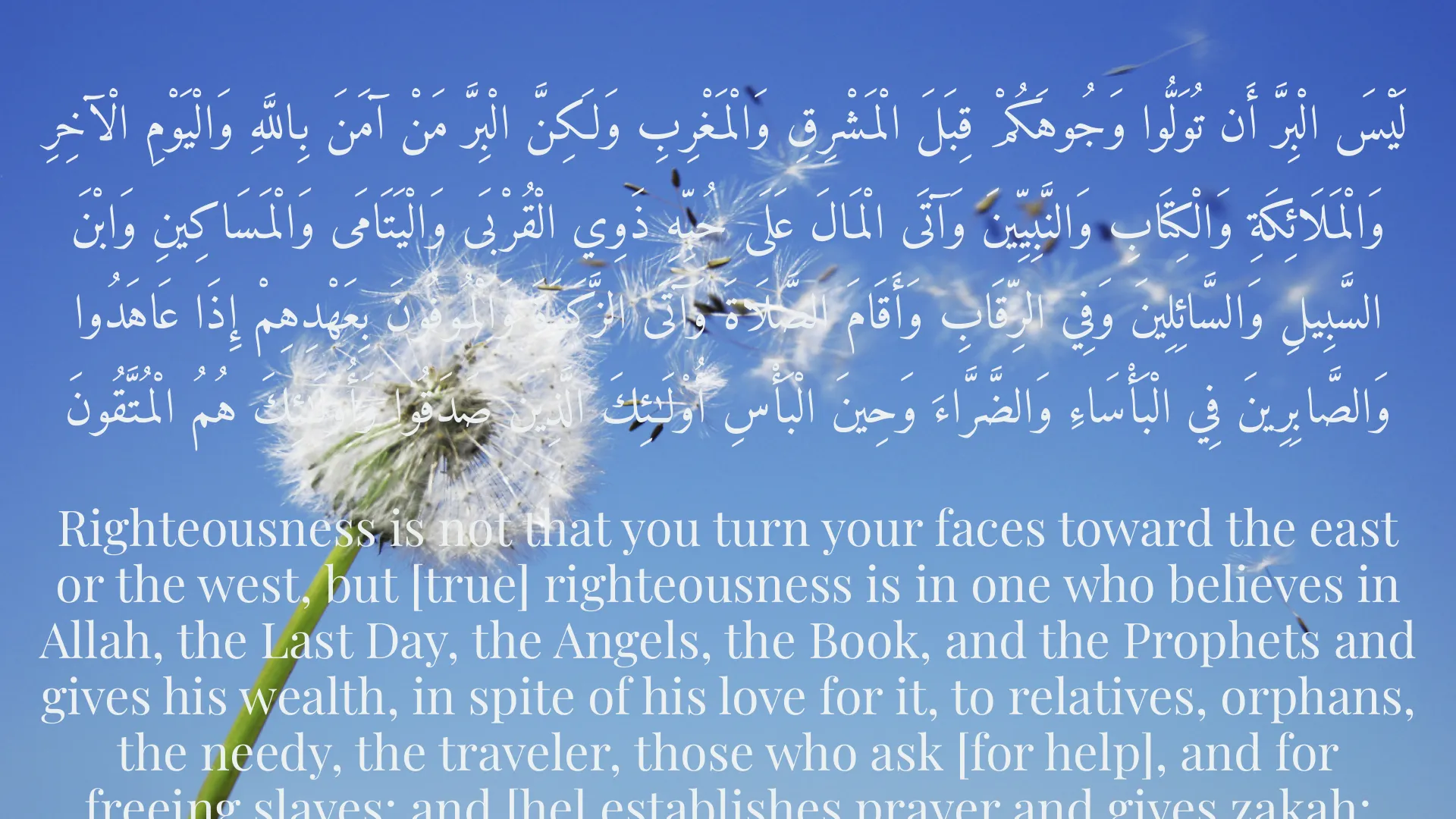
لَيْسَ الْبِرَّ أَن تُوَلُّوا وَجُوهَكُمْ قِبَلَ الْمَشْرِقِ وَالْمَغْرِبِ وَلَكِنَّ الْبِرَّ مَنْ آمَنَ بِاللَّهِ وَالْيَوْمِ الْآخِرِ وَالْمَلَائِكَةِ وَالْكِتَابِ وَالنَّبِيِّينَ وَآتَى الْمَالَ عَلَى حُبِّهِ ذَوِي الْقُرْبَى وَالْيَتَامَى وَالْمَسَاكِينِ وَابْنَ السَّبِيلِ وَالسَّائِلِينَ وَفِي الرِّقَابِ وَأَقَامَ الصَّلَاةَ وَآتَى الزَّكَوَةَ وَالْمُوفُونَ بِعَهْدِهِمْ إِذَا عَاهَدُوا وَالصَّابِرِينَ فِي الْبَأْسَاءِ وَالضَّرَّاءَ وَحِينَ الْبَأْسِ أُو۟لَـٰئِكَ الَّذِينَ صَدَقُوا وَأُو۟لَـٰئِكَ هُمُ الْمُتَّقُونَ
Righteousness is not that you turn your faces toward the east or the west, but [true] righteousness is in one who believes in Allah, the Last Day, the Angels, the Book, and the Prophets and gives his wealth, in spite of his love for it, to relatives, orphans, the needy, the traveler, those who ask [for help], and for freeing slaves; and [he] establishes prayer and gives zakah; [those who fulfill their promise when they promise] and when they are patient in poverty and hardship and during battle. Those are the ones who have been true, and it is those who are the righteous.
Al-Baqarah : 177
يَا أَيُّهَا الَّذِينَ آمَنُوا مَن يَرْتَدَّ مِنكُمْ عَنْ دِينِهِ فَسَوْفَ يَأْتِيَ اللَّـهُ بِقَوْمٍ يُحِبُّهُمْ وَيُحِبُّونَهُ أَذِلَّةٍ عَلَى الْمُؤْمِنِينَ أَعِزَّةٍ عَلَى الْكَافِرِينَ يُجَاهِدُونَ فِي سَبِيلِ اللَّـهِ وَلَا يَخَافُونَ لَوْمَةَ لَائِمٍ ۚ ذَٰلِكَ فَضْلُ اللَّـهِ يُؤْتِيهِ مَن يَشَاءُ ۗ وَاللَّـهُ وَلِيُّ الْمُؤْمِنِينَ
O you who have believed, whoever of you should revert from his religion - Allah will bring forth for the people He will love and who will love Him, [who are] humble toward the believers, mighty against the disbelievers. They strive in the cause of Allah and do not fear the blame of a blamer. That is the favor of Allah; He bestows it upon whom He wills. And Allah is All-Encompassing and Knowing.
Al-Ma'idah : 54
Short Story
One day, a man named Hasan was in the market and interacted with those around him with sincerity and special respect. This created a deep friendship and love between him and others. Hasan would help those in need daily, never expecting rewards or thanks. He understood well that Allah says in Surah Al-An'am, verse 162: 'There is no reward except from Allah.' Through this simple act, he won hearts and was recognized as a beloved and respected friend.