Quranic Answer
Forgiveness, especially when the painful memory of an event lingers in one's mind, is one of the profound spiritual and emotional challenges many people face. The Holy Quran and Islamic teachings address this matter with great wisdom and comprehensiveness. In the Quranic understanding, forgiveness, or 'afw' and 'safh,' does not mean completely erasing the incident from memory. Instead, it signifies releasing the heavy burden of resentment, anger, and the desire for revenge that settles within a person. This perspective aligns perfectly with human nature, where memory and recall are integral parts of existence. Allah Almighty knows that humans might not forget unpleasant events, but He asks them not to be enslaved by these bitter memories and not to let the past ruin their future and present peace. The Quran repeatedly calls believers to forgiveness and forbearance. One of the most beautiful verses in this regard is Surah An-Nur, verse 22, which states: "...let them pardon and overlook. Would you not like that Allah should forgive you? And Allah is Oft-Forgiving, Most Merciful." This verse establishes a deep and fundamental connection between our forgiveness towards others and Allah's forgiveness towards us. This is a very powerful motivation; if we desire divine mercy and forgiveness, we must also show mercy and forgiveness to others. Here, the discussion is not about forgetting, but about refraining from blame, reproach, and seeking retaliation or revenge. A person can remember an definite event but choose not to live with that negative feeling and desire for retribution. Furthermore, in Surah Al-Imran, verse 134, Allah describes the characteristics of the righteous: "...those who spend [in the cause of Allah] during ease and hardship and who restrain anger and who pardon the people - and Allah loves the doers of good." This verse indicates that forgiveness is a stage after suppressing anger. This means one must first overcome negative emotions and then find the power to forgive. It implies that even if a disturbing memory persists and occasionally stirs anger, a person can, through practice and spiritual struggle, control that anger and overlook the wrong. This overlooking is neither weakness nor oblivion but the peak of spiritual strength and faith. The benefits of forgiveness, even in the absence of forgetting, are numerous. From a psychological perspective, holding onto grudges and anger harms the individual themselves. These negative emotions are like a heavy burden that wears down one's soul and mind, depriving them of life's joys and inner peace. By forgiving, an individual essentially frees themselves from the shackles of this internal prison. This liberation does not mean trivializing the injustice committed, but rather refusing to allow that injustice to continue causing internal pain and torment. The memory may remain for one to learn from it and be more cautious in the future, but the pain and resentment stemming from it can dissipate through forgiveness. Spiritually, forgiveness is an act of goodness (Ihsan) that Allah loves and has promised immense reward for. When we forgive, we are, in essence, drawing closer to divine attributes; for Allah Himself is "Al-Ghafoor" (The Oft-Forgiving) and "Ar-Raheem" (The Most Merciful). A believer strives to manifest divine attributes within themselves, and forgiveness is one of the most prominent of these attributes. This act not only strengthens one's relationship with their Creator but also purifies the heart and increases the light of the soul. This process is an inner journey during which an individual confronts their emotional challenges, manages them, and ultimately reaches the pinnacle of spirituality. To be able to forgive, even when we haven't forgotten, we can consider the following steps: 1. Accept the reality: Acknowledge that the memory may never completely fade, and that's okay. The goal is to change your relationship with that memory, not to erase it. 2. Release anger: Instead of expending energy on nurturing anger and resentment, consciously decide to let these emotions go. You can do this through prayer, meditation, or by talking to a trusted person. 3. Focus on yourself: Understand that forgiveness primarily benefits you. You forgive for your own peace and spiritual well-being, not necessarily for the other party. 4. Learn the lesson: Use the experience as a life lesson. What did you learn? How can you prevent such a situation from recurring in the future? These lessons can transform the memory from a source of pain into a source of wisdom. 5. Trust in Allah: Seek Allah's help to cleanse your heart from grudges and grant you the strength to forgive. Know that He is the best supporter and guide. 6. Pray for the wrongdoer (optional): In some cases, if you are able to pray for the person who harmed you, this can be a significant step toward complete release, though it is not essential for everyone. Forgiveness does not mean forgetting your rights or trivializing the injustice, but rather freeing yourself from its heavy burden. It is a heroic act that leads to mental well-being, spiritual growth, and a deeper connection with Allah. By forgiving, even with the memory, we allow divine mercy to flow into our hearts and achieve a life full of peace and blessings.
Related Verses
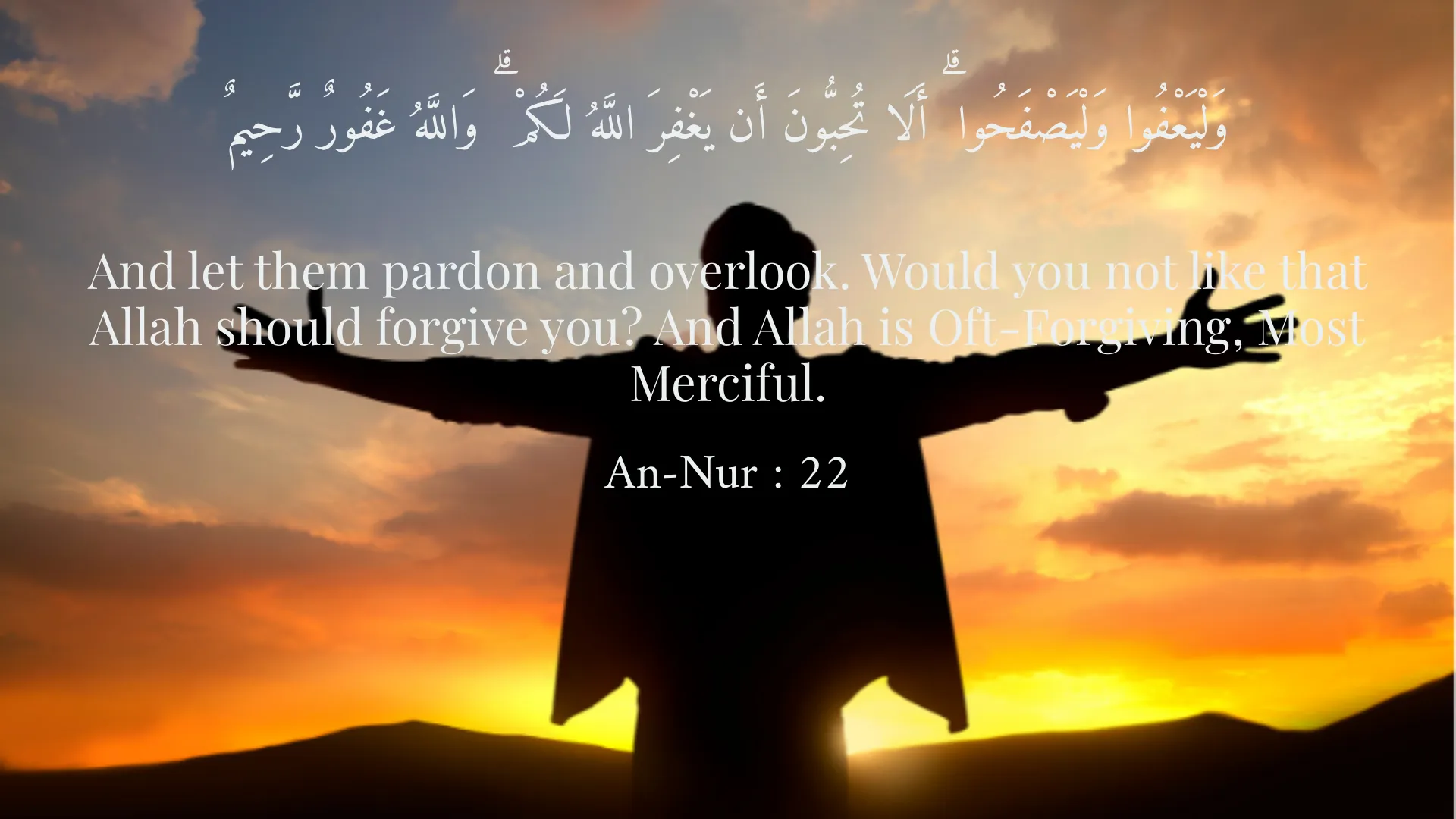
وَلْیَعْفُوا وَلْیَصْفَحُوا ۗ أَلَا تُحِبُّونَ أَن یَغْفِرَ اللَّهُ لَکُمْ ۗ وَاللَّهُ غَفُورٌ رَّحِیمٌ
And let them pardon and overlook. Would you not like that Allah should forgive you? And Allah is Oft-Forgiving, Most Merciful.
An-Nur : 22
الَّذِينَ يُنفِقُونَ فِي السَّرَّاءِ وَالضَّرَّاءِ وَالْكَاظِمِينَ الْغَيْظَ وَالْعَافِينَ عَنِ النَّاسِ ۗ وَاللَّهُ يُحِبُّ الْمُحْسِنِينَ
Those who spend [in the cause of Allah] during ease and hardship and who restrain anger and who pardon the people - and Allah loves the doers of good.
Al-Imran : 134
وَلَمَن صَبَرَ وَغَفَرَ إِنَّ ذَٰلِكَ لَمِنْ عَزْمِ الْأُمُورِ
But whoever is patient and forgives - indeed, that is of the matters [requiring] determination.
Ash-Shura : 43
Short Story
It is said that a just king had an adversary who harbored resentment towards him for many years. One day, this adversary fell into the king's hands. The soldiers and ministers unanimously advised the king: "Now that this enemy is in your grasp, uproot him so he may never harm you again." The king smiled and said: "True magnanimity lies in overlooking past transgressions and choosing forgiveness instead of revenge. A noble legacy of pardon is better than a bitter legacy of vengeance." So the king set his adversary free and overlooked his offense, without the act being erased from his memory. When the adversary witnessed this generosity, he was transformed. From that day on, he not only ceased his enmity but became one of the king's most loyal companions, constantly repeating: "This king shamed me with his forgiveness and freed me from the chains of resentment I had forged myself. The memory of that day will never fade from my mind, but now this memory is filled with gratitude and devotion, not malice." Thus, the king taught us that one can forgive, even if one cannot forget; for the purpose of forgiveness is liberation from the bonds of suffering, not the erasure of history.