Quranic Answer
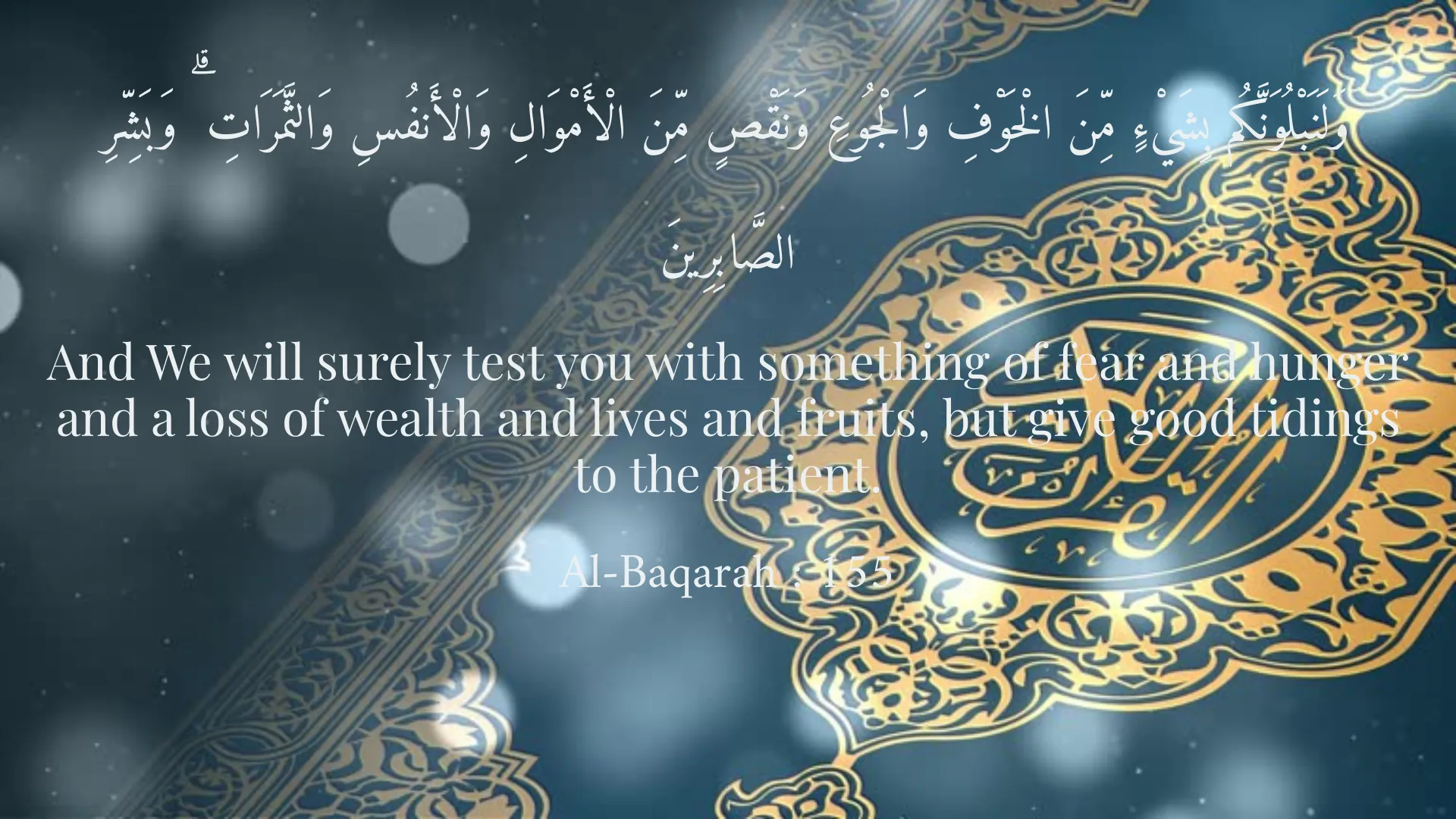
One of the most profound and frequently asked questions in the mind of a believer, especially when facing hardships and calamities, is whether these events are divine tests to gauge faith and patience, or the consequence of past actions and a punishment for sins committed. This is a question that requires deep introspection and self-awareness, as the definitive and ultimate answer rests solely with the Almighty God. However, the Holy Quran and the Prophetic tradition provide us with signs and indicators for reflection, through which we can arrive at a clearer understanding of our situation. First, let's delve into the concept of “Divine Testing” or “Ibtila’.” From the Quranic perspective, the entire world is a field of tests, and no human being is exempt from this rule. Allah clearly states in the Quran that He tests all His servants to distinguish the truthful from the liars, the patient from the impatient, and the grateful from the ungrateful. These tests are not merely for evaluation, but also designed for growth, elevation, purification of the soul, and raising the level of faith. The purpose of testing is to identify and highlight the hidden potentials within human beings and to provide an opportunity to earn immense divine rewards. For instance, in Surah Al-Baqarah, verse 155, Allah says: “And We will surely test you with something of fear and hunger and a loss of wealth and lives and fruits, but give good tidings to the patient.” This verse indicates that trials are an inseparable part of life and come in various forms. Even blessings and abundance can themselves be a type of test: a test of gratitude, justice, and the proper use of divine bounties. Do we become arrogant in prosperity, or do we remain humble and grateful? Therefore, when a calamity strikes and we face it, if our reaction is patience, gratitude (as far as possible for understanding divine wisdom), turning back to God, and strengthening our connection with the Creator, this indicates that what has occurred is more of a test and a trial. These types of hardships usually lead to spiritual growth, increased insight, and a deepening of faith. On the other hand, the concept of “Divine Punishment” or “Iqab” refers to the outcome and consequences of wrong actions and sins. The Holy Quran repeatedly emphasizes that every calamity that befalls a person is a result of their own deeds. In Surah Ash-Shura, verse 30, we read: “And whatever strikes you of disaster - it is because of what your hands have earned, and He pardons much.” This verse explicitly states that afflictions and hardships can stem from human sins and errors. However, it is important to note that this does not mean every illness or problem is a direct punishment for a specific sin. Rather, it might be a general consequence of heedlessness, injustice, or neglecting divine commands. Punishments are often intended to awaken individuals from heedlessness, guide them back to the right path, and prevent further descent into the abyss of sin. When hardships lead us towards despair, denial, indifference towards religion, or even more sins, it might be a sign that these events carry an aspect of punishment and are a warning to change direction. The main difference here is that in punishment, typically after committing a major sin or persisting in a false path, a feeling of distance from God, darkness of heart, and lack of inner peace overwhelm the individual. These feelings in tests often give way to inner tranquility and trust in divine decree, even if there is external hardship. To distinguish between these two states, we can ask ourselves a few key questions: 1. When facing this hardship, what is my inner feeling? Do I feel that God wants to draw me closer and purify me, or do I feel distance and wrath? 2. Has this hardship caused me to reflect on my past and confess my sins and repent? Or, conversely, has it plunged me into denial and arrogance? 3. Has this affliction led to an increase in my good deeds, a deepening of my connection with God, and an increase in my patience and gratitude? Or has it resulted in irreligion, restlessness, and rebellion? 4. Can I trace the footsteps of my past sins or negligence in this problem? Allah is extremely Merciful and Forgiving. Even if a hardship has an aspect of punishment, it is still a door of mercy that provides an opportunity for return and repentance. Divine punishments are usually carried out with the aim of correction and guidance, not merely revenge. If, after hardship, we return to God, repent, and rectify our life's path, this itself is a sign of divine mercy that has awakened us from heedlessness. Ultimately, the key difference between a test and a punishment lies in the intention of Almighty God and the individual’s heartfelt and practical reaction. A test is for spiritual growth and elevation, and a punishment is for awakening and returning to the right path. Both are opportunities for greater closeness to God, if viewed with insight and self-awareness. The true believer relies on God in both states, exercises patience, and seeks His help, knowing that everything is from Him and contains good. We must constantly turn to ourselves, account for our actions, and in every state, whether in hardship or ease, be grateful and obedient to the divine command. This self-awareness and piety illuminate the path to understanding divine wisdom behind calamities and help us distinguish between a test and a punishment, utilizing both for our spiritual growth. In any case, seeking refuge in divine mercy and forgiveness is the best approach, for Allah is the Forgiving, the Merciful, and has always kept the door of repentance open for His servants.
Related Verses
وَلَنَبْلُوَنَّكُم بِشَيْءٍ مِّنَ الْخَوْفِ وَالْجُوعِ وَنَقْصٍ مِّنَ الْأَمْوَالِ وَالْأَنفُسِ وَالثَّمَرَاتِ ۗ وَبَشِّرِ الصَّابِرِينَ
And We will surely test you with something of fear and hunger and a loss of wealth and lives and fruits, but give good tidings to the patient.
Al-Baqarah : 155
أَحَسِبَ النَّاسُ أَن يُتْرَكُوا أَن يَقُولُوا آمَنَّا وَهُمْ لَا يُفْتَنُونَ
Do people think that they will be left alone because they say, 'We believe,' and will not be tested?
Al-Ankabut : 2
وَمَا أَصَابَكُم مِّن مُّصِيبَةٍ فَبِمَا كَسَبَتْ أَيْدِيكُمْ وَيَعْفُو عَن كَثِيرٍ
And whatever strikes you of disaster - it is because of what your hands have earned, and He pardons much.
Ash-Shura : 30
Short Story
In Saadi's Gulistan, it is narrated that a king was on a ship with a Persian slave who had never before been to sea and had experienced no hardship. With wailing and screaming, he began to tremble, and though they tried to comfort him, he would not be quiet. The king's composure was disturbed by this, but they could find no remedy for him. A sage who was on board said, 'If you will permit me, I will quiet him.' The king replied, 'It would be a great kindness.' The sage ordered the slave to be thrown into the sea, where he sank and then came up to the surface again. Two hands grasped him by the hair and pulled him back into the ship. He clung to the stern with both hands and then sat down in a corner and became quiet. The king was pleased and asked, 'What wisdom was there in this?' The sage replied, 'Before he had tasted the danger of drowning, he did not know the safety of the boat. Thus, a man does not know the value of well-being until he has tasted misfortune.' This beautiful story shows us that sometimes hardships and calamities are tests for us to better appreciate the value of blessings and peace in life, and to understand the wisdom behind events.