Quranic Answer
From the perspective of the Holy Quran, the right path in life is one that leads humanity towards divine pleasure, inner peace, and prosperity in both this world and the hereafter. This path is built upon the strong foundations of faith (Iman), piety (Taqwa), righteous deeds (Amal Salih), and excellent character (Akhlaq Hasana). To determine whether we are on the right path, the Quran provides clear criteria that allow us to conduct an accurate self-assessment. These criteria not only help us find our way but also assist us in maintaining and persevering on that path. The first and most fundamental criterion, as we seek daily from God in Surah Al-Fatiha, is the "Straight Path" (Sirat al-Mustaqim). The Straight Path is the way that Allah Almighty has sent to guide humanity; it is the path walked by prophets, the truthful, the martyrs, and the righteous, and its ultimate outcome is true salvation (Quran 4:69). Asking whether we are on this path requires deep reflection on our behaviors, intentions, and ultimate goals. Do our actions align with divine teachings and the Sunnah of Prophet Muhammad (PBUH)? Is our ultimate goal in life to achieve God's pleasure, or are we merely pursuing material and worldly gains? The Straight Path is a clear and unambiguous way shown to us through the Divine Book and the guidance of the Prophet (PBUH). If our decisions are based on these principles, we can hope that we are on this illuminated path. This implies that every choice we make in life, from the smallest daily decisions to the largest career and family goals, should be aimed at drawing closer to God and obeying His commands. This approach provides profound direction and meaning to our lives, preventing confusion and distress. A significant sign of being on the right path is "inner peace" (Tuma'ninat al-Qulub). The Holy Quran beautifully states: "Those who have believed and whose hearts are assured by the remembrance of Allah. Unquestionably, by the remembrance of Allah hearts are assured" (Quran 13:28). This verse clearly indicates that the hearts of believers find tranquility in the remembrance of Allah. If you are on the right path, even when facing challenges and difficulties, your heart will be reliant on God, and you will not feel despair or confusion. This peace is a result of trusting in God's promises, relying on Him, and submitting to His decree. Conversely, continuous confusion, anxiety, restlessness, and a deep dissatisfaction with life can be indicators of deviation from the path. This peace does not merely mean the absence of problems, but rather the capacity for resilience and patience in the face of difficulties, relying on the Creator. An individual walking the path of truth maintains the light of hope in their heart even during hardships, knowing that no power can overcome them except the power of Allah. This perspective safeguards them from despair and frustration, allowing them to continue their journey with inner confidence, regardless of the challenges they encounter. This inner tranquility signifies a harmony between the human soul and its divine nature, accepting divine destiny, which empowers the individual to remain steadfast amidst adversities and to draw lessons for personal growth from every experience. Another criterion is "the effects of our actions and decisions" on ourselves and others. The Quran repeatedly emphasizes the importance of righteous deeds and outlines their worldly and otherworldly consequences. "So whoever does an atom's weight of good will see it, And whoever does an atom's weight of evil will see it" (Quran 99:7-8). If our decisions and actions lead to our spiritual growth, improved human relationships, solving societal problems, and earning God's pleasure, these are strong signs of being on the correct path. Conversely, if our actions lead to corruption, injustice, causing harm to others, and moving away from spirituality and divine values, we must re-evaluate our path. The right path is one that benefits both the individual and society, fostering the spread of goodness, justice, and blessings. This includes commitment to fairness in relationships, upholding the rights of others, and refraining from oppression and tyranny. An individual on the correct path constantly strives to improve and reform themselves and their surroundings. They do not merely seek personal gain but are always concerned with the public good and the pleasure of the Creator. This approach to life imbues them with a sense of worth and purpose, assisting them in their spiritual evolution. The positive and lasting impacts that our actions leave behind are the best testament to the correctness of the path we have chosen. "Attention to piety and righteousness" (Taqwa) is also a key indicator. Taqwa means refraining from sins, fearing disobedience to God, and fulfilling what Allah has commanded. Someone on the right path is always mindful of their conduct, ensuring they do not transgress divine limits. Taqwa not only prevents one from falling into sin but also enhances their insight and understanding. "O you who have believed, if you fear Allah, He will grant you a criterion" (Quran 8:29). Furqan means the ability to distinguish between right and wrong. If in your life you feel you can better differentiate between truth and falsehood, good and bad, and the right and wrong path, and make sound decisions, this is also a blessing of Taqwa and a sign of being on the divine path. Taqwa empowers individuals to resist temptations and devilish deceptions, consistently following the path of truth. This insight is a divine blessing granted only to sincere and pious servants. The more steadfast one is in Taqwa, the stronger this inner discernment becomes, and their decisions will be more well-founded and insightful. This means that not only in major life choices but also in the most minor daily affairs, they find and adhere to the correct way. A pious individual sees God as present and observing in all aspects of their life, from personal matters to social interactions, and regulates their actions based on His pleasure. "Steadfastness and perseverance on the path of truth" are also signs of being on the right path. The divine path is not always without challenges and sometimes involves obstacles and difficulties. However, those on the right path overcome these obstacles with perseverance and patience, never abandoning their way. "And seek help through patience and prayer" (Quran 2:153). Patience and prayer are two strong pillars for steadfastness on the divine path. If, when facing difficulties, instead of despairing and giving up, you continue your efforts with patience, reliance on God, and resort to prayer, this indicates that you are on the right path. This steadfastness not only helps individuals remain firm but also empowers them to stand firm against problems and learn from them. An individual on the path of truth never gives up striving for improvement and achieving noble goals, even if the journey is long and winding. This perseverance is the result of firm faith and reliance on Allah, which assures them that every effort made in the way of truth will be rewarded. This demonstrates that the individual has chosen their path not out of whim, but with conviction and sincere faith. Finally, "repentance and returning to God" is also part of the right path. No human is free from error. However, what is important is that after making a mistake, one realizes their error, repents, and returns to the correct path. The Holy Quran repeatedly emphasizes the importance of repentance and divine forgiveness. If in your life you have the ability to admit mistakes, feel remorse, and strive to make amends, this is a sign of the divine nature being alive within you and of being on the right path. The right path is not a fixed and unchanging one, but rather a dynamic journey where one is constantly learning, growing, and rectifying oneself. This means that even if we deviate at times, the doors of return are always open, and what matters is having the courage and humility to return. This return not only leads to the cleansing of sins but also gives individuals an opportunity to move towards higher goals with renewed energy and stronger determination. Accepting mistakes and striving to make amends is a sign of humility before God and a will to correct one's life path. Therefore, to determine whether we are on the right path, we must pay attention to these signs: inner peace, the positive fruits of our actions (on ourselves and others), the degree of our piety and righteousness, steadfastness on the path of truth in the face of challenges, and the ability to repent and return to God after error. These are all criteria that the Holy Quran provides for evaluating the way of life for human beings. By honestly assessing ourselves against these criteria, we can gain a better understanding of our position on the path of life and, if necessary, make the necessary corrections to always be on a path that leads to God's pleasure and true felicity. A life that aligns with these principles, even if accompanied by challenges, will be blessed with a special tranquility and guidance, leading the individual towards a benevolent and fruitful destination, and ultimately, to a state of closeness to God.
Related Verses
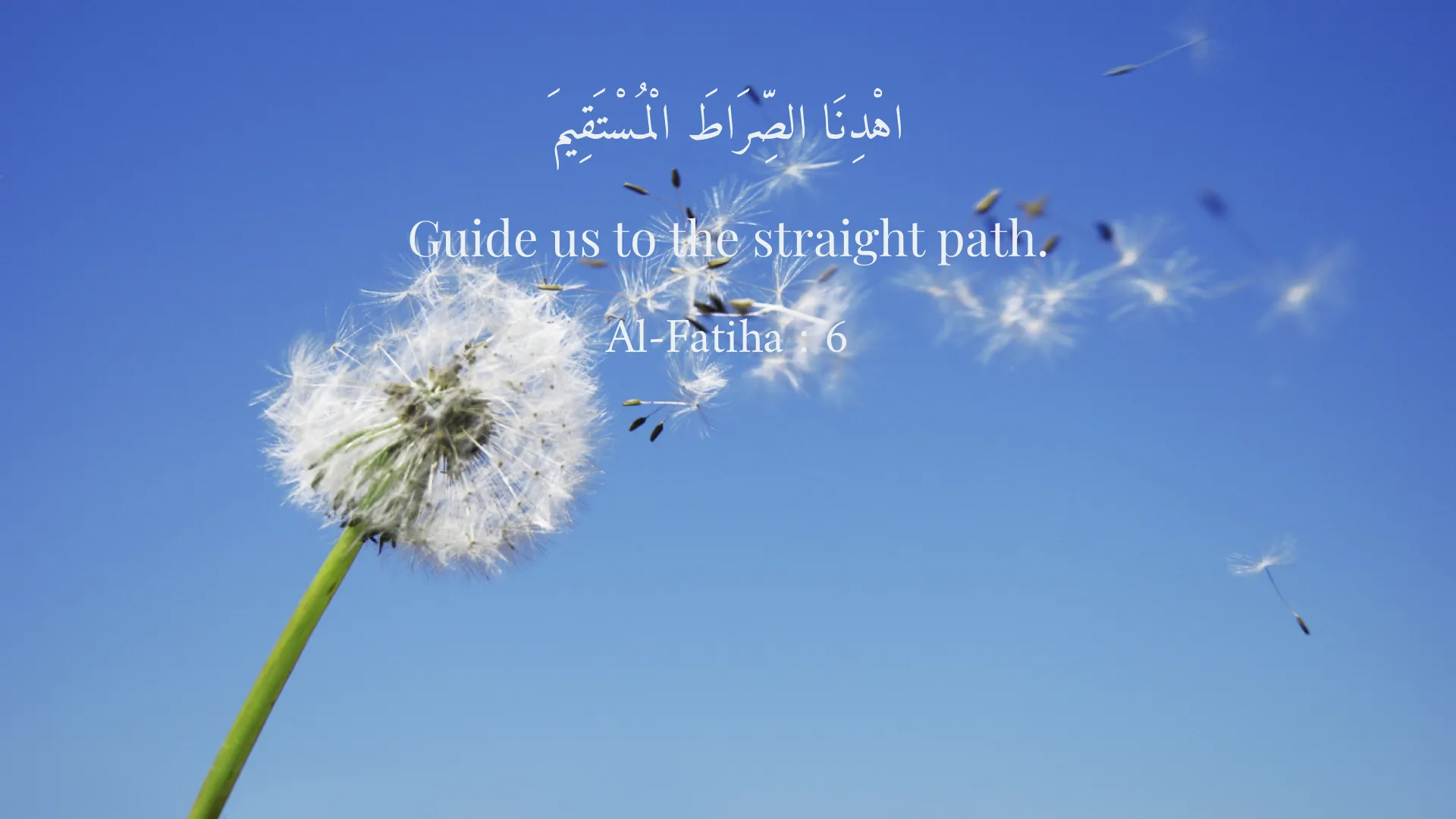
اهْدِنَا الصِّرَاطَ الْمُسْتَقِيمَ
Guide us to the straight path.
Al-Fatiha : 6
الَّذِينَ آمَنُوا وَتَطْمَئِنُّ قُلُوبُهُم بِذِكْرِ اللَّهِ ۗ أَلَا بِذِكْرِ اللَّهِ تَطْمَئِنُّ الْقُلُوبُ
Those who have believed and whose hearts are assured by the remembrance of Allah. Unquestionably, by the remembrance of Allah hearts are assured.
Ar-Ra'd : 28
وَأَنَّ هَٰذَا صِرَاطِي مُسْتَقِيمًا فَاتَّبِعُوهُ ۖ وَلَا تَتَّبِعُوا السُّبُلَ فَتَفَرَّقَ بِكُمْ عَن سَبِيلِهِ ۚ ذَٰلِكُمْ وَصَّاكُم بِهِ لَعَلَّكُمْ تَتَّقُونَ
And [know that] this is My straight path, so follow it and do not follow [other] ways, for they will diverge you from His way. This He has instructed you that you may become righteous.
Al-An'am : 153
Short Story
One day, a young man with a bewildered heart approached a wise elder and said, "O Sheikh, there are many paths in this world, and each calls me in a different direction. How can I know which path is the Straight Path that will lead me to felicity?" The wise elder smiled and said, "O young man, the sign of the right path is neither in its clamor nor in its smoothness from pitfalls. Rather, it is in three things: First, when you take a step, does your heart find peace, and do fear and doubt flee from you? Second, see if this step benefits creation or harms it. If goodness reaches others from it and you lighten someone's burden, know that you have taken a right step. Third, every night when you lay your head on your pillow, does your soul feel closer to God or further away because of this path?" The young man pondered deeply and took the elder's words to heart. Years passed, and whenever he stood at a crossroads, he paid attention to these three signs. He made the peace of his heart, the joy in the faces of the needy, and closeness to the Truth his criteria for his path. And thus, he never strayed from the path of salvation and tasted true felicity.