Quranic Answer
This profound question is one of the most fundamental inquiries that every believer encounters on their spiritual journey towards God. Understanding whether our actions have gained the pleasure of Allah Almighty not only brings peace of mind but also guides us on the correct path of servitude and perfection. The Holy Quran, this book of guidance, provides clear instructions in this regard, by reflecting upon which we can discover signs of divine pleasure in our deeds. The pleasure of God is the ultimate goal of human creation and the pinnacle of their felicity. 1. Sincerity of Intention: The Source of Divine Pleasure The most essential and primary step for your action to be pleasing to God is to possess a pure intention (Niyyah). The Holy Quran, in Surah Al-Bayyinah, verse 5, states: “And they were not commanded except to worship Allah, [being] sincerely obedient to Him, inclining to truth, and to establish prayer and to give zakah. And that is the correct religion.” This verse explicitly states that the core of every act of worship is sincerity (Ikhlas). This means that your action, whether it is prayer, charity, or serving others, should be performed solely and exclusively for the pleasure of Allah, not for showing off, not for gaining fame, not for earning people's praise, and not for worldly gains. If, deep in your heart, you feel that your only motive for doing something is closeness to Allah and His pleasure, then this itself is a great sign. Sincerity is like pure water that purifies every action and makes it worthy of acceptance in the divine presence. For instance, when you help someone, if you don't even for a moment think about being seen or praised by others, but rather your entire focus is on this action being pleasing to Allah and bringing you closer to Him, then this help is highly likely to be accepted. This pure intention transforms even a small act into a great and fruitful one in the sight of Allah. This is the distinguishing point between someone who performs an act for others and someone who performs it for the Creator of the universe. 2. Performing Righteous Deeds in Accordance with Divine Teachings After sincerity, the most important factor is the nature of the action itself. Is the work you are doing within the framework of the teachings of the Quran and the Sunnah of the Prophet (PBUH)? Allah says in Surah Al-Kahf, verse 110: “So whoever would hope for the meeting with his Lord - let him do righteous work and not associate anyone in the worship of his Lord.” Righteous deeds (Amal Saleh) refer to every good and praiseworthy act that is both compatible with sound reason and in harmony with divine law. This includes fulfilling religious obligations such as prayer (Salat), fasting (Sawm), charity (Zakat), and pilgrimage (Hajj), as well as performing recommended acts, avoiding prohibitions, and embodying good morals such as truthfulness, trustworthiness, justice, kindness to parents, helping the needy, and spreading knowledge. How do we know if our actions are righteous? If your action: * Is consistent with the explicit commands of the Quran and Sunnah: For example, performing prayer, speaking truthfully, avoiding backbiting. * Leads to your spiritual growth and that of others: Such as studying the Quran and Hadith, teaching others. * Addresses a need or solves a problem for people: Helping the poor, assisting the oppressed. * Contributes to the spread of justice and goodness in society: Striving to establish truth and righteousness. In Surah An-Nahl, verse 97, Allah also states: “Whoever does righteousness, whether male or female, while he is a believer - We will surely cause him to live a good life, and We will surely give them their reward [in the Hereafter] according to the best of what they used to do.” This verse indicates that the result of righteous deeds is not only an eternal reward but also a pure and pleasant life in this world. Therefore, if after performing an action, you feel purity, tranquility, and blessings in your life, this is also a sign of divine pleasure. 3. Taqwa (God-consciousness) and Piety: The Criterion for Superiority in God's Sight Taqwa, meaning God-consciousness and abstaining from sins, and observing divine limits, is the primary criterion for human superiority in the sight of Allah. Surah Al-Hujurat, verse 13, states: “O mankind, indeed We have created you from male and female and made you peoples and tribes that you may know one another. Indeed, the most noble of you in the sight of Allah is the most righteous of you. Indeed, Allah is Knowing and Acquainted.” No matter how good your action is, if it is not accompanied by taqwa and observance of divine limits, it cannot reach the pinnacle of divine pleasure. Taqwa gives depth and value to your actions. A person who is always mindful of their actions and words and avoids what Allah has forbidden, their deeds are rooted in deeper faith, and therefore, the probability of their acceptance by Allah is higher. For example, an individual who is always careful to avoid unlawful earnings in their life, even if they give a small amount of charity, that charity gains higher value due to their taqwa. 4. Feeling of Inner Peace and Contentment One of the indirect and internal signs of divine pleasure for one's actions is the feeling of peace, tranquility, and contentment of the heart that one experiences after performing a good deed. Allah says in Surah Ar-Ra’d, verse 28: “Those who have believed and whose hearts are assured by the remembrance of Allah. Unquestionably, by the remembrance of Allah hearts are assured.” If, after performing an action, you feel that your heart has drawn closer to God, you have moved away from sins, a burden has been lifted from your shoulders, and anxiety has been replaced by peace, this is a good sign. This peace is the result of connecting to the infinite source of tranquility, which is Allah, who accepts sincere and righteous deeds. Conversely, if performing an action, even with good intentions, causes you worry, hypocrisy, or inner discomfort, it might be a sign that the action needs a review of its intention or method of execution. 5. Steadfastness in Good Deeds and Perseverance God's pleasure with an action is usually accompanied by the success of continuing it and perseverance on the path of goodness. If, after performing a good deed, Allah opens other doors of goodness for you and makes you more steadfast in righteous works, this itself is a sign of the acceptance of your initial action. This steadfastness and perseverance are not only indications of acceptance but are, in themselves, actions pleasing to God. The Prophet Muhammad (PBUH) said: “The most beloved deeds to Allah are those that are most consistent, even if they are small.” 6. Acceptance and Correction of Mistakes (Repentance) Sometimes, a person makes mistakes. Even in these circumstances, how one deals with errors can be pleasing to Allah. Sincere repentance (Tawbah), returning to Allah, regretting sins, and striving to rectify them, is an action highly pleasing to Allah. Allah loves those who repent and opens the doors of His mercy to them. Surah At-Tahrim, verse 8, states: “O you who have believed, repent to Allah with sincere repentance.” Therefore, even on a path of slips, if we return to Him with a regretful heart and a pure intention, this return is also pleasing to Him and is a sign of His attention and mercy that enables a person to repent. Conclusion: Understanding whether our work is pleasing to God is a continuous process of self-assessment, contemplation of divine verses, and attention to internal and external signs. Sincerity of intention, conformity of actions with Islamic law and reason, accompanying actions with taqwa, feeling inner peace and tranquility after the action, and steadfastness in the path of goodness are among the most important signs of divine pleasure. Of course, the ultimate acceptance of deeds rests solely with Allah, but by observing these principles, we can proceed with greater confidence and hope that our efforts will be accepted in His presence. This path is a journey of continuous growth and perfection.
Related Verses
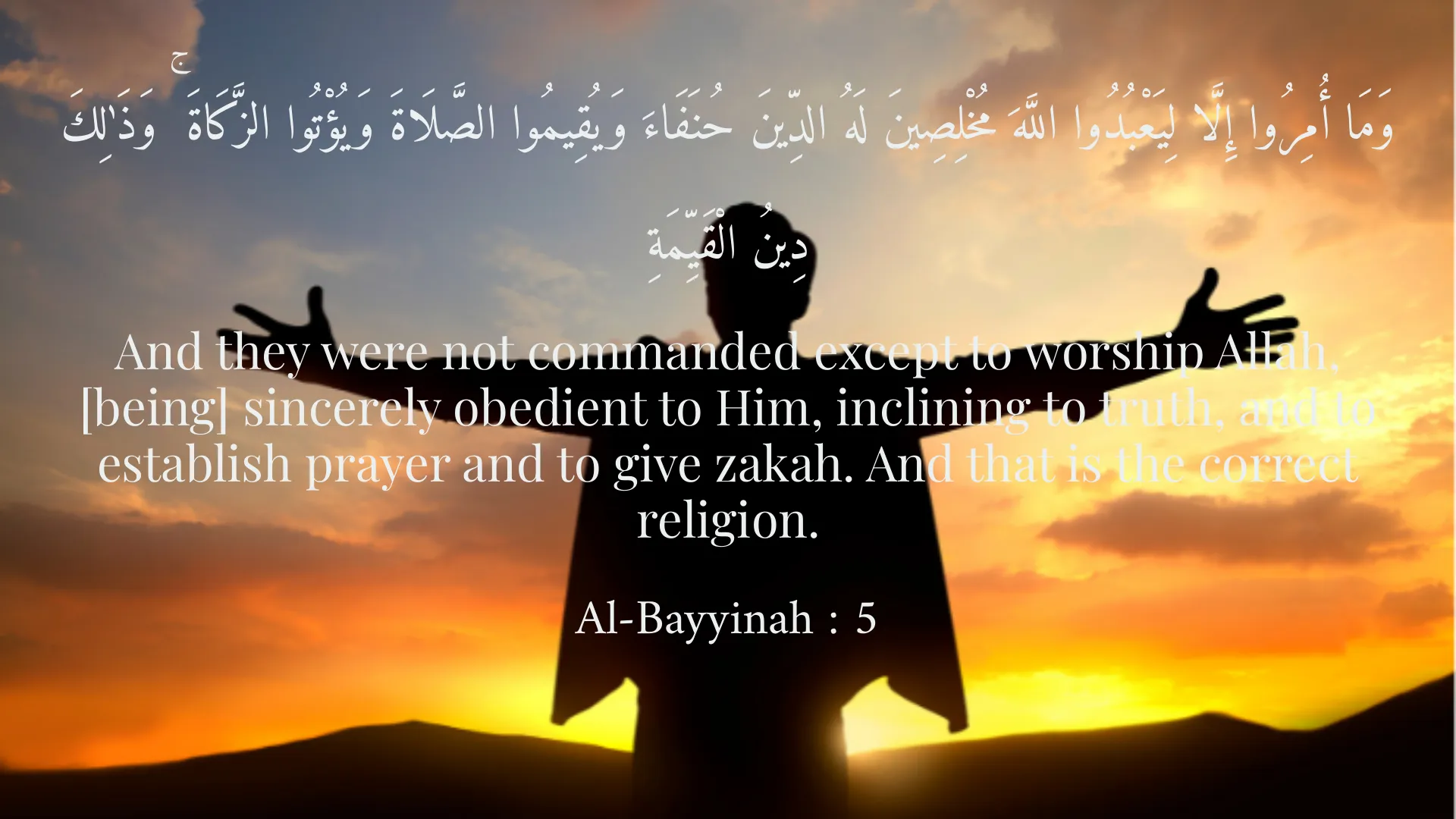
وَمَا أُمِرُوا إِلَّا لِيَعْبُدُوا اللَّهَ مُخْلِصِينَ لَهُ الدِّينَ حُنَفَاءَ وَيُقِيمُوا الصَّلَاةَ وَيُؤْتُوا الزَّكَاةَ ۚ وَذَٰلِكَ دِينُ الْقَيِّمَةِ
And they were not commanded except to worship Allah, [being] sincerely obedient to Him, inclining to truth, and to establish prayer and to give zakah. And that is the correct religion.
Al-Bayyinah : 5
قُلْ إِنَّمَا أَنَا بَشَرٌ مِّثْلُكُمْ يُوحَىٰ إِلَيَّ أَنَّمَا إِلَٰهُكُمْ إِلَٰهٌ وَاحِدٌ ۖ فَمَن كَانَ يَرْجُو لِقَاءَ رَبِّهِ فَلْيَعْمَلْ عَمَلًا صَالِحًا وَلَا يُشْرِكْ بِعِبَادَةِ رَبِّهِ أَحَدًا
Say, 'I am only a man like you, to whom has been revealed that your god is one God. So whoever would hope for the meeting with his Lord - let him do righteous work and not associate anyone in the worship of his Lord.'
Al-Kahf : 110
يَا أَيُّهَا النَّاسُ إِنَّا خَلَقْنَاكُم مِّن ذَكَرٍ وَأُنثَىٰ وَجَعَلْنَاكُمْ شُعُوبًا وَقَبَائِلَ لِتَعَارَفُوا ۚ إِنَّ أَكْرَمَكُمْ عِندَ اللَّهِ أَتْقَاكُمْ ۚ إِنَّ اللَّهَ عَلِيمٌ خَبِيرٌ
O mankind, indeed We have created you from male and female and made you peoples and tribes that you may know one another. Indeed, the most noble of you in the sight of Allah is the most righteous of you. Indeed, Allah is Knowing and Acquainted.
Al-Hujurat : 13
الَّذِينَ آمَنُوا وَتَطْمَئِنُّ قُلُوبُهُم بِذِكْرِ اللَّهِ ۗ أَلَا بِذِكْرِ اللَّهِ تَطْمَئِنُّ الْقُلُوبُ
Those who have believed and whose hearts are assured by the remembrance of Allah. Unquestionably, by the remembrance of Allah hearts are assured.
Ar-Ra'd : 28
Short Story
It is said that an old worshipper, in the heart of the mountains, engaged in devotion for many years. His disciples asked him: “O Sheikh, how do we know if our deeds are accepted by God?” The Sheikh smiled and replied: “Whenever a heart rejoices from your deed and you find yourself light and peaceful, know that a breeze of divine pleasure has blown upon you. For a righteous deed not only enlightens its doer's heart but also leaves a pleasant effect on others. But if your heart holds the dust of hypocrisy and self-admiration, no matter how good your outward appearance, the scent of sincerity will not reach the soul, and God's pleasure will not be in it.”