Quranic Answer
In the rich and profound teachings of the Holy Quran, the concept of a 'living heart' is discussed not in its biological sense, but rather in its spiritual and metaphysical meaning. A living heart is one that is awake, aware, connected to the Creator of the universe, receptive to truth, and actively engaged in acts of goodness and righteousness. Conversely, a dead or sick heart is one that is heedless, hardened, indifferent to divine signs, and far from the remembrance of Allah. The signs of a heart being alive can be examined from several Quranic perspectives, all of which, in some way, relate to a deep connection with the Lord and adherence to His teachings. The first, and perhaps most crucial, sign is the 'remembrance of Allah' (Dhikr). The Quran explicitly states that hearts find tranquility through the remembrance of Allah. In Surah Ar-Ra’d, verse 28, we read: «الَّذِينَ آمَنُوا وَتَطْمَئِنُّ قُلُوبُهُم بِذِكْرِ اللَّهِ ۗ أَلَا بِذِكْرِ اللَّهِ تَطْمَئِنُّ الْقُلُوبُ» (Those who have believed and whose hearts are assured by the remembrance of Allah. Unquestionably, by the remembrance of Allah hearts are assured). This verse clearly articulates that the true tranquility of the heart and its vitality depend on the constant remembrance of God. Dhikr is not merely restricted to glorification and praise, but encompasses prayer (Salah), recitation of the Quran, contemplation of divine verses, and mindfulness in all daily activities. A heart that is never heedless of Allah is a heart that is always illuminated and brimming with spiritual life. The second sign is 'acceptance and submission to the truth.' A living heart is one that becomes soft and submissive when confronted with divine verses and truth. In Surah Al-Hadid, verse 16, it is stated: «أَلَمْ يَأْنِ لِلَّذِينَ آمَنُوا أَن تَخْشَعَ قُلُوبُهُمْ لِذِكْرِ اللَّهِ وَمَا نَزَلَ مِنَ الْحَقِّ وَلَا يَكُونُوا كَالَّذِينَ أُوتُوا الْكِتَابَ مِن قَبْلُ فَطَالَ عَلَيْهِمُ الْأَمَدُ فَقَسَتْ قُلُوبُهُمْ ۖ وَكَثِيرٌ مِّنْهُمْ فَاسِقُونَ» (Has the time not come for those who have believed that their hearts should become humbly submissive at the remembrance of Allah and what has descended of the truth? And that they should not be like those who were given the Scripture before, and a long period passed over them, so their hearts hardened; and many of them were defiantly disobedient). This verse indicates that a living heart is a humble and receptive heart that shows flexibility in the face of the remembrance of Allah and Quranic truths, avoiding the hardness and rebellion that result from detachment from the truth. The third sign is 'Taqwa and piety.' A living heart is one that is pious and discerning, upholding the sanctity of Allah's symbols. In Surah Al-Hajj, verse 32, we read: «ذَٰلِكَ وَمَن يُعَظِّمْ شَعَائِرَ اللَّهِ فَإِنَّهَا مِن تَقْوَى الْقُلُوبِ» (That [is so]. And whoever honors the symbols of Allah - indeed, it is from the piety of hearts). This verse emphasizes that respecting and honoring the symbols of Allah (such as the rituals of Hajj, prayer, the Quran, etc.) are signs of heart-felt piety. A heart possessing Taqwa constantly seeks God's pleasure and abstains from prohibitions. There are also other signs of a living heart, including: 'sincere love for Allah and His Messenger,' 'spending and giving in the way of Allah,' 'repentance and turning away from sins,' 'empathy and kindness towards others,' 'recitation and contemplation of the Quran,' and 'feeling both fear and hope towards Allah.' A heart alive with the remembrance of Allah not only finds inner peace but also manifests positive reflections in daily life. Such a heart is filled with hope, insight, patience, and courage. With every recitation of the Quran, it absorbs more light, and with every step taken in the path of Allah, it increases its vitality. To maintain this spiritual life, it is essential for an individual to continuously nourish their heart with 'spiritual sustenance': prayers offered with presence of mind, sincere supplications, contemplation of creation, companionship with righteous people, avoidance of sin and harmful environments, and continuous seeking of forgiveness (Istighfar). Ultimately, a living heart will intercede for its owner on the Day of Judgment, when «يَوْمَ لَا يَنفَعُ مَالٌ وَلَا بَنُونَ إِلَّا مَنْ أَتَى اللَّهَ بِقَلْبٍ سَلِيمٍ» (The Day when neither wealth nor sons will benefit, but only he who comes to Allah with a sound heart). Therefore, keeping the heart alive is a duty and an eternal blessing that is attained through the path of Taqwa, Dhikr, and righteous deeds.
Related Verses
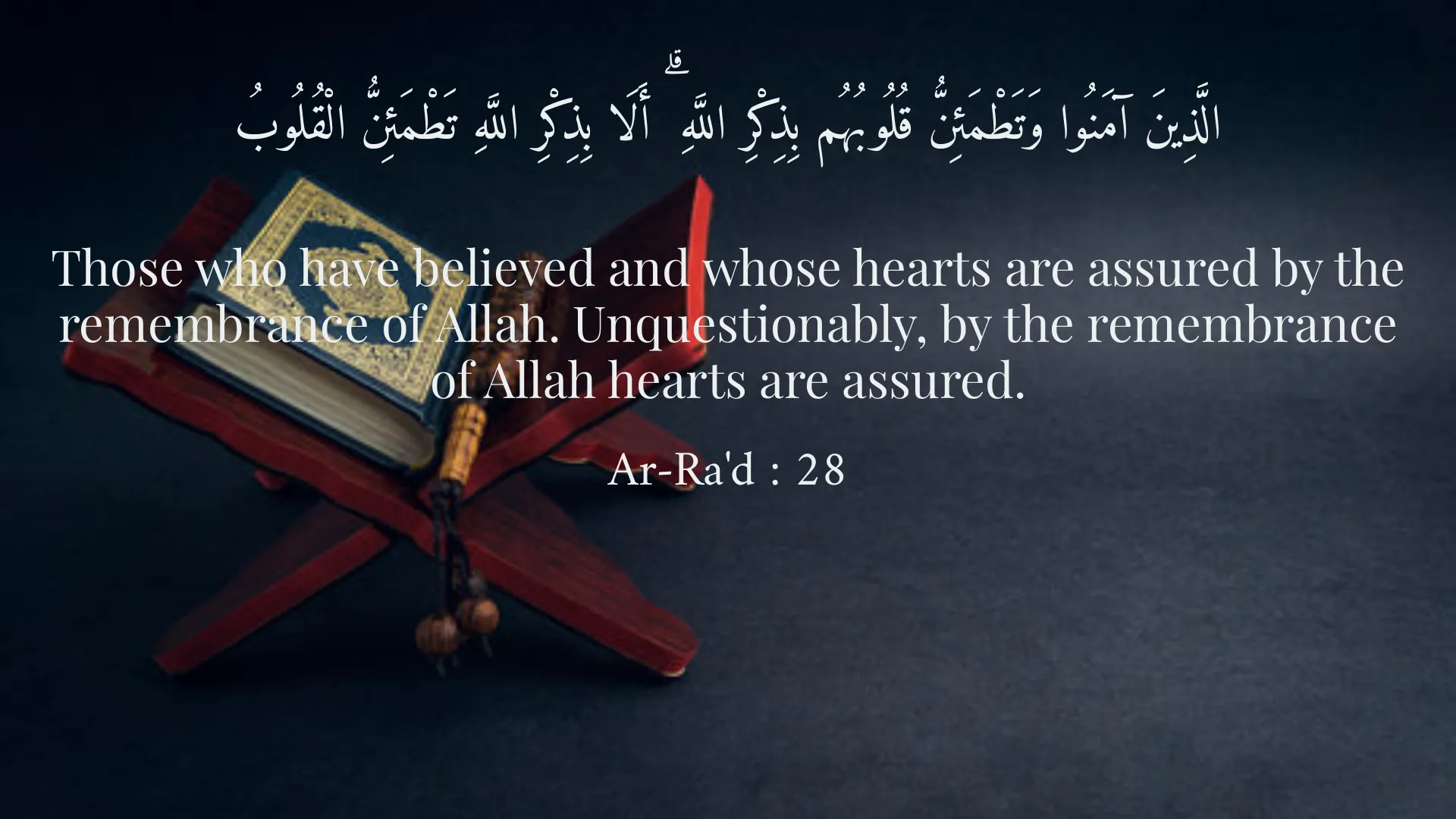
الَّذِينَ آمَنُوا وَتَطْمَئِنُّ قُلُوبُهُم بِذِكْرِ اللَّهِ ۗ أَلَا بِذِكْرِ اللَّهِ تَطْمَئِنُّ الْقُلُوبُ
Those who have believed and whose hearts are assured by the remembrance of Allah. Unquestionably, by the remembrance of Allah hearts are assured.
Ar-Ra'd : 28
أَلَمْ يَأْنِ لِلَّذِينَ آمَنُوا أَن تَخْشَعَ قُلُوبُهُمْ لِذِكْرِ اللَّهِ وَمَا نَزَلَ مِنَ الْحَقِّ وَلَا يَكُونُوا كَالَّذِينَ أُوتُوا الْكِتَابَ مِن قَبْلُ فَطَالَ عَلَيْهِمُ الْأَمَدُ فَقَسَتْ قُلُوبُهُمْ ۖ وَكَثِيرٌ مِّنْهُمْ فَاسِقُونَ
Has the time not come for those who have believed that their hearts should become humbly submissive at the remembrance of Allah and what has descended of the truth? And that they should not be like those who were given the Scripture before, and a long period passed over them, so their hearts hardened; and many of them were defiantly disobedient.
Al-Hadid : 16
ذَٰلِكَ وَمَن يُعَظِّمْ شَعَائِرَ اللَّهِ فَإِنَّهَا مِن تَقْوَى الْقُلُوبِ
That [is so]. And whoever honors the symbols of Allah - indeed, it is from the piety of hearts.
Al-Hajj : 32
Short Story
It is said that there was a king who, despite all his wealth and power, found no peace in his heart and always felt a sense of emptiness. One day, he encountered a simple and pure-hearted dervish who was secluded in a corner, radiating profound tranquility. The king asked him, "O man of God, I, with all this glory and worldly possessions, have a restless heart, yet you, who possess nothing of this world, are so peaceful and content. What is the secret to this serenity?" The dervish replied with a smile: "O King, your heart is preoccupied with managing and preserving your kingdom, but my heart is preoccupied with the remembrance and glorification of its Creator. A heart that is alive and prosperous with the remembrance of God, even if outwardly poor, is inwardly rich and at peace; and a heart engrossed in worldly affairs and forgetfulness of the Truth, even if outwardly a king, is inwardly sick and dead." The king took heed of these words and realized that the true life of the heart lies in the remembrance of God and contentment.