Quranic Answer
To discern whether one's faith is truly based on conviction and understanding rather than mere imitation, the Holy Quran offers profound and comprehensive guidance. Imitative faith (Taqleedi Iman) is a belief system adopted without personal reflection, inquiry, or intellectual engagement, often inherited from family, community, or prevailing social norms. Such faith, lacking deep roots, can be fragile and susceptible to doubts and challenges. In contrast, authentic faith (Tahqeeqi Iman) emerges from insight, conscious awareness, and deliberate choice, rooted in intellectual and spiritual proofs, embraced wholeheartedly by the individual. The Quran repeatedly urges humanity to reflect, reason, ponder, and contemplate God's signs, while strongly admonishing blind imitation, which obstructs the path to truth and certainty. The first and perhaps most crucial step to transcend imitative faith and cultivate genuine conviction is "Tadabbur (contemplation) of Allah's signs." The Quran is replete with verses inviting people to ponder the creation of the heavens and the earth, the alternation of night and day, the movement of celestial bodies, the cosmic order, the intricate design of human creation, and the marvels of their own existence. In Surah Al-Imran, verses 190-191, Allah says: "Indeed, in the creation of the heavens and the earth and the alternation of the night and the day are signs for those of understanding. Who remember Allah while standing or sitting or [lying] on their sides and reflect upon the creation of the heavens and the earth, [saying], 'Our Lord, You did not create this in vain; exalted are You [above such a thing]; then protect us from the punishment of the Fire.'" These verses directly call for deep contemplation. Faith arising from such reflection will be unwavering and non-imitative, as the individual reaches certainty by perceiving and comprehending the Creator's grandeur, not merely by hearing stories. The second vital point is "the Quran's emphasis on intellect and reasoning." In numerous verses, Allah addresses people with rhetorical questions like, "Afa la ta'qiloon?" (Do you not reason?) or "Afa la yatafakkaroon?" (Do they not reflect?). These admonishing questions underscore that neglecting the use of intellect in fundamental matters of faith is reprehensible. Authentic faith must be built upon rational arguments and logical proofs, not solely on customs or traditions. The Quran demands that for any belief one adopts, there should be a basis of reason and evidence, and a sincere pursuit of truth. Imitative faith poses a significant barrier to this intellectual insight, as individuals confine themselves within inherited beliefs without the need for personal reflection. Thirdly, a key Quranic strategy is its "severe condemnation of blind imitation of ancestors." The Quran repeatedly censures nations who, in response to the prophets' invitations, declared: "We found our fathers upon a religion, and we are following in their footsteps." (For example, Surah Al-Baqarah, verse 170: "And when it is said to them, 'Follow what Allah has revealed,' they say, 'Rather, we will follow that which we found our fathers doing.' Even though their fathers understood nothing, nor were they guided?") This verse clearly articulates that unquestioning adherence to ancestral traditions, even if it leads to misguidance, is condemned by Allah. Faith that is not imitative has no hesitation in embracing truth, even if it contradicts prevailing customs, and relies on one's own intellect and reflection to find it. A fourth crucial component is the "pursuit of knowledge (ilm) and certainty (yaqin)." The Quran grants a special status to those who possess knowledge and understanding, deeming them essential factors for genuine faith. "And do not pursue that of which you have no knowledge. Indeed, the hearing, the sight and the heart - all of those will be questioned about." (Surah Al-Isra, verse 36). This verse implies that accepting any belief must be based on knowledge and awareness, not on mere conjecture or imitation. Faith born of knowledge and understanding leads to "yaqin" – certainty. Yaqin is a state of profound inner conviction, free from any doubt. To attain this certainty, one must deeply study the Quran, the Sunnah of the Prophet (PBUH), and Islamic teachings, striving for a profound understanding of the religion. The more one's knowledge grows, the more their faith transcends imitation and transforms into investigated and certain belief. The fifth point is "personal experience and the sense of divine presence." While the Quran does not explicitly delve into the concept of "religious experience" in a Western sense, it strongly emphasizes a direct and heartfelt relationship with Allah. Prayer (Salat), remembrance (Dhikr), supplication (Du'a), and thoughtful recitation of the Quran are all tools that guide an individual towards an internal and personal experience of God's presence and majesty. These inner experiences not only deepen faith but transform it from a mere mental assent into a living, dynamic reality within the heart. Faith accompanied by such spiritual and emotional experiences will never be imitative, as the individual has "tasted" faith and has no need to mimic others. To ensure our faith is not imitative, we must actively embark on a path of spiritual growth. This means not only adhering to the outward practices of religion but also delving into the depths of its teachings. We must constantly question, reflect, and strive to uncover truths. Studying authentic Quranic commentaries, familiarizing oneself with the lives and wisdom of the Prophets and righteous predecessors whose faith was rooted in insight, and associating with people of knowledge and contemplation can be invaluable on this journey. The more we reflect on Allah's signs and the order of the universe, and the more we seek profound understanding of religious matters, the more we will free ourselves from the shackles of imitation and reach the pure spring of certainty. True faith, like the roots of a tree, becomes stronger and more resilient against storms as it grows deeper and wider, yielding sweeter fruits.
Related Verses
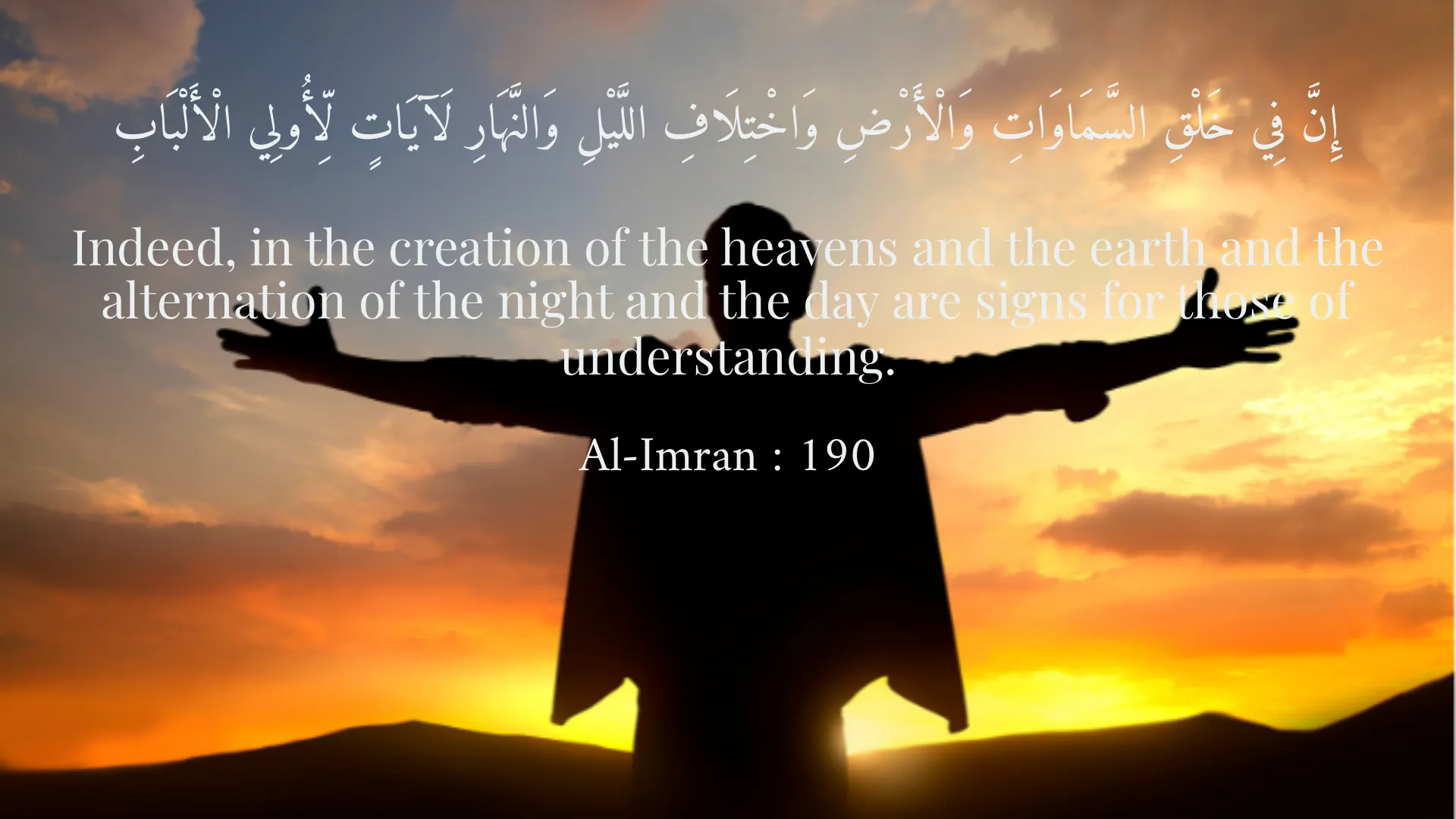
إِنَّ فِي خَلْقِ السَّمَاوَاتِ وَالْأَرْضِ وَاخْتِلَافِ اللَّيْلِ وَالنَّهَارِ لَآيَاتٍ لِّأُولِي الْأَلْبَابِ
Indeed, in the creation of the heavens and the earth and the alternation of the night and the day are signs for those of understanding.
Al-Imran : 190
الَّذِينَ يَذْكُرُونَ اللَّهَ قِيَامًا وَقُعُودًا وَعَلَىٰ جُنُوبِهِمْ وَيَتَفَكَّرُونَ فِي خَلْقِ السَّمَاوَاتِ وَالْأَرْضِ رَبَّنَا مَا خَلَقْتَ هَٰذَا بَاطِلًا سُبْحَانَكَ فَقِنَا عَذَابَ النَّارِ
Who remember Allah while standing or sitting or [lying] on their sides and reflect upon the creation of the heavens and the earth, [saying], 'Our Lord, You did not create this in vain; exalted are You [above such a thing]; then protect us from the punishment of the Fire.'
Al-Imran : 191
وَإِذَا قِيلَ لَهُمُ اتَّبِعُوا مَا أَنزَلَ اللَّهُ قَالُوا بَلْ نَتَّبِعُ مَا أَلْفَيْنَا عَلَيْهِ آبَاءَنَا ۗ أَوَلَوْ كَانَ آبَاؤُهُمْ لَا يَعْقِلُونَ شَيْئًا وَلَا يَهْتَدُونَ
And when it is said to them, 'Follow what Allah has revealed,' they say, 'Rather, we will follow that which we found our fathers doing.' Even though their fathers understood nothing, nor were they guided?
Al-Baqarah : 170
وَلَا تَقْفُ مَا لَيْسَ لَكَ بِهِ عِلْمٌ ۚ إِنَّ السَّمْعَ وَالْبَصَرَ وَالْفُؤَادَ كُلُّ أُولَٰئِكَ كَانَ عَنْهُ مَسْئُولًا
And do not pursue that of which you have no knowledge. Indeed, the hearing, the sight and the heart - all of those will be questioned about.
Al-Isra : 36
Short Story
It is said that in ancient times, there was a young man named Basir, who had grown up in the house of a pious family. He accepted and acted upon everything his parents taught him about religion, without question. One day, on his way to the market, by a spring, he saw an old and wise scholar sitting by the water, gazing at the flowing stream and murmuring: 'A spring that does not gush forth from within, but only takes water from others' streams, will sooner or later dry up.' Basir, astonished by these words, approached respectfully and asked, 'O wise elder, what is the meaning of this saying?' The scholar smiled and said, 'Young man, faith is similar. If you only take it from others and do not contemplate the signs of existence and the words of truth yourself, your faith is like water from another spring, always at risk of drying up. But if it gushes forth from your own inner spring, enlightened by reason and contemplation, it will never dry.' From that day on, instead of merely listening and imitating, Basir engaged in deep reflection on the Quran and the world, tasted the sweet flavor of certainty, and his faith transformed from imitation to genuine conviction, becoming as firm as a mountain.