Quranic Answer
Familiarizing children with the concept of the Hereafter is one of the essential duties of parents in their religious upbringing. The significance of the Hereafter, or the afterlife, is emphasized extensively within the texts of the Holy Quran, and it is a vital element of belief in many religions. Assuring that children cultivate an understanding of it from a young age helps prepare them for a future where moral and ethical behaviors take precedence. Through formal religious teachings, storytelling, and practical discussions about the consequences of actions, parents can instill a lasting awareness of the Hereafter in their children. The Holy Quran refers to the Hereafter in several verses, portraying it as a fundamental aspect of human existence. For instance, in Surah Al-Imran, verse 185, it significantly states: "Every soul will taste death, and you will only be given your full compensation on the Day of Resurrection. And whoever is removed from the Fire and admitted to Paradise has certainly succeeded." Such verses encapsulate the reality of life and death, underscoring an essential truth that every individual must confront. By introducing young ones to this essential teaching, parents can facilitate discussions about the meaning and purpose of life, thereby reinforcing the importance of making moral and ethical choices throughout their lives. To introduce children effectively to the concept of the Hereafter, parents may find it helpful to share stories from the Quran or Hadith. These narratives often carry profound moral lessons and provide a framework for understanding the consequences of one's actions. Engaging children with relatable stories helps them envision concepts that may initially seem abstract or distant. It gives them relatable scenarios to ponder, discuss, and ultimately internalize. Moreover, asking questions related to Heaven and Hell, and the overall concept of life after death, allows children to explore their curiosity regarding existential questions. Questions such as "What do you think Heaven is like?" or "Why do you think we should behave well?" cultivate a deeper understanding of the principles guiding our actions—ultimately leading to a realization that every choice has implications on their lives and the Hereafter. In Surah Al-Mu’minun, verses 99 and 100, the Quran continues to underscore this theme, stating, "Until, when death comes to one of them, he says, 'My Lord, send me back so that I might do righteousness in that which I left behind.' No! It is only a word he is saying; and behind them is a barrier until the Day they are resurrected." The profound message here emphasizes the irrevocable nature of death and the importance of taking action in the present life. It is a powerful reminder that while one can wish to make amends after death, the opportunity to act is afforded exclusively during life. Discussing such verses with children provides an educational opportunity to reflect on the choices they make daily. As children grapple with concepts of life and the Hereafter, it is essential for parents to use language that is age-appropriate and easily understood. Simplifying complex theological ideas helps ensure that children can grasp the significance of the Hereafter without feeling overwhelmed by abstract ideas. Effective communication encourages curiosity and inquiry, allowing for open dialogue about faith, morality, and values. In addition to storytelling and conversation, parents can also consider incorporating visual aids, practical activities, and discussion groups where children can engage with their peers. For instance, drawing pictures depicting Heaven or crafting stories about their ideal afterlife can help solidify their understanding creatively while still focusing on the moral lessons within these concepts. Children learn vividly through participation, and involving them actively can enhance their retention of these lessons. Furthermore, it is crucial for parents to embody the principles they wish to impart. Children absorb behavior they observe; thus, parents who live in accordance with their beliefs significantly influence their children's understanding. Simple acts of kindness, fairness, honesty, and compassion are not just ethical teachings but also practical applications that help children connect their actions to their beliefs about the Hereafter. Children often emulate their parents' behaviors, and when they see their parents practicing principles of righteousness, it instills in them a deep-seated understanding of leading a righteous life. Another aspect of instilling an understanding of the Hereafter is to frame it as a topic of hope rather than fear. Often, conversations about the afterlife can become focused on punishment or judgments. While it is essential to recognize these aspects, highlighting the joys of Heaven and the rewards of righteous actions will leave children feeling positive and motivated to engage in good deeds. It's vital to discuss the rewards of virtuous living and how they contribute to a pleasant afterlife, viewing it as a natural continuation rather than a destination marked by suffering and despair. To further enrich children's understanding, it is also beneficial for parents to discuss the roles of prophets, saints, and figures within theological frameworks who represent a moral compass or guidance in navigating life’s challenges. These figures can serve as role models, depicting the virtues that lead to success in both this life and the Hereafter. In conclusion, familiarizing children with the concept of the Hereafter is not simply about imparting knowledge; it’s about nurturing an understanding that shapes their morality and ethical behavior for a lifetime. Through storytelling, thoughtful discussions, age-appropriate language, role modeling, and a focus on hope and positivity, parents can play a pivotal role in shaping their children's views on life, death, and what lies beyond. As children grasp these spiritually significant concepts, they become more equipped to navigate the complexities of life in good faith, leading lives that align with their beliefs and values. Indeed, where conversations about the Hereafter can invoke existential pondering, they equally provide a robust foundation for moral living and personal responsibility, rooted in the profound teachings of their faith.
Related Verses
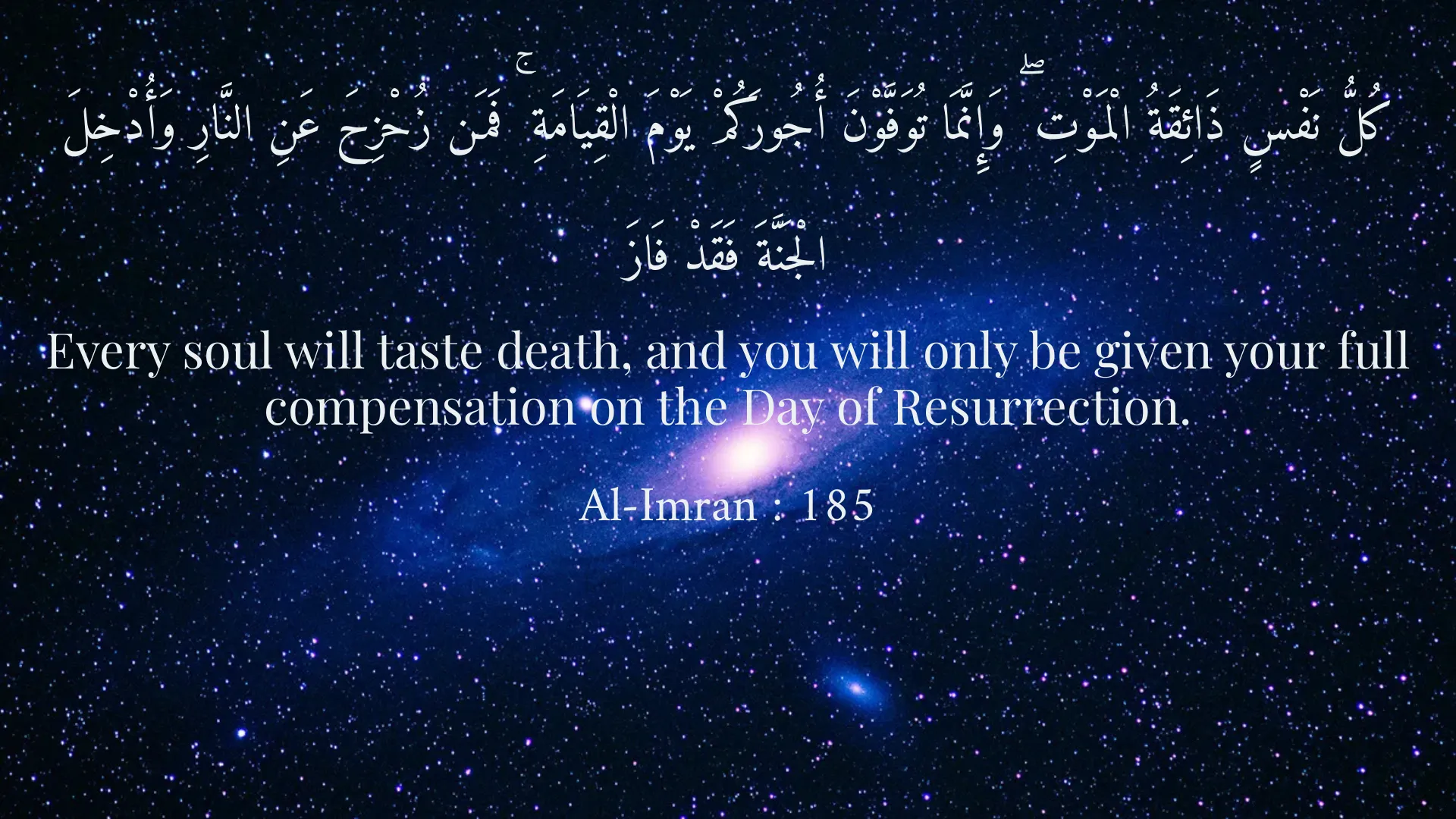
كُلُّ نَفْسٍ ذَائِقَةُ الْمَوْتِ ۖ وَإِنَّمَا تُوَفَّوْنَ أُجُورَكُمْ يَوْمَ الْقِيَامَةِ ۚ فَمَن زُحْزِحَ عَنِ النَّارِ وَأُدْخِلَ الْجَنَّةَ فَقَدْ فَازَ
Every soul will taste death, and you will only be given your full compensation on the Day of Resurrection.
Al-Imran : 185
حَتَّى إِذَا جَاءَ أَحَدَهُمُ الْمَوْتُ قَالَ رَبِّ ارْجِعُونِ لَعَلِّي أَعْمَلُ صَالِحًا فِي مَا تَرَكْتُ ۚ كَلَّا إِنَّهَا كَلِمَةٌ هُوَ قَائِلُهَا وَمِن وَرَائِهِمْ بَرْزَخٌ إِلَى يَوْمِ يُبْعَثُونَ
Until, when death comes to one of them, he says, 'My Lord, send me back so that I might do righteousness in that which I left behind.' No! It is only a word he is saying; and behind them is a barrier until the Day they are resurrected.
Al-Mu'minun : 99
Short Story
Once upon a time, a girl named Sara asked her father, 'Dad, what does death mean? What happens after that?' Her father lovingly explained that the Quran states that after death, life continues in a different form, and she would go to either Heaven or Hell. Upon hearing this, Sara pondered and decided to do good deeds so that one day she could go to Paradise.