Quranic Answer
In the Holy Quran, poverty and wealth are not merely presented as economic states, but rather as profound tests of faith, character, and gratitude. This divine scripture offers a comprehensive and balanced perspective, steering clear of extremes such as absolute glorification of wealth or outright condemnation of poverty. The Quran clearly states that both conditions originate from Allah and are integral parts of His divine plan for humanity. Therefore, individuals, regardless of their circumstances, are expected to be grateful and patient, fulfilling their responsibilities correctly concerning the blessings or limitations they experience. Wealth as a Trust and Divine Trial: The Quran views wealth not as an indicator of divine favor or displeasure, but as a trust (amanah) from the Almighty. As vicegerents of Allah on Earth, human beings are entrusted with the responsibility to manage this trust optimally and to utilize it in ways that are pleasing to Him. Wealth can be a source of immense good and blessing, yet simultaneously, it poses significant dangers against which the Quran explicitly warns. Arrogance stemming from riches, heedlessness of God and social responsibilities, and excessive attachment to worldly life are among these perils. The Quran admonishes believers not to let their wealth distract them from the remembrance of Allah and their obligatory duties. For instance, in Surah Al-Munafiqun, verse 9, it states: "O you who have believed, let not your wealth and your children divert you from remembrance of Allah. And whoever does that - then those are the losers." This verse clearly illustrates that while wealth and children are blessings, they can also become a great trial if not managed properly. The responsibilities of the wealthy are detailed in the Quran. Paramount among these is the payment of Zakat and Sadaqah. Zakat is not merely a financial act of worship; it is also a powerful tool for purifying one's wealth and soul, and a means to distribute wealth and reduce socio-economic disparities within the Islamic community. The Quran, in numerous verses, emphasizes the importance of spending in the way of Allah and assisting those in need. Surah Al-Baqarah, verse 261, offers a beautiful parable illustrating the blessings of charity: "The example of those who spend their wealth in the way of Allah is like a seed [of grain] which grows seven spikes; in each spike is a hundred grains. And Allah multiplies [His reward] for whom He wills. And Allah is all-Encompassing and Knowing." This verse signifies the manifold increase in reward for spending in Allah's cause, demonstrating that giving charity does not diminish wealth but rather makes it more blessed. Beyond Zakat and Sadaqah, the wealthy are obligated to avoid extravagance and wastefulness (israf) and to consume their wealth with moderation. The Quran refers to the extravagant as 'brothers of the devils' (Surah Al-Isra, verse 27), thereby stressing accountability in consumption. Poverty as a Test of Patience and Reliance: Just as wealth is a test for its possessors, poverty is equally a trial for the deprived. The Quran advises the poor to exercise patience (sabr) in the face of hardships and deprivations and to place their complete trust in Allah (tawakkul). This patience does not imply abandoning effort; rather, it signifies resilience against despair, gratitude in all circumstances, and firm reliance on Allah as the Sustainer. In Surah Al-Baqarah, verse 155, Allah says: "And We will surely test you with something of fear and hunger and a loss of wealth and lives and fruits, but give good tidings to the patient." This verse explicitly identifies poverty and hunger as instruments of divine testing and promises reward to the patient. Poverty accompanied by contentment (qana'ah) and self-dignity holds a high status in the sight of Allah. The Quran grants special virtue to those who, despite their poverty, maintain their dignity and refrain from begging, encouraging believers to assist such individuals (Surah Al-Baqarah, verse 273). Moderation and Balance in the Quranic View: The Quran consistently emphasizes moderation and balance (wasatiyyah). It neither encourages absolute asceticism and withdrawal from the world nor condones complete immersion in materialism and forgetting the Hereafter. Instead, it advocates a middle path: utilizing the lawful blessings of this world as a means to achieve ultimate success in the Hereafter. "Say, 'Who has forbidden the adornment of Allah which He has produced for His servants and the good [lawful] things of provision?' Say, 'They are for those who have believed in [this] worldly life [but] exclusively for them on the Day of Resurrection.'" (Surah Al-A'raf, verse 32). This verse indicates that enjoying the pure and beautiful things is permissible, but it should not deter one from the primary purpose of creation. Social Justice and Wealth Distribution: A primary objective of the Quran is to establish social justice and prevent the concentration of wealth in the hands of a select few. The Quran emphasizes the circulation of wealth in society so that it "will not be a perpetual distribution among the rich among you" (Surah Al-Hashr, verse 7). This noble verse elucidates the philosophy behind many Islamic financial injunctions, including Zakat, Khums, inheritance laws, and the prohibition of usury (riba). Usury is strictly forbidden in the Quran (Surah Al-Baqarah, verse 275) because it leads to wealth accumulation by a few, exploitation of the poor, and stagnation of the natural flow of wealth. Conversely, promoting lawful trade, partnership, and productive investments for the public good are foundational economic principles in Islam. True Richness is the Richness of the Heart: Ultimately, the Quran defines "true richness" beyond material wealth. True richness encompasses independence from creation, reliance on the Creator, contentment, self-dignity, and inner peace. This perspective frees individuals from greed and covetousness, helping them maintain a grateful and patient spirit in all circumstances, whether in poverty or wealth. The Prophet Muhammad (peace be upon him) said: "Richness is not having many possessions, but richness is the richness of the soul (self-sufficiency)." This Hadith testifies to the truth that a person's real value is not in their material possessions but in the quality of their soul and heart. In summary, the Quran considers poverty and wealth as two sides of the same coin of divine trials, each offering an opportunity for growth and closeness to Allah. The wealthy bear the responsibility of spending and gratitude, while the poor are responsible for patience and reliance. The ultimate goal is to establish a just society where human dignity is preserved, and everyone strives towards Allah's pleasure.
Related Verses
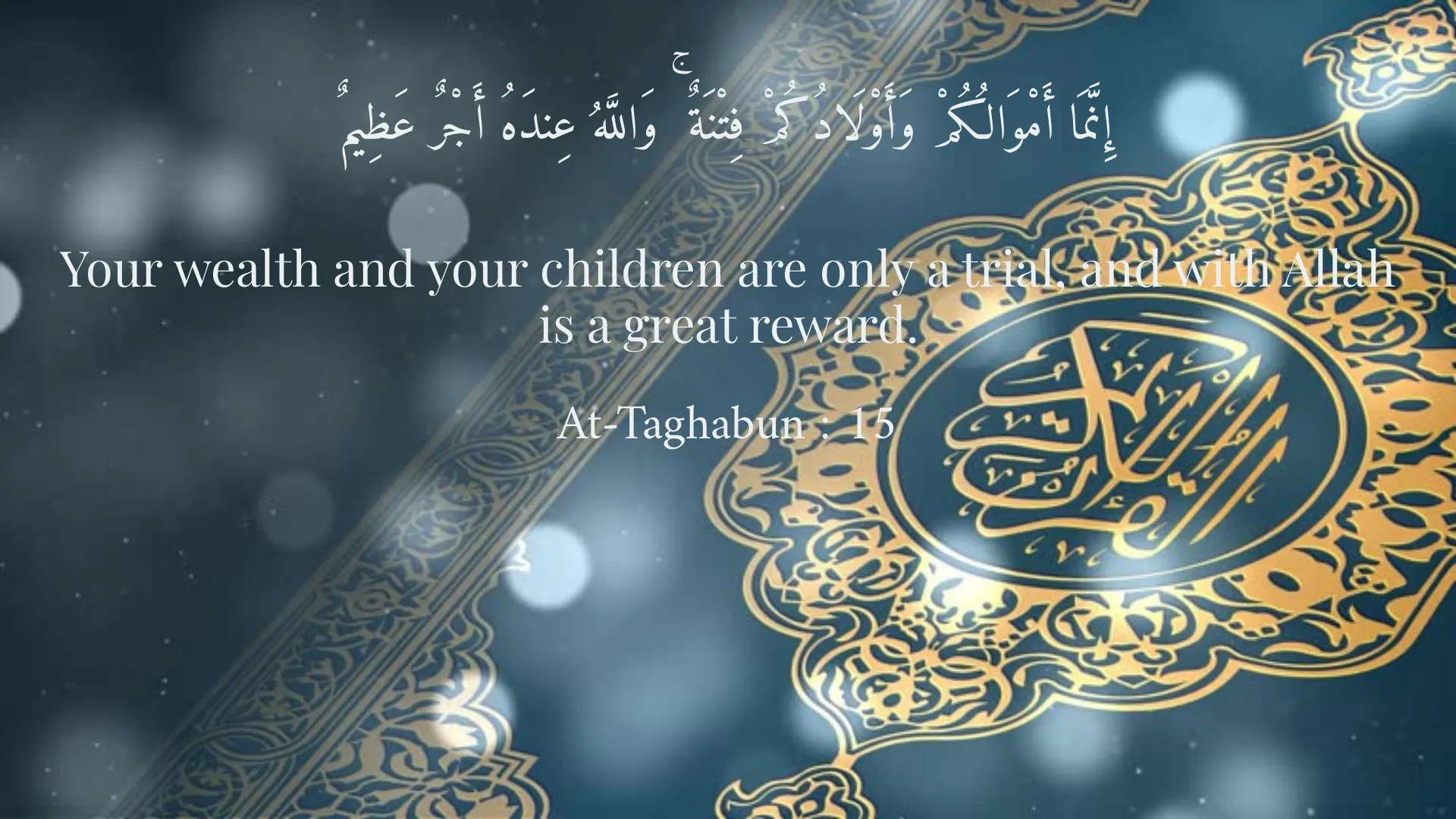
إِنَّمَا أَمْوَالُكُمْ وَأَوْلَادُكُمْ فِتْنَةٌ ۚ وَاللَّهُ عِندَهُ أَجْرٌ عَظِيمٌ
Your wealth and your children are only a trial, and with Allah is a great reward.
At-Taghabun : 15
آمِنُوا بِاللَّهِ وَرَسُولِهِ وَأَنفِقُوا مِمَّا جَعَلَكُم مُّسْتَخْلَفِينَ فِيهِ ۖ فَالَّذِينَ آمَنُوا مِنكُمْ وَأَنفَقُوا لَهُمْ أَجْرٌ كَبِيرٌ
Believe in Allah and His Messenger and spend from that which He has made you successors over. For those among you who have believed and spent, there will be a great reward.
Al-Hadid : 7
مَّثَلُ الَّذِينَ يُنفِقُونَ أَمْوَالَهُمْ فِي سَبِيلِ اللَّهِ كَمَثَلِ حَبَّةٍ أَنبَتَتْ سَبْعَ سَنَابِلَ فِي كُلِّ سُنبُلَةٍ مِّائَةُ حَبَّةٍ ۗ وَاللَّهُ يُضَاعِفُ لِمَن يَشَاءُ ۗ وَاللَّهُ وَاسِعٌ عَلِيمٌ
The example of those who spend their wealth in the way of Allah is like a seed [of grain] which grows seven spikes; in each spike is a hundred grains. And Allah multiplies [His reward] for whom He wills. And Allah is all-Encompassing and Knowing.
Al-Baqarah : 261
Short Story
It is narrated that there was a wealthy man in Yemen who possessed vast riches, yet he wore coarse garments and ate simple food. They asked him, 'O man, you have so much wealth and possessions, why do you wear rough clothes and eat plain food?' He replied, 'I do this so that the poor may not be ashamed of their poverty, and that the rich may not become arrogant due to their wealth.' This tale from the great Saadi teaches us that one should be humble in wealth and considerate of others' situations, and maintain self-dignity in poverty.