Quranic Answer
The Holy Quran, as a divine guide, presents a comprehensive set of principles and values that fundamentally counter any form of extremism, fanaticism, and exaggeration in thought and action. The Quran's approach to combating extremism is multifaceted and profound, built upon foundations such as moderation, freedom of belief, justice, unity, and an invitation to reason and reflection. These teachings serve as a timeless guide for humanity, not only during their revelation but also in all ages and for all societies, to avoid the pitfalls of extremism and achieve a balanced and peaceful community. One of the most crucial pillars in countering extremism in the Quran is the emphasis on the principle of moderation and balance (Wasatiyyah). The Quran describes the Muslim Ummah as a "middle nation" (Al-Baqarah, 2:143), meaning that this community should avoid excess and negligence in all matters and choose the middle path. This moderation encompasses beliefs, acts of worship, social relations, and even the interpretation of religious texts. Extremism often stems from rigid, one-dimensional, and inflexible interpretations of religion. In contrast, the Quran, by emphasizing mercy, ease in religion (Al-Hajj, 22:78), and avoiding hardship (Al-Baqarah, 2:185), closes the door to such interpretations. This principle teaches believers not to err by either exaggerating the status of prophets and saints (as was done with Christ) or by underestimating their status. True religiosity lies neither in complete withdrawal from the world nor in complete immersion in it, but in maintaining a balance between this world and the hereafter, between material and spiritual aspects, between the individual and society, and between individual and social rights. The Quran views humans as comprehensive beings who must develop all dimensions of their existence in moderation, avoiding being drawn to either pole of excess or deficiency. This central principle provides a strong foundation against ideologies that seek to divide society into extremist and negligent factions, or to create false boundaries between people. The Quran explicitly states, "Allah intends for you ease and does not intend for you hardship" (Al-Baqarah, 2:185), clearly portraying religion as facilitative, not burdensome, and negating any excessive strictness, which is a hallmark of extremism. Quranic moderation does not imply laxity or indifference but rather upholding truth with a realistic, balanced, and merciful approach. The second vital principle is no compulsion in religion and respect for freedom of belief. The famous verse "There shall be no compulsion in [acceptance of] the religion; the right course has become clear from the wrong" (Al-Baqarah, 2:256) explicitly negates any coercion in accepting faith. This verse indicates that faith is a matter of the heart and free will, and any imposition of it is not only futile but also contrary to the nature of faith itself. Extremists often seek to impose their beliefs through force and coercion, while the Quran emphasizes the necessity of peaceful dialogue (An-Nahl, 16:125), inviting others with wisdom and good counsel, and engaging in respectful argumentation. This Quranic approach fosters an environment for intellectual diversity and mutual respect among followers of different religions and beliefs, eliminating the grounds for violence and ideological purges. The Quran repeatedly states that guidance and misguidance come from God, and the Prophet's duty is merely to convey the message, not to compel people to believe (Yunus, 10:99; Al-Ghashiyah, 88:21-22). This emphasis on human free will and individual responsibility in accepting or rejecting the truth uproots many forms of extremism that seek to impose beliefs in the name of religion. This principle unequivocally demonstrates that religion cannot be a tool for power-seeking or oppression, but rather a path for conscious choice and individual growth. The third Quranic strategy is the emphasis on justice and equity in all aspects of life. The Quran calls upon believers to stand firmly for justice, testifying truthfully, even if it is against themselves, their parents, or their relatives (An-Nisa, 4:135). Extremism is often accompanied by injustice and discrimination, whereas Islam emphasizes universal justice, regardless of color, race, or religion. Justice in judgment, social relations, economic matters, and even in dealing with enemies (Al-Ma'idah, 5:8) is a fundamental principle. This just approach eradicates the roots of oppression and tyranny, which are themselves primary causes of extremism and violence in society. When a society is built on justice, opportunities for growth and prosperity are provided for everyone, reducing the grounds for frustration and rebellion that lead to extremism. Quranic justice includes 'Qist,' meaning the observance of balance and the right of every rightful claimant, which directly contradicts any form of inequality and discrimination that serves as a breeding ground for extremism. The fourth principle is the call for unity and brotherhood and the prohibition of division. The Quran explicitly urges Muslims to hold fast to the rope of Allah and not to become divided (Al-Imran, 3:103). Division and sectarianism provide fertile ground for the growth of extremism, as each group considers itself the sole possessor of truth and others as false and deserving of destruction. The Quran condemns such divisions and factions, warning believers against turning their religion into sects and parties (Ar-Rum, 30:32). This emphasis on unity and solidarity enables believers to focus on common goals and the global mission of Islam instead of internal conflicts, and to avoid falling into the trap of blind sectarian prejudices that are the source of much extremism. The Quran also emphasizes the dignity of human beings regardless of race or ethnicity, "O mankind, indeed We have created you from male and female and made you peoples and tribes that you may know one another. Indeed, the most noble of you in the sight of Allah is the most righteous of you" (Al-Hujurat, 49:13). This verse judges all humanity based on piety and negates any racial or ethnic superiority, which is a source of extremism. The fifth factor is the encouragement of reason, reflection, and the pursuit of knowledge and the prohibition of blind imitation and following conjecture. The Quran repeatedly invites humans to ponder on divine verses, reflect on creation, and use their intellect. Extremism is often built upon ignorance, superstition, and a lack of logical analysis. The Quran condemns those who follow something without knowledge and warns against pursuing that of which one has no knowledge (Al-Isra, 17:36). This emphasis on seeking knowledge and rationality closes the door to the acceptance of extremist ideologies, which often lack logical and scientific backing. The Quran asks people to pay attention to reasons and proofs, not to ancestral traditions accepted without reason or logic. This rational approach strengthens critical thinking and makes individuals resistant to adopting irrational and fanatical ideologies. Deep and logical thinking prevents the formation of superficial and rigid ideas that pave the way for extremism. Finally, the Quran directly addresses this issue by warning against exaggeration and excess in religion (An-Nisa, 4:171). This verse, though addressed to the People of the Book, expresses a universal principle: transgressing divine limits and going to extremes in any matter, even in religion, leads to destruction and misguidance. Extremism is precisely an instance of such exaggeration; that is, an individual or group disregards the limits set by God and, in the name of religion, goes beyond them, imposing strictness and violence that were never sanctioned by the sacred law. The Quran presents religion as innate and easy, not a heavy and unbearable burden. Therefore, any ideology that seeks to interpret religion in a harsh, exclusive, and violent manner has, in fact, deviated from the Quranic path. These teachings protect societies from falling into the abyss of fanaticism and violence, offering a path to peace and coexistence. The Quran continuously emphasizes that the purpose of sending prophets and divine books is to establish justice and equity and to guide people to the straight path, not to impose beliefs by force or to create division and strife among people. This comprehensive approach makes the Quran an unparalleled source for confronting modern intellectual and social challenges, including extremism.
Related Verses
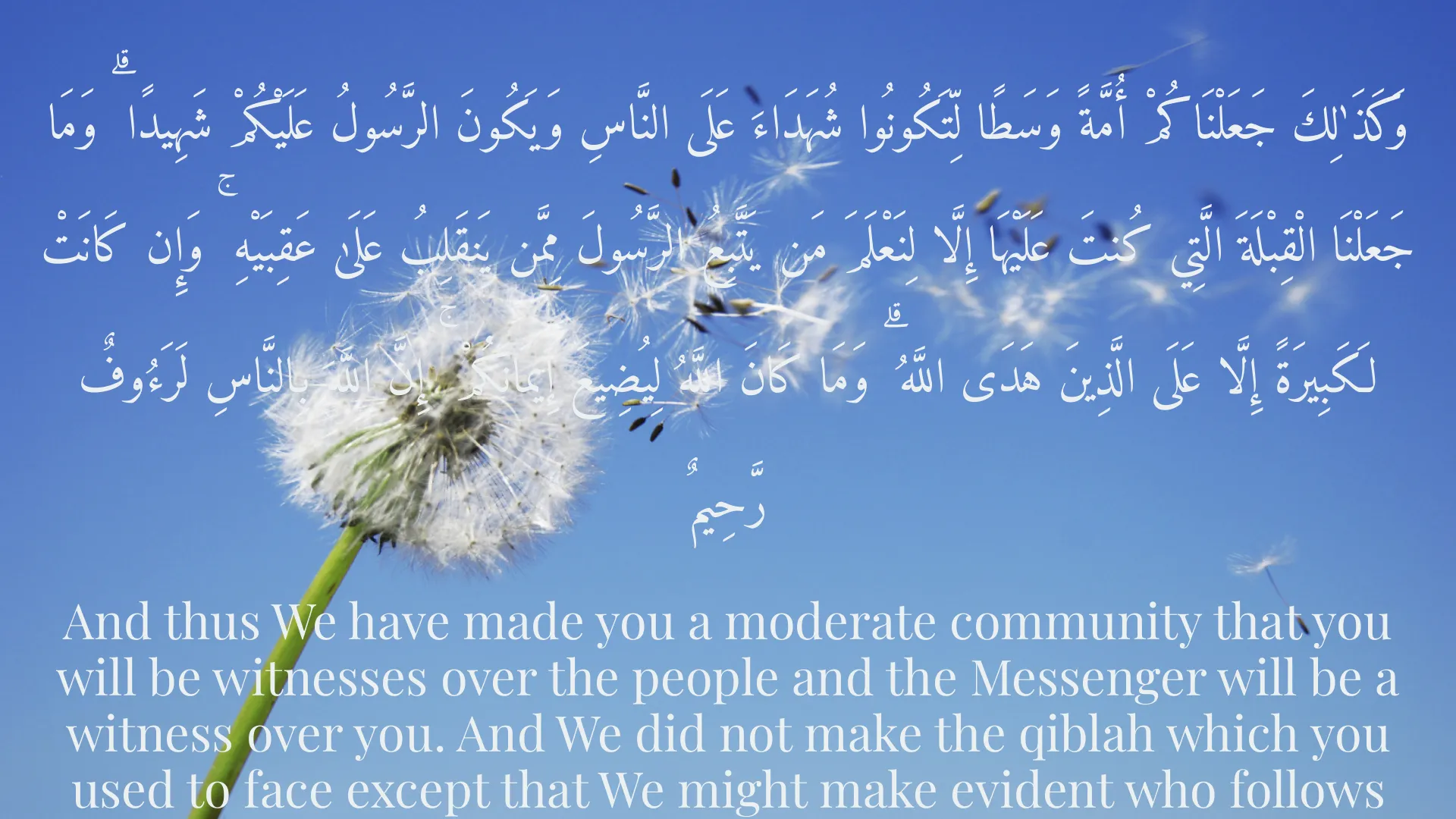
وَكَذَٰلِكَ جَعَلْنَاكُمْ أُمَّةً وَسَطًا لِّتَكُونُوا شُهَدَاءَ عَلَى النَّاسِ وَيَكُونَ الرَّسُولُ عَلَيْكُمْ شَهِيدًا ۗ وَمَا جَعَلْنَا الْقِبْلَةَ الَّتِي كُنتَ عَلَيْهَا إِلَّا لِنَعْلَمَ مَن يَتَّبِعُ الرَّسُولَ مِمَّن يَنقَلِبُ عَلَىٰ عَقِبَيْهِ ۚ وَإِن كَانَتْ لَكَبِيرَةً إِلَّا عَلَى الَّذِينَ هَدَى اللَّهُ ۗ وَمَا كَانَ اللَّهُ لِيُضِيعَ إِيمَانَكُمْ ۚ إِنَّ اللَّهَ بِالنَّاسِ لَرَءُوفٌ رَّحِيمٌ
And thus We have made you a moderate community that you will be witnesses over the people and the Messenger will be a witness over you. And We did not make the qiblah which you used to face except that We might make evident who follows the Messenger from who turns back on his heels. And indeed, it was difficult except for those whom Allah has guided. And never would Allah have caused you to lose your faith. Indeed, Allah is, to the people, Kind and Merciful.
Al-Baqarah : 143
لَا إِكْرَاهَ فِي الدِّينِ ۖ قَد تَّبَيَّنَ الرُّشْدُ مِنَ الْغَيِّ ۚ فَمَن يَكْفُرْ بِالطَّاغُوتِ وَيُؤْمِن بِاللَّهِ فَقَدِ اسْتَمْسَكَ بِالْعُرْوَةِ الْوُثْقَىٰ لَا انفِصَامَ لَهَا ۗ وَاللَّهُ سَمِيعٌ عَلِيمٌ
There shall be no compulsion in [acceptance of] the religion. The right course has become clear from the wrong. So whoever disbelieves in Taghut and believes in Allah has grasped the most trustworthy handhold with no break in it. And Allah is Hearing and Knowing.
Al-Baqarah : 256
يَا أَهْلَ الْكِتَابِ لَا تَغْلُوا فِي دِينِكُمْ وَلَا تَقُولُوا عَلَى اللَّهِ إِلَّا الْحَقَّ ۚ إِنَّمَا الْمَسِيحُ عِيسَى ابْنُ مَرْيَمَ رَسُولُ اللَّهِ وَكَلِمَتُهُ أَلْقَاهَا إِلَىٰ مَرْيَمَ وَرُوحٌ مِّنْهُ ۖ فَآمِنُوا بِاللَّهِ وَرُسُلِهِ ۖ وَلَا تَقُولُوا ثَلَاثَةٌ ۚ انتَهُوا خَيْرًا لَّكُمْ ۚ إِنَّمَا اللَّهُ إِلَٰهٌ وَاحِدٌ ۖ سُبْحَانَهُ أَن يَكُونَ لَهُ وَلَدٌ ۘ لَّهُ مَا فِي السَّمَاوَاتِ وَمَا فِي الْأَرْضِ ۗ وَكَفَىٰ بِاللَّهِ وَكِيلًا
O People of the Scripture, do not commit excess in your religion or say about Allah except the truth. The Messiah, Jesus, the son of Mary, was but a messenger of Allah and His word which He directed to Mary and a soul [created at a command] from Him. So believe in Allah and His messengers. And do not say 'three'; desist — it is better for you. Indeed, Allah is but one God. Exalted is He above having a son. To Him belongs whatever is in the heavens and whatever is on the earth. And sufficient is Allah as Disposer of affairs.
An-Nisa : 171
Short Story
It is narrated that in ancient times, there was a king who was extremely harsh on his subjects and allowed no error in state affairs. For every mistake, he decreed a severe and merciless punishment, to the extent that people, fearing him, hid in their homes. One day, a wise dervish told him: "O King, power and justice, like two scales of a balance, must be in equilibrium. If one becomes too heavy, the other fails, and the system collapses. You are excessive in your justice and have forgotten mercy. Have you not heard that mercy precedes wrath? A ruler who governs people with harshness and violence will soon find his people scattered from around him, and even his close ones will shun him. He who takes the middle path in affairs is praised, and a king who practices both justice and mercy captures hearts. If you conduct all matters with severity, people will turn away from you, and if you abandon all matters to laxity, your affairs will be ruined. So, do not speak so harshly to the beggar that he seeks alms from another due to your harshness, nor speak so softly to the rich that he becomes arrogant and boasts over others. Moderation is the key to preserving the kingdom and the hearts of men." The king took heed of the dervish's advice and adopted the middle path; he abandoned excessive strictness and emphasized justice combined with mercy. Thereafter, his kingdom prospered, and the hearts of the people grew fonder of him, understanding that true power lies in balance and good conduct, not in violence and extremism.