Quranic Answer
The Holy Quran, as the divine revelation and a comprehensive guide for humanity, does not merely present a set of rituals or beliefs; it lays down a complete framework for establishing an upright, just, and compassionate society. A significant part of this framework involves a profound and direct critique of destructive social behaviors, condemning actions that undermine human dignity, communal harmony, and spiritual well-being. This criticism is multifaceted, encompassing direct prohibitions, vivid descriptions of consequences, historical lessons from past nations, and an emphasis on cultivating virtues that are antithetical to these harmful acts. The Quran views these negative behaviors not just as individual sins, but as primary causes of social decay, and strongly criticizes them with the aim of fostering an elevated and prosperous society. One of the most frequently condemned destructive behaviors in the Quran is injustice and oppression (ظلم). The Quran unequivocally declares Allah's aversion to injustice. It warns against exploiting the weak, usurping others' rights, and abusing power. Verses like Surah An-Nahl (16:90) explicitly command justice, beneficence, and giving to kin, while forbidding indecency, evil, and aggression. This condemnation extends to all forms of injustice, whether economic, social, or political. The Quran stresses that justice is a fundamental pillar of a healthy society, and its absence leads to societal decay and divine retribution. It promotes the idea that even against one's own self or one's parents and relatives, one must stand firm for justice (Surah An-Nisa 4:135). The historical narratives of tyrannical rulers and their ultimate downfall serve as powerful deterrents, illustrating the inescapable consequences of oppression. The Quran emphasizes that true prosperity, both in this life and the hereafter, is unattainable without upholding justice and fairness in all dealings. It describes the unjust as those who deviate from the straight path, incurring divine displeasure and ultimately facing severe repercussions. Closely related to injustice is the condemnation of corruption and mischief in the land (فساد في الأرض). The Quran repeatedly warns against those who spread corruption, disrupt peace, destroy agriculture and progeny, and cause discord among people. This includes economic exploitation, environmental degradation, and any act that destabilizes society. Surah Al-Baqarah (2:205) eloquently describes such individuals as those who 'strive to spread corruption in the land, destroying crops and livestock.' The Quran frames peace and order as divine blessings that must be preserved, and acts of corruption are seen as direct defiance of God's will and a betrayal of human trust. Such actions are not merely social wrongs but spiritual transgressions, leading to a breakdown of moral fabric and a sense of insecurity within the community. The Quranic vision of a thriving society is one built on integrity, accountability, and the responsible stewardship of resources, contrasting sharply with the chaos and decay wrought by corruption. Dishonesty, lying, and false witness (كذب، زور) are also rigorously criticized. The Quran champions truthfulness (صدق) as a core virtue and condemns all forms of deception, fraud, and perjury. It emphasizes the importance of honest dealings in trade, fair weights and measures, and speaking truth, even if it is against oneself or one's interests. Surah Al-Hajj (22:30) explicitly warns against 'false statement (قول الزور).' This emphasis on truth forms the bedrock of trust within a community, without which social relations disintegrate. A society built on lies cannot prosper or maintain integrity; it inevitably collapses under the weight of mistrust and suspicion. The Quran teaches that honesty is a hallmark of true belief, and those who engage in falsehood betray both their fellow human beings and their covenant with God. Furthermore, the Quran addresses social ills like backbiting (غیبت), slander (بهتان), and gossip (نمیمه), seeing them as corrosive to communal bonds. Surah Al-Hujurat (49:12) famously likens backbiting to 'eating the flesh of one's dead brother,' a vivid and repulsive imagery designed to deter such behavior. These actions sow discord, break trust, and lead to enmity among individuals and groups. The Quran encourages verification of news (تبین) before acting upon it, particularly when it comes from individuals of questionable character, to prevent the spread of misinformation and its harmful consequences (Surah Al-Hujurat 49:6). It champions mutual respect, privacy, and good faith among believers, asserting that true brotherhood is built on preserving each other's honor and dignity. The spiritual harm of these acts is emphasized, as they strip the perpetrator of their good deeds and fill their heart with ill-will. Arrogance and pride (کبر) are denounced as destructive to both individual character and social harmony. The Quran frequently reminds humans of their humble origins and warns against walking on earth with conceit. Surah Luqman (31:18) advises, 'And do not turn your cheek [in contempt] toward people and do not walk through the earth exultantly. Indeed, Allah does not like every self-deluded and boastful person.' Arrogance leads to disdain for others, unwillingness to accept truth, and ultimately, isolation and divine wrath. It is a barrier to empathy and cooperation, fostering division and conflict within society. The Quran portrays pride as a characteristic of Satan and those who reject divine guidance, leading them to deny justice and treat others with contempt. Humility, in contrast, is praised as a sign of true servanthood and a path to spiritual elevation and communal peace. The Quran also critiques wastefulness and extravagance (اسراف و تبذیر), promoting moderation (اقتصاد) and balance. It warns against squandering resources, whether personal wealth or communal assets, as such behaviors often stem from greed and disregard for the needs of others. These actions are seen as ingratitude for divine blessings and contribute to economic disparities and social resentment. The principle of moderation extends beyond material possessions to all aspects of life, including speech and actions. The Quran teaches that while God has provided abundant resources, they are a trust, and their misuse leads to spiritual and material impoverishment, both for the individual and the wider community. In its critique, the Quran does not merely list prohibitions; it provides compelling reasons for these injunctions, often linking negative social behaviors to a lack of God-consciousness (تقوى) and a departure from the straight path. The consequences are often presented in dual terms: immediate worldly decay and ultimate divine punishment in the hereafter. Conversely, the Quran highlights the virtues that build a robust and ethical society: justice, truthfulness, compassion, humility, generosity, patience, and mutual cooperation. The underlying message is that these destructive behaviors are not just individual sins but acts that damage the very fabric of society, preventing it from achieving its full potential. The Quranic methodology for societal reform is holistic. It starts with individual moral purification, emphasizing self-accountability and the development of a strong conscience guided by divine principles. This individual transformation is then projected onto the social sphere, leading to a community where 'enjoining good and forbidding evil (أمر بالمعروف ونهي عن المنكر)' becomes a collective responsibility. This proactive approach ensures that harmful behaviors are not only condemned but actively counteracted by the promotion of righteous conduct, fostering a society that strives for peace, equity, and spiritual elevation. The divine wisdom embedded in these critiques serves to protect the sanctity of life, the dignity of the individual, and the collective well-being of humanity. The Quran's message is timeless, offering enduring principles for human conduct and societal governance, perpetually calling humanity to a path of righteousness and harmony, and warning against any deviation that would lead to corruption and moral decay.
Related Verses
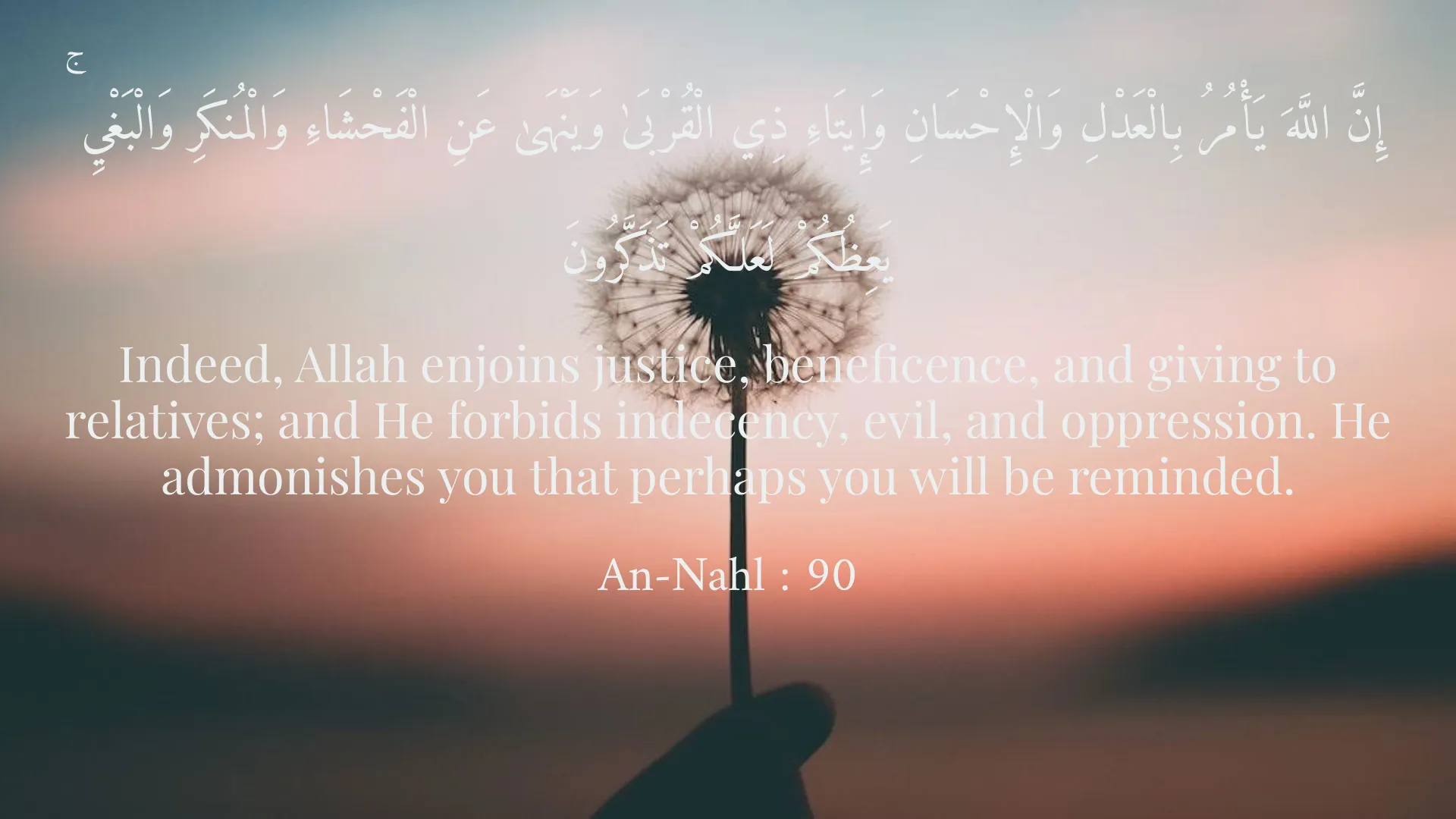
إِنَّ اللَّهَ يَأْمُرُ بِالْعَدْلِ وَالْإِحْسَانِ وَإِيتَاءِ ذِي الْقُرْبَىٰ وَيَنْهَىٰ عَنِ الْفَحْشَاءِ وَالْمُنكَرِ وَالْبَغْيِ ۚ يَعِظُكُمْ لَعَلَّكُمْ تَذَكَّرُونَ
Indeed, Allah enjoins justice, beneficence, and giving to relatives; and He forbids indecency, evil, and oppression. He admonishes you that perhaps you will be reminded.
An-Nahl : 90
يَا أَيُّهَا الَّذِينَ آمَنُوا اجْتَنِبُوا كَثِيرًا مِّنَ الظَّنِّ إِنَّ بَعْضَ الظَّنِّ إِثْمٌ ۖ وَلَا تَجَسَّسُوا وَلَا يَغْتَب بَّعْضُكُم بَعْضًا ۚ أَيُحِبُّ أَحَدُكُمْ أَن يَأْكُلَ لَحْمَ أَخِيهِ مَيْتًا فَكَرِهْتُمُوهُ ۚ وَاتَّقُوا اللَّهَ ۚ إِنَّ اللَّهَ تَوَّابٌ رَّحِيمٌ
O you who have believed, avoid much [negative] assumption. Indeed, some assumption is sin. And do not spy or backbite each other. Would one of you like to eat the flesh of his brother when dead? You would detest it. And fear Allah; indeed, Allah is Accepting of repentance and Merciful.
Al-Hujurat : 12
وَإِذَا تَوَلَّىٰ سَعَىٰ فِي الْأَرْضِ لِيُفْسِدَ فِيهَا وَيُهْلِكَ الْحَرْثَ وَالنَّسْلَ ۗ وَاللَّهُ لَا يُحِبُّ الْفَسَادَ
And when he goes away, he strives throughout the land to cause corruption therein and destroy crops and animal offspring. And Allah does not like corruption.
Al-Baqarah : 205
Short Story
It is said that Nushirvan the Just had a wise and pious minister. One day, the king asked his minister, "O wise minister, what causes a country to flourish and its people to be happy, and what leads to ruin and distress?" The minister respectfully replied, "O virtuous king, the prosperity of a country and the tranquility of its people arise from the king's justice and fairness, and his avoidance of tyranny and oppression. When a ruler himself rises with justice and criticizes destructive social behaviors such as oppression, lying, and corruption, and insists upon it, the people will also follow the right path. However, if he promotes injustice and corruption or overlooks it, it will not be long before the foundations of the kingdom weaken and peace disappears. In truth, the good deeds of rulers and people are like good seeds in the earth that yield a harvest of comfort and blessing, and any corruption and decay are like weeds that spoil the garden of society. For this very reason, the Holy Quran explicitly and decisively condemns destructive social behaviors and forbids them, because such actions endanger the health and well-being of the individual and society, burning the roots of faith and morality. The king took good counsel from these words, strengthened his resolve to implement justice and combat corruption, and consequently, his country remained in comfort and peace, and his name was remembered favorably in history.