Quranic Answer
The Holy Quran, as the divine word, does not explicitly use the modern terms 'wants' and 'needs' for precise differentiation. However, through its comprehensive and profound principles and guidance throughout its verses, it provides unparalleled insights into understanding this fundamental distinction in individual and societal life. By emphasizing concepts such as moderation, gratitude, contentment, avoidance of extravagance and waste, and prioritizing the Hereafter over worldly life, this heavenly book helps individuals develop a correct understanding of what is truly necessary for their survival, health, and well-being (needs), as opposed to what are merely egoistic desires and luxuries (wants). This distinction not only leads to spiritual peace but also aids in the proper management of resources and wealth at individual and societal levels, preventing many economic and social problems arising from excessive wants. One of the most important principles the Quran puts forth for distinguishing between wants and needs is the principle of 'moderation' or 'wasatiyyah'. In Surah Al-Furqan, verse 67, we read: "And [they are] those who, when they spend, do so not excessively or stingily but are ever, between that, [justly] moderate." This verse clearly indicates that the correct path in life is to avoid extremes. Extravagance signifies fulfilling unlimited wants beyond genuine needs, while stinginess means falling short even in providing for basic necessities. The Quran guides believers towards a middle path; a path where true needs are met, but there is no room for excess and waste. This principle applies not only to financial matters but also to other aspects of life. For instance, regarding eating and drinking, the Quran states: "Eat and drink, but do not be extravagant. Indeed, He does not like those who commit extravagance" (Surah Al-A'raf, verse 31). This command demonstrates the necessity of meeting physical needs (eating and drinking), but with a clear warning against extravagance, it teaches us that wants beyond the boundaries of need are undesirable and harmful. The Quran also plays a significant role in controlling wants by emphasizing the concepts of 'contentment' (qana'ah) and 'gratitude' (shukr). Contentment means being satisfied with what is available and sufficient with what is necessary, in contrast to greed and covetousness for acquiring more than one needs. When a person is truly content at heart and grateful for Allah's blessings, their egoistic desires for endless wants diminish. Gratitude shifts a person's perspective towards their possessions, preventing them from focusing on what they lack and regretting unfulfilled desires. This approach brings them peace and frees them from falling into the trap of materialism and endless worldly competitions. The Quran repeatedly reminds humans that this world is transient and the primary goal is the Hereafter. In Surah Al-Qasas, verse 77, it states: "But seek, through that which Allah has given you, the home of the Hereafter; and [yet], do not forget your share of the world. And do good as Allah has done good to you. And desire not corruption in the land. Indeed, Allah does not like corrupters." This verse presents a balanced view of life: striving for the Hereafter should be the main goal, but one's share of the world should not be forgotten. This 'share of the world' primarily means fulfilling legitimate needs and making proper use of blessings, not being engrossed in material wants and forgetting the main purpose of creation. Avoiding 'tabdheer' (waste) and 'israf' (extravagance), explicitly stated in Surah Al-Isra, verse 27: "Indeed, the squanderers are brothers of the devils, and ever has Satan been to his Lord ungrateful," shows us that wasting resources and spending them on useless and unnecessary matters is a devilish act. These verses directly address the distinction between real needs and unnecessary wants. Needs are legitimate and even essential, but wants that lead to extravagance and waste are not only reprehensible but are considered satanic acts. The Quran warns believers that excessive attachment to wealth and children can be a trial for them and divert them from the right path. In Surah At-Taghabun, verse 15, it says: "Your wealth and your children are only a trial, and with Allah is a great reward." These verses help individuals understand the true values of life and realize that wealth and children, although blessings, should not become idols that distract them from spiritual needs and their primary goals. In summary, the Quran, through the principles of moderation in consumption, gratitude for blessings, contentment, strict avoidance of extravagance and waste, and emphasis on prioritizing the Hereafter over the world, teaches believers how to differentiate between wants and needs. These guidelines not only help individuals live a peaceful and balanced life but also pave the way for building a just society and avoiding destructive material competitions. The Quran's goal is for humans to be freed from the bondage of endless egoistic desires and to step towards true freedom and eternal felicity, a felicity achieved by meeting true needs and focusing on the spiritual dimensions of life, not by the endless accumulation of worldly wants and desires.
Related Verses
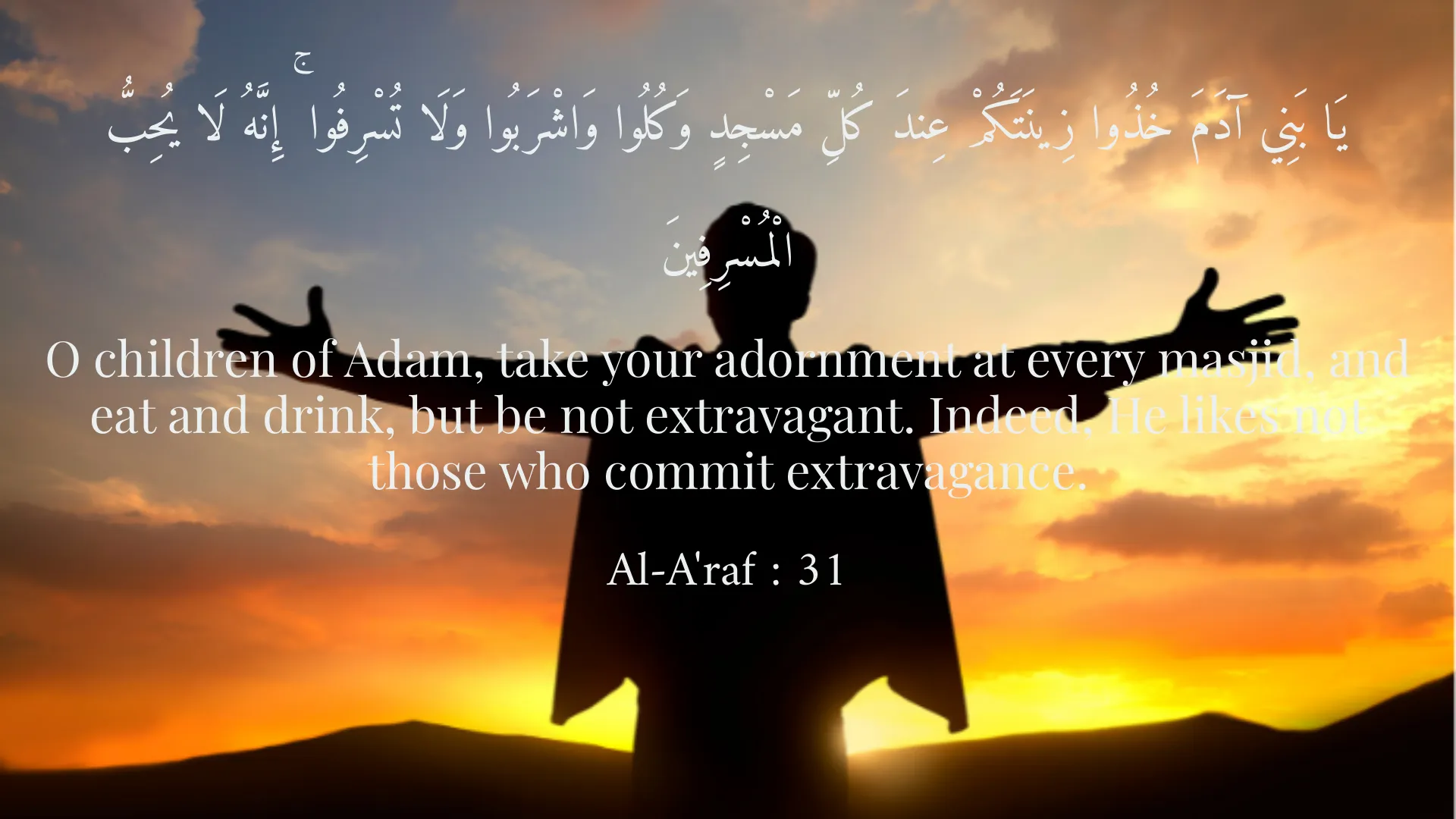
يَا بَنِي آدَمَ خُذُوا زِينَتَكُمْ عِندَ كُلِّ مَسْجِدٍ وَكُلُوا وَاشْرَبُوا وَلَا تُسْرِفُوا ۚ إِنَّهُ لَا يُحِبُّ الْمُسْرِفِينَ
O children of Adam, take your adornment at every masjid, and eat and drink, but be not extravagant. Indeed, He likes not those who commit extravagance.
Al-A'raf : 31
إِنَّ الْمُبَذِّرِينَ كَانُوا إِخْوَانَ الشَّيَاطِينِ ۖ وَكَانَ الشَّيْطَانُ لِرَبِّهِ كَفُورًا
Indeed, the squanderers are brothers of the devils, and ever has Satan been to his Lord ungrateful.
Al-Isra : 27
وَابْتَغِ فِيمَا آتَاكَ اللَّهُ الدَّارَ الْآخِرَةَ ۖ وَلَا تَنسَ نَصِيبَكَ مِنَ الدُّنْيَا ۖ وَأَحْسِن كَمَا أَحْسَنَ اللَّهُ إِلَيْكَ ۖ وَلَا تَبْغِ الْفَسَادَ فِي الْأَرْضِ ۖ إِنَّ اللَّهَ لَا يُحِبُّ الْمُفْسِدِينَ
But seek, through that which Allah has given you, the home of the Hereafter; and [yet], do not forget your share of the world. And do good as Allah has done good to you. And desire not corruption in the land. Indeed, Allah does not like corrupters.
Al-Qasas : 77
Short Story
It is narrated that a wealthy man, perpetually complaining, went to a wise sage and lamented his constant unrest and dissatisfaction. The sage asked: "Have you ever observed how the poorest people manage their lives with contentment?" The rich man replied: "No, I have always sought more." The sage smiled and said: "Saadi says: 'The more one builds in brick and clay, and in water and mud, the tighter it becomes.' This tale suggests that the more one pursues worldly wants, the narrower their heart becomes and the less peace they find. But he who is content with his needs and grateful, his heart will be spacious and his soul filled with tranquility. This is the very distinction the Quran teaches us: neglecting basic needs is wrong; but getting entangled in endless wants creates pain and suffering.