Quranic Answer
In today's world, where consumerism has become a dominant force, constantly pushing individuals to acquire and accumulate more goods and services, the teachings of the Holy Quran offer a clear beacon and guidance for returning to a balanced, purposeful, and peaceful life – indeed, simple living. With its profound and foundational perspectives on the nature of worldly life, true values, and the purpose of human creation, the Quran calls upon us to re-evaluate our lifestyles and avoid the traps of unbridled consumerism. This invitation is not about poverty or deprivation; rather, it is about living sufficiently, being content without worldly glitter, and focusing on lasting values. One of the central Quranic teachings that aligns with simple living is the concept of "moderation" (wasatiyyah) and avoiding "excess" (israf). The Quran strictly prohibits extremism and extravagance in all aspects of life, including the consumption and utilization of divine blessings. Numerous verses explicitly warn believers against "israf" (exceeding limits) and "tabdhir" (squandering and wasting resources). In Surah Al-A'raf, verse 31, Allah states: "O children of Adam, take your adornment at every mosque, and eat and drink, but be not excessive. Indeed, He likes not those who commit excess." This verse indicates that even in permissible consumption and enjoying aesthetics, moderation must be observed. Consumerism stands precisely opposite to this moderation, as it constantly encourages humans to consume more than they need and even to buy things they don't have or don't require. Furthermore, in Surah Al-Isra, verses 26 and 27, there is a strong emphasis on avoiding extravagance and squandering: "And give the relative his due, and the needy and the wayfarer, and do not squander excessively. Indeed, the squanderers are brothers of the devils, and ever has Satan been to his Lord ungrateful." These verses deem squandering a satanic act, not only because it wastes resources but also because it hinders gratitude for divine blessings and leads to ungratefulness. A consumerist society, by encouraging rapid disposal of goods and their replacement with newer models, actively moves towards extravagance and waste. The Quran's perspective on "worldly life" (dunya) versus the "Hereafter" (akhirah) is also a significant factor in promoting simple living. The Quran repeatedly emphasizes that worldly life is fleeting and transient, and humanity's primary goal is to achieve divine pleasure and eternal bliss in the afterlife. In Surah Al-Hadid, verse 20, Allah says: "Know that the life of this world is only play and amusement, an adornment and boasting among yourselves, and rivalry in [increasing] wealth and children – like the example of a rain whose [resulting] plant growth pleases the disbelievers; then it dries and you see it [become] yellow, then it becomes [scattered] debris. And in the Hereafter is severe punishment and forgiveness from Allah and approval. And what is the worldly life except the enjoyment of delusion." This verse clearly illustrates that excessive attachment to wealth and children, and competition in accumulating them, are worthless and deceptive. Whoever understands this truth will no longer pursue materialism and extravagant living, but will turn to "contentment" (qana'ah). While the concept of qana'ah (contentment) is not directly mentioned with this specific word in the Quran, its spirit is embedded in many Quranic verses that speak of "acceptance of divine provisions" and "gratitude" for existing blessings. When a person is grateful for what they possess, they are less likely to constantly seek what they lack. Consequently, the psychological pressure stemming from comparison with others and craving what advertisements propagate diminishes. Contentment does not mean abandoning efforts to improve one's life, but rather finding peace of mind free from greed and avarice, and experiencing tranquility in sufficient and appropriate utilization of divine favors. Moreover, the Quran's emphasis on "infaq" (spending in the way of Allah) and helping the needy indirectly encourages simple living. When a person uses their wealth not for personal accumulation and consumption but for aiding fellow humans and seeking divine pleasure, consumerist impulses within them weaken. This act transforms wealth from an end in itself into a means to achieve higher goals, which is the essence of simple living: using the world as a means to the Hereafter, not as the ultimate end. In summary, the Holy Quran, by referring to eternal values, reminding of the transience of worldly life, prohibiting extravagance and squandering, and encouraging contentment and charity, provides a comprehensive intellectual and practical framework for simple living. These teachings, far from being obsolete in the era of consumerism, are more vital and guiding than ever. They help humanity escape the abyss of endless material competition and the emptiness that results from it, leading to peace, satisfaction, and the true meaning of life.
Related Verses
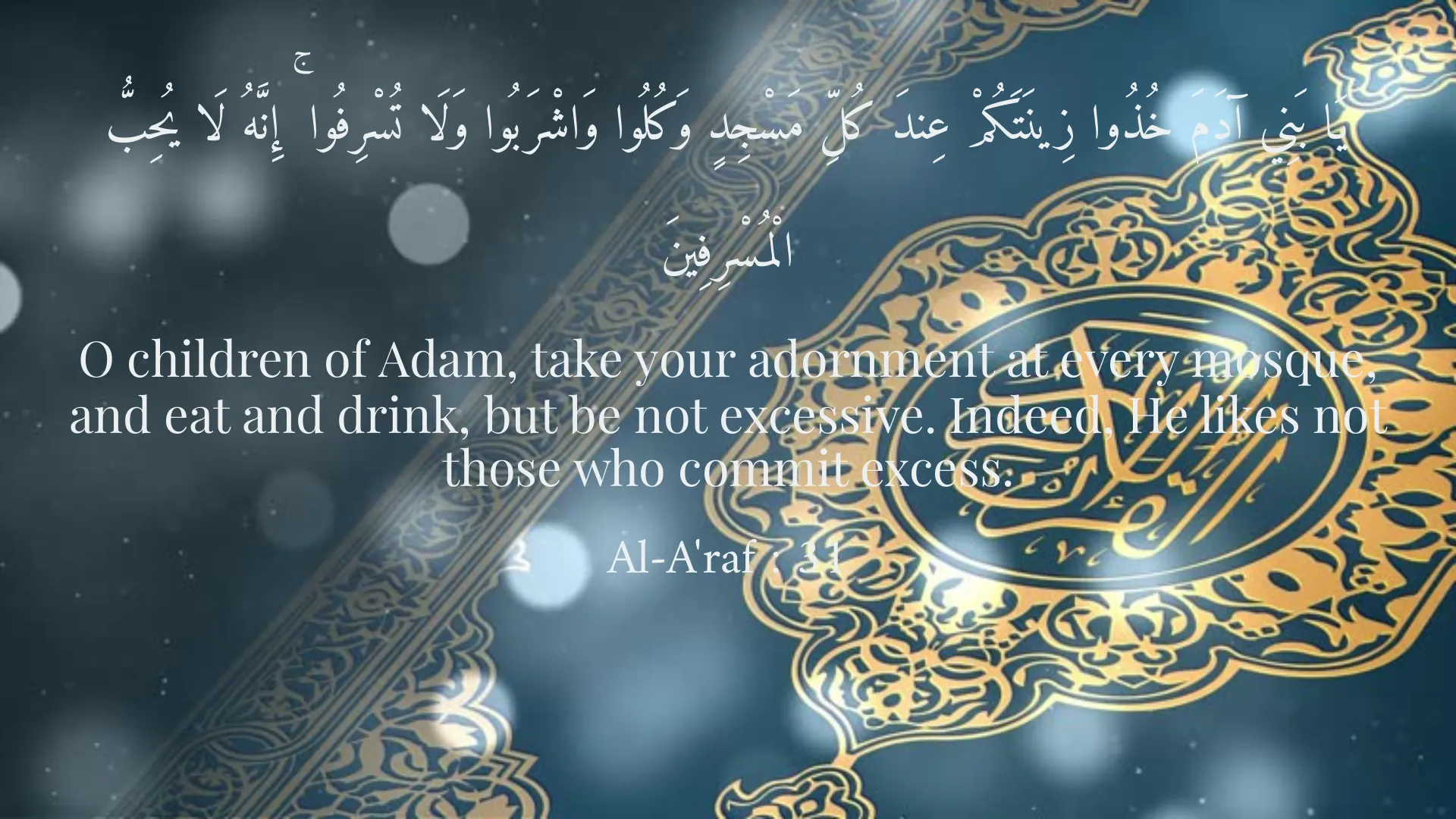
يَا بَنِي آدَمَ خُذُوا زِينَتَكُمْ عِندَ كُلِّ مَسْجِدٍ وَكُلُوا وَاشْرَبُوا وَلَا تُسْرِفُوا ۚ إِنَّهُ لَا يُحِبُّ الْمُسْرِفِينَ
O children of Adam, take your adornment at every mosque, and eat and drink, but be not excessive. Indeed, He likes not those who commit excess.
Al-A'raf : 31
وَآتِ ذَا الْقُرْبَىٰ حَقَّهُ وَالْمِسْكِينَ وَابْنَ السَّبِيلِ وَلَا تُبَذِّرْ تَبْذِيرًا
And give the relative his due, and the needy and the wayfarer, and do not squander excessively.
Al-Isra : 26
إِنَّ الْمُبَذِّرِينَ كَانُوا إِخْوَانَ الشَّيَاطِينِ ۖ وَكَانَ الشَّيْطَانُ لِرَبِّهِ كَفُورًا
Indeed, the squanderers are brothers of the devils, and ever has Satan been to his Lord ungrateful.
Al-Isra : 27
اعْلَمُوا أَنَّمَا الْحَيَاةُ الدُّنْيَا لَعِبٌ وَلَهْوٌ وَزِينَةٌ وَتَفَاخُرٌ بَيْنَكُمْ وَتَكَاثُرٌ فِي الْأَمْوَالِ وَالْأَوْلَادِ ۖ كَمَثَلِ غَيْثٍ أَعْجَبَ الْكُفَّارَ نَبَاتُهُ ثُمَّ يَهِيجُ فَتَرَاهُ مُصْفَرًّا ثُمَّ يَكُونُ حُطَامًا ۖ وَفِي الْآخِرَةِ عَذَابٌ شَدِيدٌ وَمَغْفِرَةٌ مِّنَ اللَّهِ وَرِضْوَانٌ ۚ وَمَا الْحَيَاةُ الدُّنْيَا إِلَّا مَتَاعُ الْغُرُورِ
Know that the life of this world is only play and amusement, an adornment and boasting among yourselves, and rivalry in [increasing] wealth and children – like the example of a rain whose [resulting] plant growth pleases the disbelievers; then it dries and you see it [become] yellow, then it becomes [scattered] debris. And in the Hereafter is severe punishment and forgiveness from Allah and approval. And what is the worldly life except the enjoyment of delusion.
Al-Hadid : 20
Short Story
Once upon a time, in the city of Shiraz, lived a wealthy merchant whose sole preoccupation was accumulating riches and expanding his trade. Every day he added to his wealth, yet he never felt peace or sufficiency, constantly seeking to buy new goods and display his possessions. In the same city lived a humble, kind cobbler who led a simple life by the sweat of his brow. Every morning he worked with a cheerful face and a peaceful heart, and at night, he slept soundly, grateful to God. One day, the merchant passed by the cobbler's shop and observed that despite his apparent poverty, the cobbler was happy and full of contentment. The merchant, puzzled, asked, "How is it that with all my wealth, my heart is never at ease, yet you, with all your simplicity, are always smiling?" The cobbler smiled and replied, "O esteemed merchant, you strive for life, but I live. Your wealth binds you and the desire to increase it daily drowns you in longing and competition. But I am content with what I have and know that this world is like a fleeting shadow, and true peace lies in freedom from its attachments, not in accumulating them." The merchant was transformed by the cobbler's words, realizing that simple living and contentment are treasures beyond any wealth.